


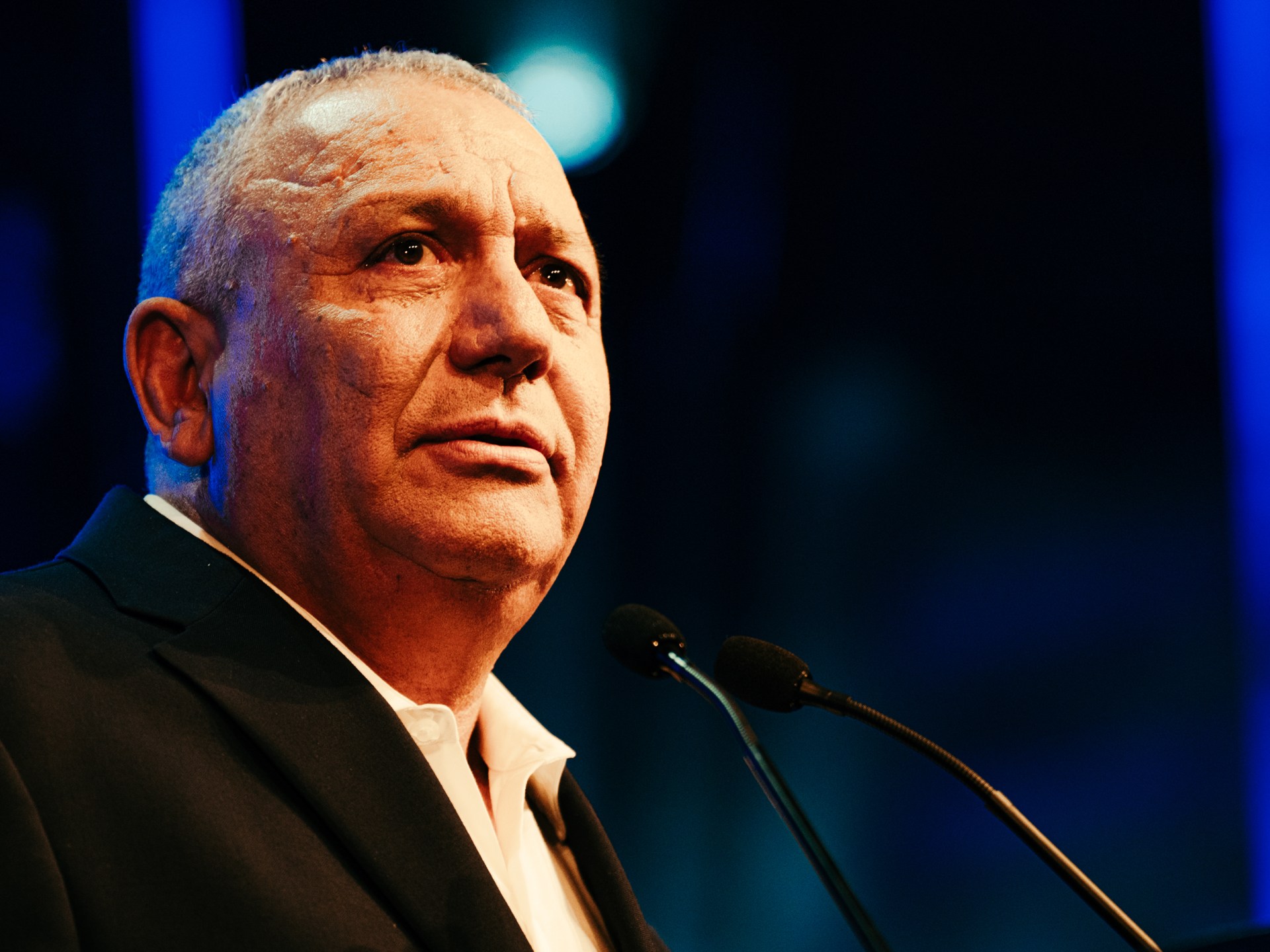
Israeli President Appoints Gadi Eisenkot to Form New Government
After recent elections yielded no clear majority in the Knesset, Israeli President Isaac Herzog has entrusted Gadi Eisenkot, the leader of the Yashar (“Straight”) party and former military chief of staff, with the task of assembling a government. Eisenkot has a period of 28 days for this endeavor, with the possibility of extending it by an additional 14 days. If he fails, the opportunity will likely shift to Prime Minister Benjamin Netanyahu, with the looming prospect of new elections hanging in the balance.
Challenges Ahead for Eisenkot
Despite the opportunity, Eisenkot faces significant obstacles in forming a coalition. It appears unlikely that he will be able to establish a government that mirrors the majority establishment that has historically supported Netanyahu’s right-wing policies. Achieving support may necessitate cooperation with at least one of the ultra-Orthodox parties that have traditionally aligned with Netanyahu, particularly in exchange for preserving military service exemptions for young ultra-Orthodox men.
Uncertain Alliances
Eisenkot will also need to court some factions of Israel’s opposition to gain additional support, possibly including Arab parties, who could play a pivotal role even from outside the government framework. Political analysts note Eisenkot’s discomfort with the intricate maneuvering often associated with Netanyahu’s political strategy. The very nature of his coalition, formed merely days before the elections, has been characterized by cloudy messaging and a lack of coordination.
Pending Legislative Concessions
Support from the ultra-Orthodox United Torah Judaism is likely contingent upon continued exemption from military service for its constituents. Additionally, any nod to Arab parties would have to address the pressing concerns surrounding violence within Palestinian neighborhoods and the recent escalatory wave of settler violence in the West Bank. According to Aida Touma-Sliman, a Knesset member from the Hadash party, Eisekot appears more inclined to appease the ultra-Orthodox factions than risk dependence on Arab support.
Israel’s International Reputation
Regardless of political maneuvering, the new government will grapple with the complexities of Israel’s international standing, especially in relation to the United States. The recent military actions in Gaza and ongoing tensions with Iran have diminished Israel’s public image among Americans. Even Trump’s announcement to end the annual $3.8 billion military aid to Israel has intensified scrutiny, with the ramifications of the political landscape in the U.S. potentially impacting Israeli relations.
Eisenkot: A Diverging Profile from Netanyahu
Eisenkot is perceived favorably by many Israelis, largely due to his contrasting persona with Netanyahu. Born in Tiberias and raised in Eilat before an extensive military career, Eisenkot embodies a more grounded image compared to Netanyahu’s polished demeanor. His personal losses in the recent conflict, including the death of his son and nephew, have humanized him in the eyes of the electorate.
A Complex Legacy as Military Leader
However, Eisenkot’s past as the architect of the Dahiyeh Doctrine—a strategy advocating disproportionate military responses against perceived threats—remains a contentious aspect of his biography. His record in military engagements has resulted in significant civilian casualties, raising questions about whether his leadership will bring differences in policy towards the Palestinian populace and the ongoing humanitarian challenges facing them.