


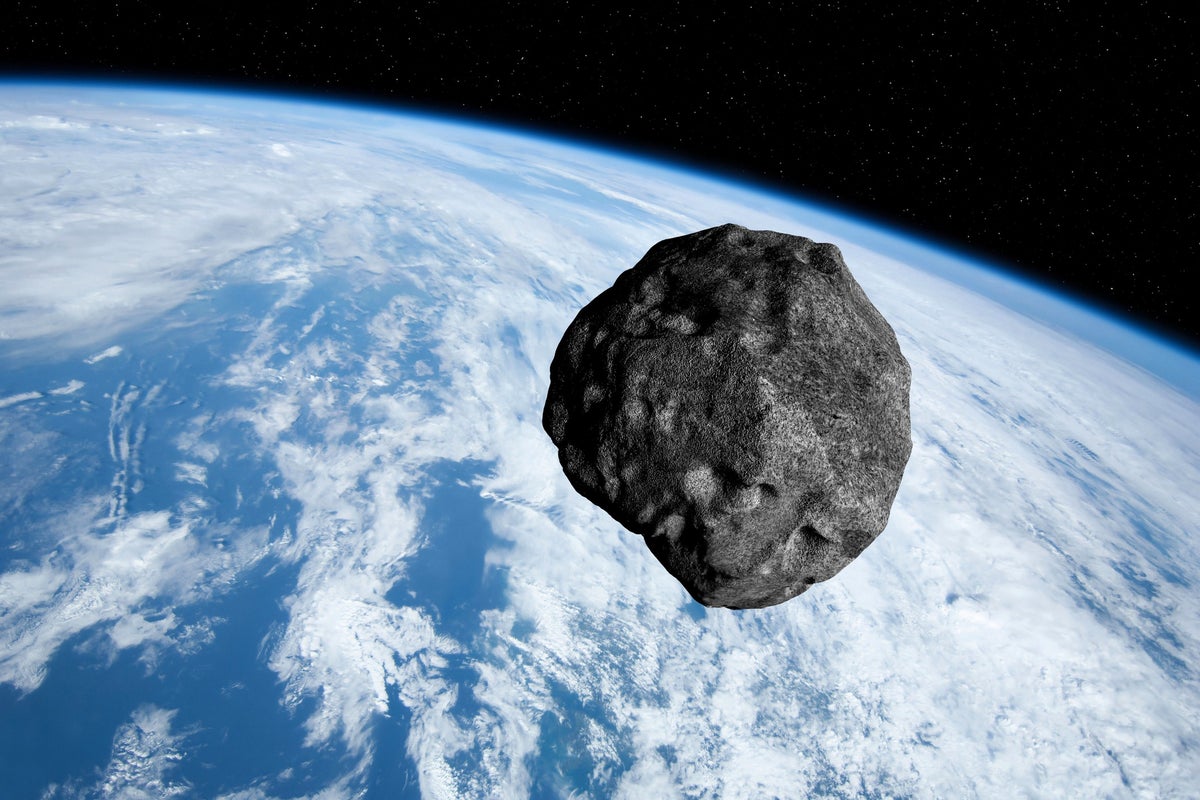
Asteroid 2026 QQ8: Earth’s New Mini-Moon
In an exciting development for astronomers, a new mini-moon, officially designated as Asteroid 2026 QQ8, is now orbiting Earth. This small celestial body was captured by our planet’s gravitational pull in April 2026, entering a short-term orbit that is expected to last until it escapes back into space in 2027.
Discovery and Characteristics
Asteroid 2026 QQ8 was first detected by Hungarian astronomer Kriztián Sárneczky, noted for his contributions to asteroid hunting. Initially observed in August, the discovery was corroborated and reported by the International Astronomical Union’s Minor Planet Center.
With a diameter of approximately 2 meters, this mini-moon poses no threat to Earth; any direct collision would likely see it incinerated by the atmosphere.
Orbital Path and Proximity
This asteroid typically completes an orbit around the Sun every 359 days, making close approaches to Earth roughly every decade. During its current orbit, Asteroid 2026 QQ8 will come closest to Earth at a distance of about 568,000 kilometers (353,000 miles), which is approximately 1.5 times the average distance from the Earth to the Moon.
Temporary Moons: A Common Occurrence
The occasional capture of small asteroids by Earth’s gravity is not a rare event. A study conducted last year suggested that there could be as many as six temporary mini-moons orbiting Earth simultaneously. These mini-moons might occasionally break off from larger celestial bodies during impact events, serving as fascinating examples of the dynamics of our solar system.
One known example is Kamoʻoalewa, a 40-meter asteroid discovered in 2016, believed to be a quasi-satellite of Earth and sharing similarities with lunar materials, hinting at a possible origin from the Moon.
Understanding Near-Earth Objects (NEOs)
Near-Earth Objects like Asteroid 2026 QQ8 typically have lifespans ranging from 1 to 10 million years, though some can persist for up to 150 million years. The study of these bodies is crucial for understanding their origins, their potential hazards, and their role in the formation of terrestrial planets and their satellites.
