Close Menu
Newsward
  • World
  • US
    • Politics
  • Tech
    • Science/Tech
  • Money
    • Business and Market Watch
    • Crypto
    • Career
  • Health
    • Fitness
  • State of Women
  • Opinion
  • Sports
    • NFL
    • MLB

Subscribe to Updates

Get the latest creative news from FooBar about art, design and business.

What's Hot

Sony’s new PlayStation Portal handheld includes ‘additional’ internal storage

November 9, 2026

Trump questions midterm election results after Democrats win

November 9, 2026

North Korea is minting meme coins to launder the Binance hack

November 9, 2026
Newsward
  • World
  • US
    • Politics
  • Tech
    • Science/Tech
  • Money
    • Business and Market Watch
    • Crypto
    • Career
  • Health
    • Fitness
  • State of Women
  • Opinion
  • Sports
    • NFL
    • MLB
Subscribe
Newsward
Home » Hubble finds dwarf galaxies are missing most of their oxygen
Science/Tech

Hubble finds dwarf galaxies are missing most of their oxygen

Kabil Bendress<span class="bp-verified-badge"></span>By Kabil BendressNovember 9, 2026No Comments3 Mins Read
Facebook Twitter Pinterest LinkedIn Tumblr WhatsApp VKontakte Email
Hubble finds dwarf galaxies are missing most of their oxygen
Share
Facebook Twitter LinkedIn Pinterest Email

How Dwarf Galaxies Lose Oxygen: Insights from Hubble’s Research

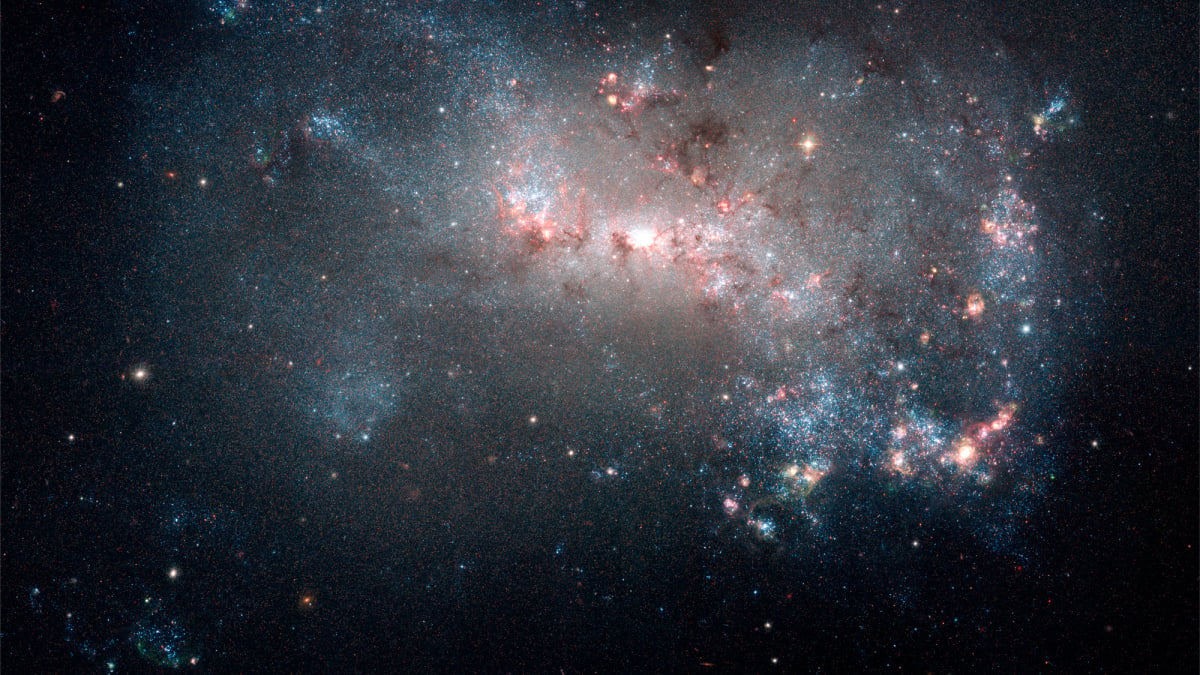
Recent research using NASA’s Hubble Space Telescope has unveiled a striking phenomenon: most of the oxygen generated by stars in small galaxies known as dwarf galaxies is expelled into space. A detailed examination of 37 nearby dwarf galaxies, each containing anywhere from a few thousand to hundreds of millions of stars, revealed that these galaxies retain, on average, only about 11% of the oxygen they produce over time. The best-performing among them managed to keep around 25%, while some absorbed as little as 4%.

Understanding the Mechanism of Oxygen Loss

The loss of oxygen can be primarily attributed to the explosive deaths of massive stars, known as supernovas. These cataclysmic events generate powerful winds that can propel gas—including oxygen—far beyond the gravitational reach of dwarf galaxies, which inherently have weaker gravitational fields compared to larger galaxies.

Research Initiatives: The GLOW Project

A project titled Galaxies Losing Oxygen via Winds (GLOW) is underway to track the movement of oxygen, not just within stars but also through interstellar gas and into the vast spaces between galaxies. This project leverages oxygen due to its abundance—second only to hydrogen and helium—making it an effective indicator for understanding how galaxies recycle materials. “So, it’s really for practical reasons that we’ve chosen oxygen,” said Kristen Wingfield McQuinn, the GLOW principal investigator.

The Methodology Behind the Findings

The astronomers utilized Hubble’s refined imaging capabilities to observe individual stars within these dwarf galaxies, which are typically too distant for such detailed observation. By analyzing the star formation history in each galaxy, the team estimated the total oxygen production and subsequently assessed how much remained.

Key Findings

  • Most of the remaining oxygen exists in the gas surrounding galaxies rather than within their stars.
  • Galaxies situated in densely populated regions or within proximity (approximately 3 million light-years) of larger galaxies tend to retain more oxygen.
  • Nearby gas may help recapture some of the lost oxygen or assist in gathering oxygen expelled by neighboring galaxies.

Challenges in Tracking Oxygen Dispersal

Despite these findings, the ultimate fate of much of the oxygen produced remains a mystery. Previous studies have suggested that only 1% to 7% of oxygen from these dwarf galaxies resides in the surrounding hot gas halos, and it’s estimated that these halos might hold up to a third of the total oxygen generated. The rest likely disperses into intergalactic space, but definitive conclusions are yet to be drawn.

Future Research Directions

McQuinn, who is also involved in the science operations for the upcoming Nancy Grace Roman Space Telescope, intends to explore even smaller and less visible galaxies. With support from both Hubble and the James Webb Space Telescope, the team aims to provide further insights into the role of massive stars in oxygen generation and dispersal.

If most of the oxygen does escape into outer space, it would suggest that some of the universe’s smallest galaxies are significant contributors to the distribution of this vital element, effectively ‘seeding’ the cosmos with the oxygen essential for life on Earth.

dwarf Finds galaxies Hubble missing oxygen
Share. Facebook Twitter Pinterest LinkedIn Tumblr WhatsApp Email
Previous ArticleBlades Brown, 19, becomes youngest PGA Tour winner since 1938
Next Article Is NC turning blue? Not so fast. What this year’s election results mean for 2028 :: WRAL.com
Kabilbendress0
Kabil Bendress

Related Posts

Finally! Physicists Create an Exotic Quantum State of Matter That Works at Room Temperature : ScienceAlert

November 9, 2026

Nasa seeks next generation of astronauts to live and work on the moon | Nasa

November 8, 2026

Moon phase today explained: What the Moon will look like on November 8, 2026

November 8, 2026

Send your name to Saturn’s moon Titan with NASA’s upcoming Dragonfly mission

November 8, 2026

Top Articles

AI translation sounds convincing, but it can be riddled with hidden errors

November 2, 2026

Apple iPhone 18 Pro Max vs. iPhone 17 Pro Max

October 6, 2026

The Fight for the Future of Democratic Foreign Policy

November 3, 2026

Outraged gym-goers call out luxury fitness studios for relying on clients to clean equipment

October 30, 2026

Don't Miss

Technology

Sony’s new PlayStation Portal handheld includes ‘additional’ internal storage

By November 9, 20260

Sony to Launch Enhanced PlayStation Portal in Japan On December 10, Sony will introduce a…

Trump questions midterm election results after Democrats win

November 9, 2026

North Korea is minting meme coins to launder the Binance hack

November 9, 2026

Leak reveals details for more iPhone 18 models launching early 2027

November 9, 2026

Subscribe to Updates

Subscribe to our newsletter and stay updated with the latest news and exclusive offers.

About Us
About Us

NEWSWARD is an independent news and media company covering the economy, politics, international affairs, and a changing world. Through articles, podcasts, video, and candid conversations, we connect major events to their impact on your life, your livelihood, and your future.

Our purpose is simple: help you understand what matters, think critically, and make informed decisions.

See what’s happening now. Know what’s next.

Don't Miss

Sony’s new PlayStation Portal handheld includes ‘additional’ internal storage

November 9, 2026

Trump questions midterm election results after Democrats win

November 9, 2026

North Korea is minting meme coins to launder the Binance hack

November 9, 2026
Most Viewed

AI translation sounds convincing, but it can be riddled with hidden errors

November 2, 2026

Apple iPhone 18 Pro Max vs. iPhone 17 Pro Max

October 6, 2026

The Fight for the Future of Democratic Foreign Policy

November 3, 2026
  • About Us
  • Contact Us
  • Privacy Policy
  • Terms and Conditions
  • Disclaimer
© 2026 Newsward. All Rights Reserved.

Type above and press Enter to search. Press Esc to cancel.