


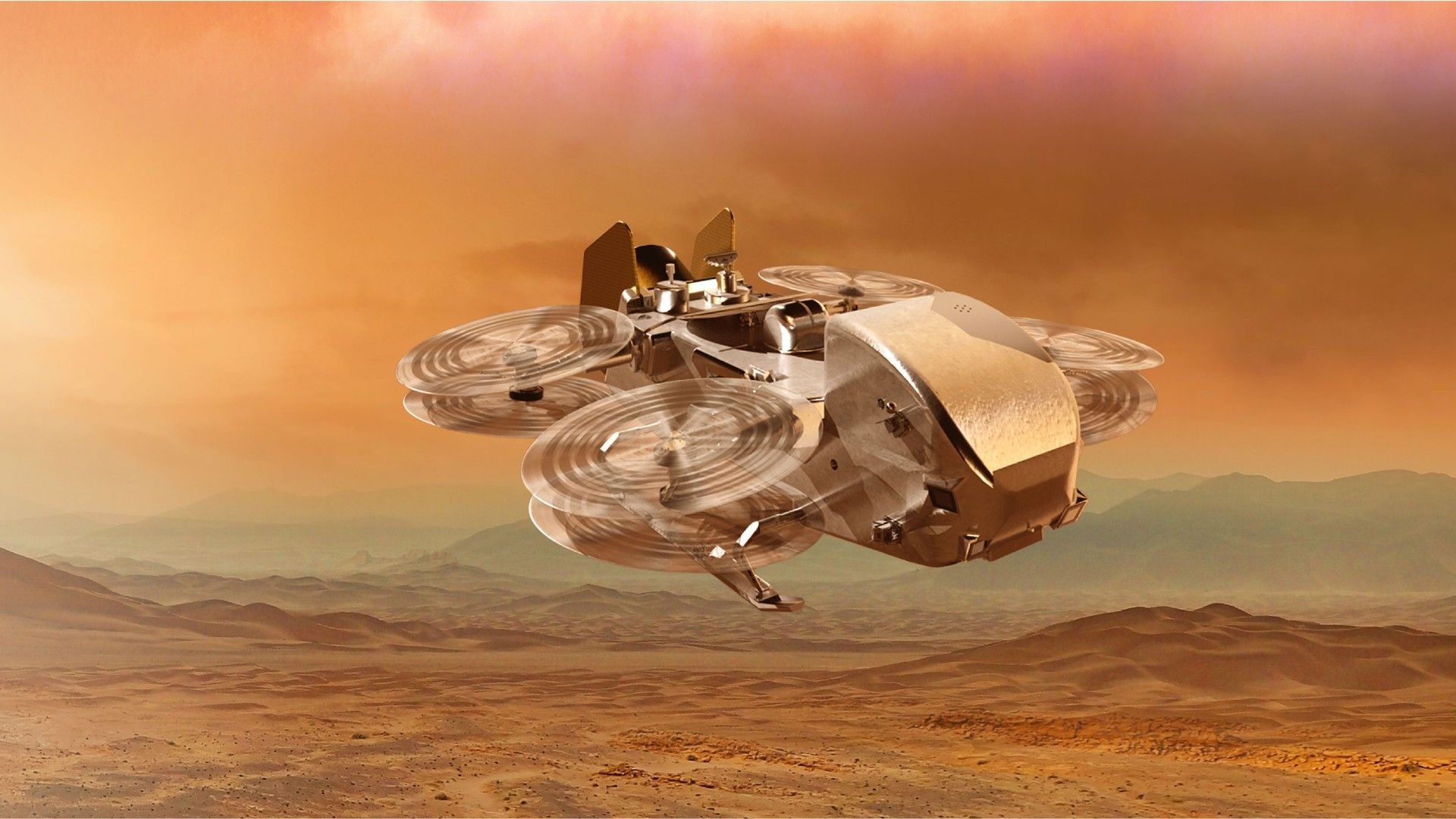
NASA’s Dragonfly Mission: Exploring the Mysteries of Titan
NASA is initiating an ambitious exploration of Titan, Saturn’s largest moon, through its upcoming mission named Dragonfly. This innovative rotorcraft, comparable in size to an SUV and powered by nuclear energy, is set to launch in 2028 with the goal of uncovering the moon’s potential for hosting life.
Participate by Sending Your Name to Titan
In an engaging initiative to involve the public, NASA has created a platform where individuals can submit their names to be carried on Dragonfly. These names will be etched onto a chip attached to the spacecraft during its assembly. The deadline for submissions is January 15, 2027.
Mission Objectives and Journey to Titan
Set for arrival on Titan in 2034, the Dragonfly mission plans to explore the moon’s diverse geological features, including rivers, lakes, and organic material-rich landscapes. According to NASA, the mission boasts an extraordinary itinerary, as the rotorcraft will transport itself across significant distances on Titan’s surface.
Flight Capabilities and Science Goals
Dragonfly aims to revolutionize space exploration through aerial surveys, making it one of the very few flying crafts designed for use on another celestial body. This mission follows the success of NASA’s Ingenuity mini-helicopter, which has demonstrated that powered flight is feasible in extraterrestrial environments. While Ingenuity was initially intended for five flights, it has exceeded expectations with 72 flights as of January 2024.
Dragonfly is expected to conduct approximately one flight every Titan day, or “Tsol,” which lasts about 16 Earth days. This will allow the rotorcraft to visit a wide range of geological sites, collecting and analyzing samples using its sophisticated suite of instruments.
Investigating Titan’s Potential for Life
The science objectives of the Dragonfly mission are particularly compelling. Researchers aim to investigate:
- Prebiotic chemistry – conditions that existed prior to the emergence of life.
- The past habitability of Titan.
- Possible chemical indicators of life, primarily related to water or hydrocarbons.
Historical Context: Previous Missions to Titan
Dragonfly’s venture is not the first to Titan; it follows the Huygens probe that landed on January 14, 2005, after being deployed from the Cassini spacecraft. Huygens provided invaluable data on Titan’s atmosphere and surface conditions. Additionally, Cassini conducted over 100 flybys of Titan, enriching our understanding of this enigmatic moon.
Conclusion: The Future of Titan Exploration
With its unique capabilities and ambitious objectives, Dragonfly represents a major step forward in planetary exploration. By exploring Titan’s intriguing geological features, NASA hopes to unlock secrets that could illuminate the conditions necessary for life beyond Earth.
