


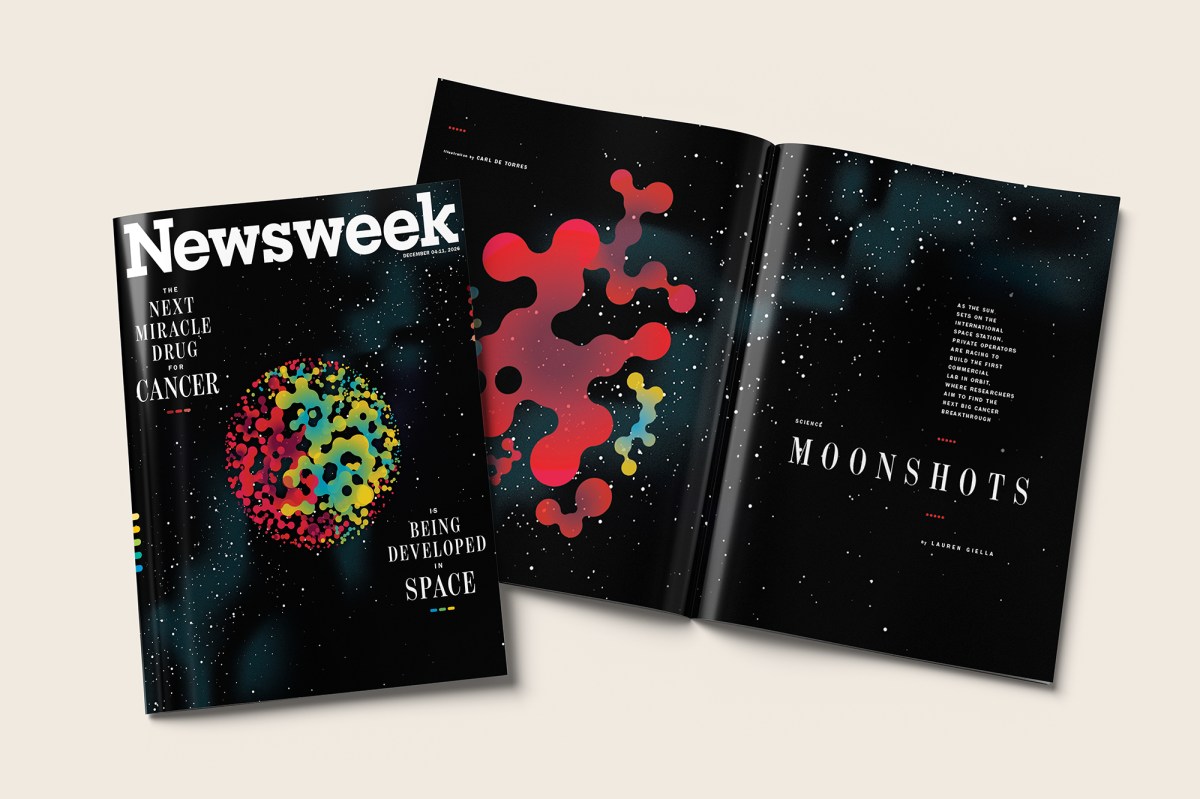
Advancements in Cancer Treatment via Space Research
Innovation in Cancer Therapy: The Role of Keytruda
Keytruda has become a pivotal treatment for patients battling various forms of cancer, effectively addressing over 20 types. Initially administered as an intravenous infusion every few weeks, recent developments have streamlined this process into a simple injection, enhancing both accessibility and patient comfort.
Transformative Developments from Space Research
Paul Reichert, a scientist involved in the evolution of Keytruda at Merck & Co, noted, “You can get that in a doctor’s office in a little under five minutes. It cuts the cost of delivery down in half. Not only that, but it improves the actual adherence and quality of life.” He highlighted that this significant innovation owes its origins to research conducted in the unique environment of space.
This research, conducted aboard the International Space Station (ISS), revealed that a formulation of Keytruda could be improved significantly in microgravity. Ariel Ekblaw, CEO of Aurelia Institute, explained, “They took a formulation of Keytruda to the International Space Station, did some research, discovered that they could get a more pure formulation of the drug—a better crystalline structure, more homogenous—that let them take it from an IV drug to a shot.” This advancement has not only optimized clinical administration but also enhanced the overall experience for cancer patients.
The Unique Advantages of Microgravity
Microgravity provides a distinct setting that allows for groundbreaking research. In the absence of gravitational forces, cellular behaviors can be studied without the usual constraints posed by buoyancy and sedimentation on Earth. According to Dr. Michael Roberts, chief scientist at the ISS National Lab, “That is important not only for manufacturing drugs but also [to] lead to the improvement in formulation.”
As cells form in three-dimensional structures in microgravity, researchers can create organoids that closely mimic human organs, facilitating a deeper understanding of drug interactions and efficacy.
Future of Cancer Research and Drug Development in Space
The International Space Station has become a laboratory for innovations in cancer treatment, collaborating with various institutions including NASA and the National Institutes of Health. With over 4,000 experiments conducted in orbit, the potential for applying discoveries made in space to improve health outcomes on Earth is significant.
Jennifer Buchli, chief scientist for NASA’s Low Earth Orbit Program, emphasized that “NASA uses the space station as a proving ground for innovation and to open the door to more possibilities to biopharma research and development not available on Earth.” There is an optimism surrounding the shift towards commercial endeavors in low Earth orbit, as the ISS is set to be decommissioned by 2030.
Commercialization in Space Research
The transition toward commercial space stations opens new avenues for research, with private entities poised to explore in-space manufacturing. Companies like Varda, which focuses on aerospace and life sciences, are pushing the boundaries of what is possible in microgravity environments. They are currently testing how microgravity can enhance the solubility of drugs, particularly for challenging cancer treatments.
The growing landscape of commercial firms is crucial. SpaceX has revolutionized access to space with reusable rocket technology, reducing costs and increasing the frequency of research missions. As regulations surrounding commercial space launch become more streamlined, the potential for rapid advancements in biopharmaceutical research is substantial.
Looking Ahead: Space as a New Frontier in Medicine
As the foundation for drug development continues to evolve beyond Earth, experts like Arun Sharma see immense potential. Sharma’s work with stem cells and organoids aims to leverage microgravity to model human biological responses more effectively, paving the way for new cancer therapies.
Reichert reflects on the unique opportunity presented by space exploration, remarking, “This is a unique opportunity for humankind… It opens up people’s minds in a different way.” With the convergence of innovative research and commercial capabilities, the next decade may witness breakthroughs that not only tackle cancer more effectively but also enhance our understanding of health and disease in unprecedented ways.
