


Marine Corps Aims for 40 Amphibious Ships to Boost Global Readiness
The U.S. Navy and Marine Corps are advocating for an increase in their amphibious fleet, aiming for a total of 40 ships to ensure effective deployment of three Marine Expeditionary Units (MEUs) simultaneously. Currently, the Navy possesses 31 amphibious vessels, which meets the statutory minimum set by Congress. There is now a strong initiative to persuade lawmakers to enhance this fleet size.
Understanding Marine Expeditionary Units (MEUs)
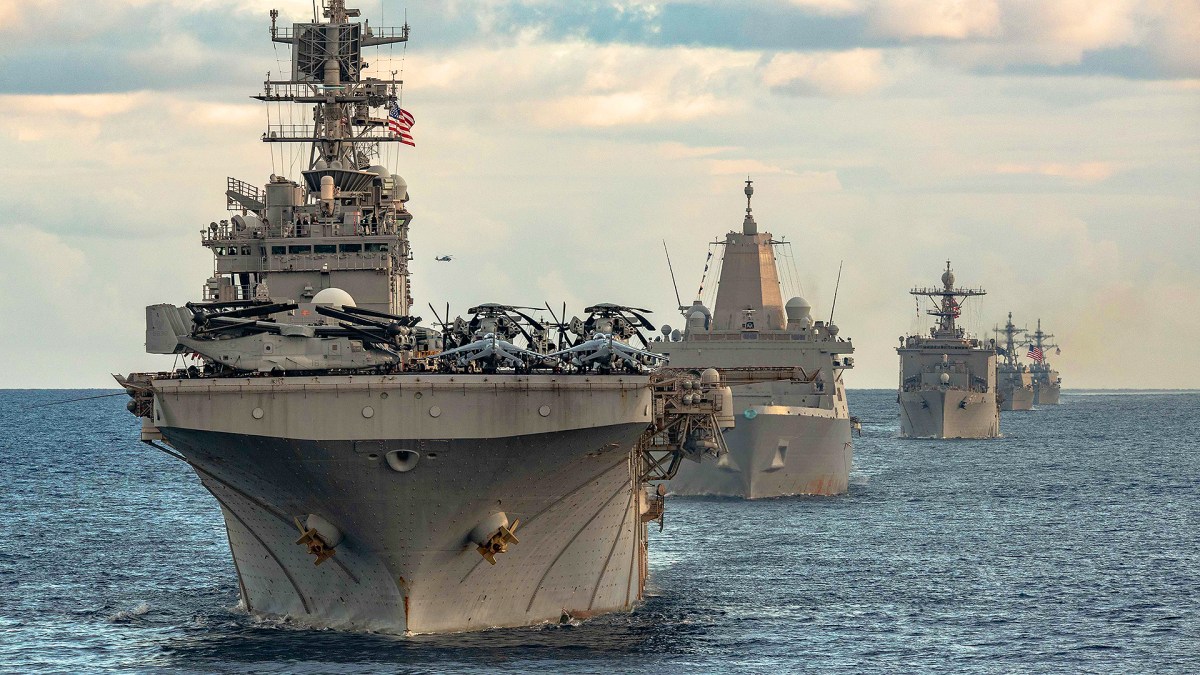
Each MEU comprises approximately 2,200 Marines and typically embarks on Amphibious Ready Groups (ARGs). These ARGs commonly consist of an assault ship along with two transport docks or dock landing ships. Additional support can be provided by surface combatants and, in certain scenarios, a nuclear fast attack submarine, all forming a larger Expeditionary Strike Group.
Strategic Goals and Leadership Perspectives
According to Marine Corps Commandant Gen. Eric Smith, establishing a robust presence through the 3.0 ARG/MEU is a primary objective. Shon Brodie, the director of Maritime Expeditionary Warfare at the Corps’ Combat Development and Integration Directorate, emphasized that Gen. Smith’s vision is to deliver a well-trained MEU consistently from the East and West Coasts, as well as from Japan.
To implement this strategy, Vice Chief of Naval Operations Adm. James W. Kilby and Assistant Commandant of the Marine Corps Gen. Bradford J. Gering have collaboratively assessed the number of ships necessary based on current operational readiness. Their analysis concludes that achieving the 3.0 presence requires a fleet comprising 40 ships—13 of which should be larger assault vessels and 27 amphibious transport docks (LPDs).
The Changing Landscape of Amphibious Warfare
Amphibious ships have evolved significantly over the past decade, with current MEUs acquiring capabilities that in limited circumstances allow them to perform roles traditionally held by aircraft carrier strike groups. The integration of MV-22 tiltrotors and F-35B Joint Strike Fighters within a “Lightning carrier” configuration has greatly expanded the operational scope of these units.
Recent discussions led by the Amphibious Force Readiness Board (AFRB) have finalized these amphibious fleet requirements. Brodie acknowledged the necessity for additional amphibious assault ships, which are essential to the Marine Corps’ operational capabilities.
Current Ship Availability and Future Plans
Presently, the Marine Corps operates nine amphibious assault ships, which is below the mandated ten—after the USS Bonhomme Richard (LHD-6) was decommissioned following a significant fire incident. The Corps seeks to increase this requirement from ten to thirteen big deck amphibious assault ships.
Challenges Ahead in Shipbuilding
Achieving the goal of a 40-ship fleet represents a significant shift in strategy compared to previous guidance from former Commandant Gen. David Berger, who had proposed a reduction in amphibious assault ships in favor of smaller vessels. The increasing threat to large ships from advanced weaponry necessitates a reevaluation of the fleet’s composition.
Brodie remarked, “The only way for me to realistically increase that inventory is for me to build new ships and do a service-life extension on some of the selective ships that I currently have in the inventory.” With a request set to be presented to Congress, the timeline for realizing the 40-ship goal remains flexible and heavily dependent on future appropriations.
Financial Implications and Resource Allocation
Recent funding discussions may encounter opposition, particularly in light of a recent shift in congressional control. The anticipated $1.5 trillion defense budget for Fiscal Year 2027 includes substantial allocations, but challenges may arise as budget scrutiny intensifies and comprehensive reviews of national defense strategies ensue.
The operational demands on the Navy have further complicated planning, with the service currently facing a shortage of combat-capable surface vessels. A lack of readiness within the amphibious fleet has also been acknowledged, characterized by a 47% readiness rate as of April, primarily due to chronic maintenance issues, budget constraints, and procurement challenges.
Conclusion
The commitment to expanding the amphibious fleet to meet modern military challenges is both ambitious and necessary. However, the path ahead is fraught with obstacles, including financial limitations and the complexities of maintaining existing vessels. The need for a balanced approach to resource allocation will be critical as the Navy and Marine Corps strive to fulfill their strategic objectives.
For further inquiries, contact the author at: howard@twz.com