


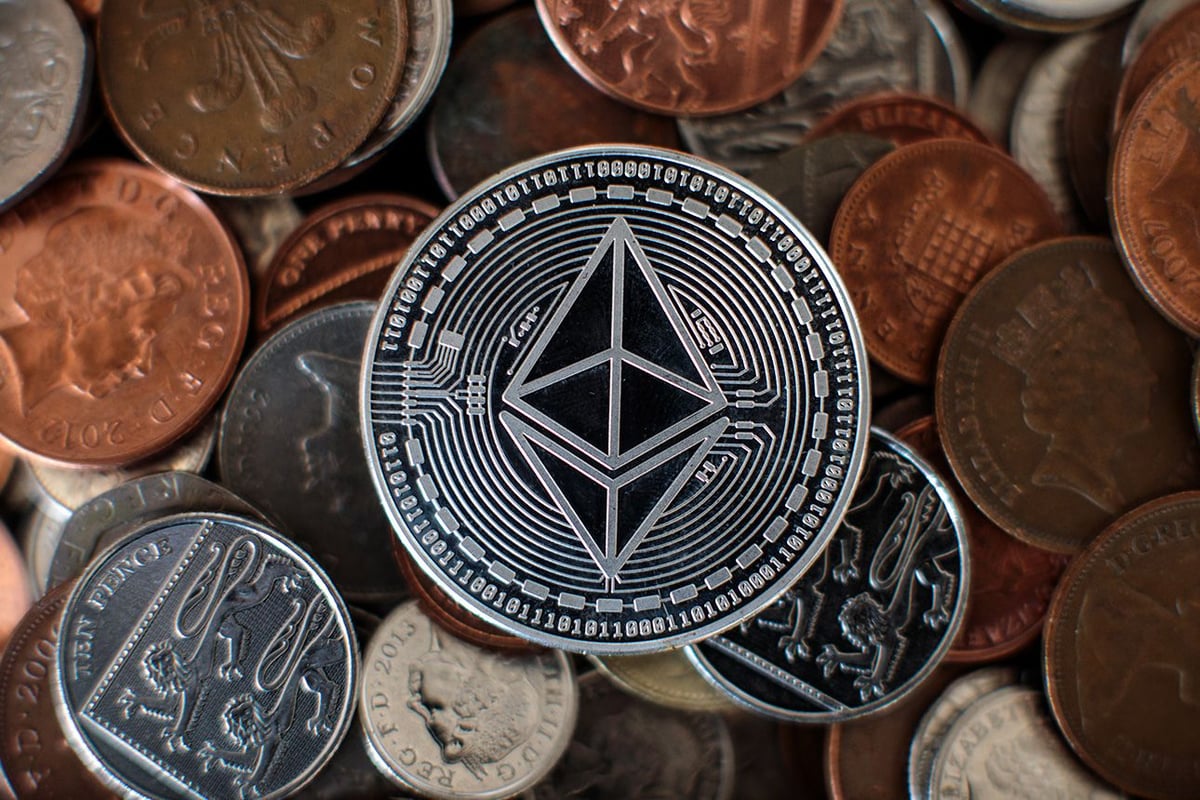
The discussion around Ethereum’s (ETH) value has shifted, as co-founder Vitalik Buterin indicates a departure from traditional metrics tied to transaction fees.
By Alex Carchidi – Nov 18, 2026 at 7:10AM EST
Overview of Changes in Ethereum’s Valuation Approach
Vitalik Buterin has articulated a new valuation framework for Ethereum that shifts focus away from fee revenue.
The new framework prioritizes attributes that enhance its function as a store of value.
If you invested in Ethereum under the assumption that transaction fees would reduce supply and increase the price, it may be prudent to reconsider your investment strategy. In a recent thread on X (formerly Twitter), Buterin emphasized that the value of Ethereum should not solely hinge on transaction fees but rather on a range of factors that contribute to its utility and scarcity.
A New Philosophical Perspective on Ethereum’s Value
Buterin has proposed a conceptual framework characterized by what he coined as CROPS: censorship resistance, open-source code, privacy, and security. These elements, he argues, could potentially increase Ethereum’s value more effectively than merely basing it on transaction fees. The rarity of these attributes positions Ethereum advantageously within the cryptocurrency landscape.
Further supporting this notion, Buterin suggested that Ethereum should serve as a platform for hosting tokenized real-world assets (RWAs). By allowing various assets, such as Treasury bills, to exist as tokens on its blockchain, Ethereum could enhance its role as a medium of exchange, thus establishing a value transfer mechanism even if the transaction volume remains low.
Image source: Getty Images.
Should Investors Consider Selling Ethereum?
The significant pivot in Ethereum’s leadership perspective raises questions for investors who anticipated that the coin’s value would escalate due to transaction fee mechanisms that reduce supply through coin burns. Given that these fees have drastically decreased by 96% over the past five years due to various technological enhancements, reliance on fee revenue as a primary value driver appears outdated.
While Ethereum’s commitment to adoption remains intact, it seems that this growth will not center on maximizing fee revenue. Rather, the focus will shift to the aforementioned CROPS factors, which may be more challenging to quantify in terms of their contribution to value.
For those who invested in Ethereum with a broader thesis, the arguments for retaining their holdings are becoming increasingly complex. Nevertheless, Ethereum’s substantial foothold within the cryptocurrency market still signifies notable potential for growth despite the current reevaluation of its value metrics.
Where to Invest $1,000 Right Now
Our analysts have identified ten stocks with outstanding growth potential, outperforming the S&P 500 by a significant margin. Learn more by joining our Stock Advisor service today.
About the Author

Alex Carchidi is a contributing analyst at Motley Fool, focusing on healthcare and cryptocurrency. With a background in science and finance, he offers insights into biotech, pharma, and digital assets.
Alex Carchidi holds positions in Ethereum. The Motley Fool also holds positions in and recommends Ethereum.
