


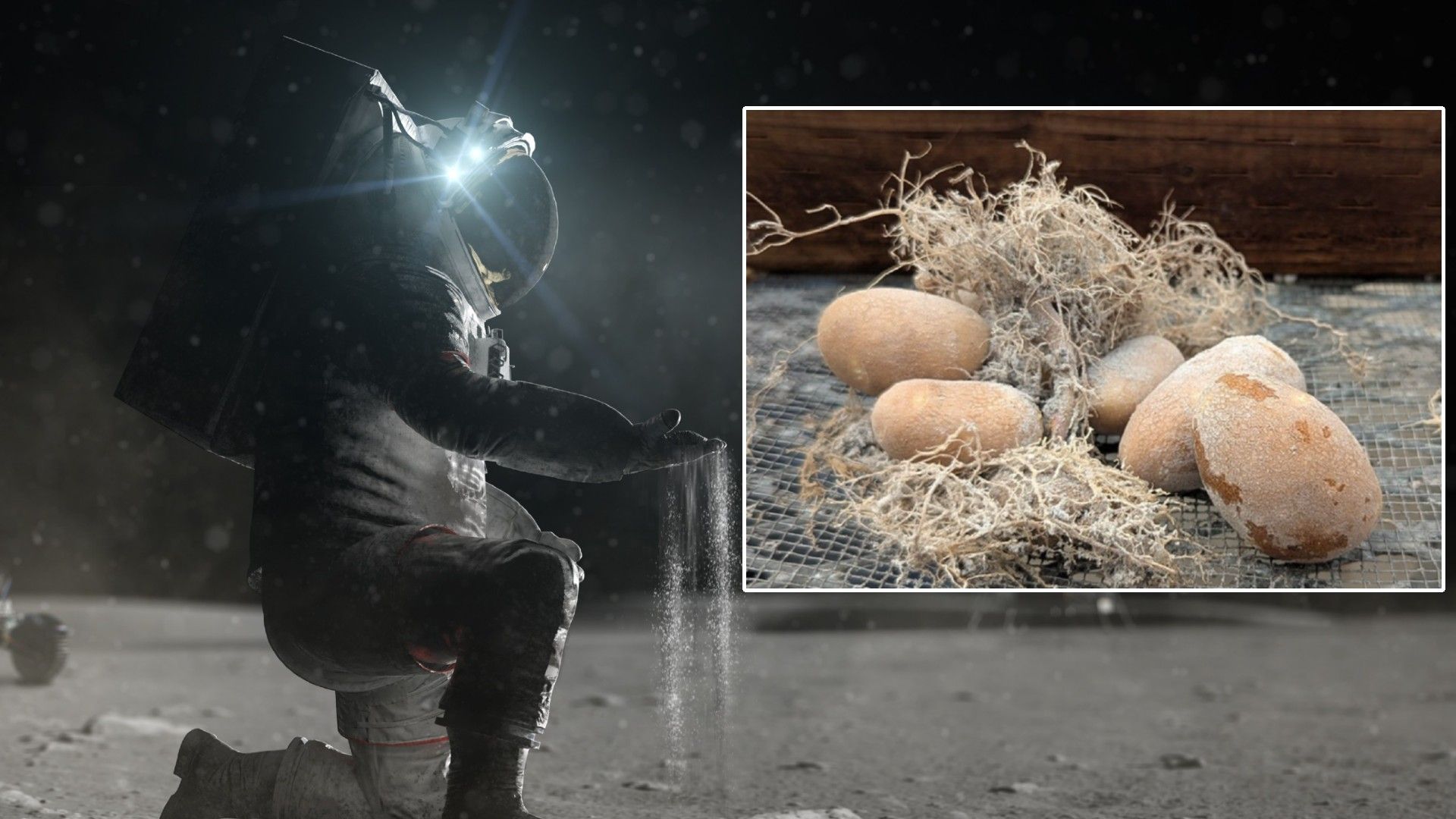
Growing Potatoes on the Moon: A Step Toward Sustainable Lunar Habitats
NASA aims to establish a long-term human presence on the moon, including the construction of habitats where astronauts can live. A critical aspect of this endeavor is ensuring a reliable food supply, which has led researchers to investigate the feasibility of cultivating food on lunar soil.
Research Overview
A team from Oregon State University’s College of Agricultural Sciences has made significant strides in this area by successfully growing potatoes in simulated lunar soil. Their findings, published on November 20 in the journal Microgravity Science, provide a promising glimpse into future lunar agriculture.
Key Findings
According to Aymeric Goyer, an associate professor at OSU’s Department of Botany and Plant Pathology, “We found that potatoes can complete their entire life cycle in simulated lunar soil when supplemented with organic matter.” This development represents an essential progress towards creating sustainable food production systems for long-term lunar exploration.
Experiment Details
The researchers conducted their experiments using five different materials designed to mimic the unique characteristics of lunar regolith—the powdery substance covering the moon’s surface. By simulating both lunar mare and highland regions, they aimed to replicate the diverse soil types found on the moon.
In their approach, the scientists identified vermicompost, a nutrient-rich organic material, as a crucial component. Adjusting the mixture, they found that utilizing 30 percent vermicompost mixed with simulated regolith successfully supported potato growth, comparable to traditional soil conditions.
Addressing Lunar Soil Toxicity
“We believe the compost helps balance some of the toxicity we see in lunar regolith by reducing plant exposure to harmful compounds,” stated David Handy, a postdoctoral researcher involved in the study. This finding suggests a feasible method for astronauts to cultivate food on the moon during their missions.
Future Implications
The potential for growing food on the moon is significant, as it could drastically decrease the costs and logistics of transporting food supplies from Earth. The research suggests that astronauts could supplement the lunar dust with nutrient-rich soil, allowing them to grow their food effectively.
This study was supported by NASA funding, highlighting the importance of sustainable practices in future space missions.
