


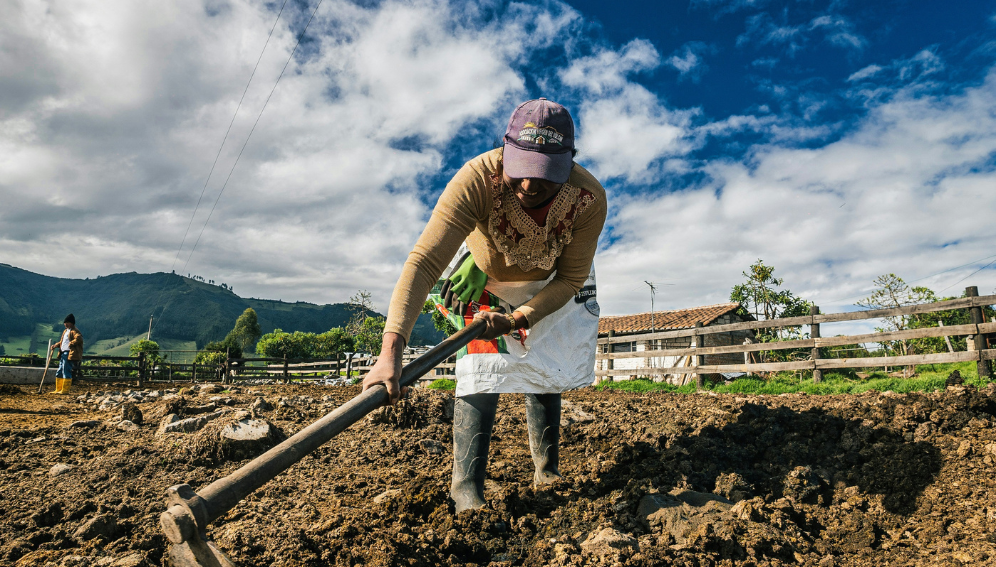
Breaking Barriers: Empowering Women in Agriculture through Digital Innovation
Investment Needs for Women’s Full Participation
As multiple global crises exacerbate existing inequalities, Shobha Shetty, a senior agricultural adviser at the World Bank, emphasizes the necessity for both public and private investments to dismantle financial obstacles that prevent women from fully leveraging digital technologies and artificial intelligence (AI) in agriculture.
The Risk of Exclusion Amidst Crises
Shetty expresses concern that women’s access to digital resources is often quantified without understanding the nuances of their needs. A recent report released by the CGIAR highlights that without targeted efforts to secure rights to land, water, and digital tools, women may fall further behind in the face of intersecting challenges like climate change and food insecurity.
Current Agricultural Challenges Faced by Women
According to Shetty, ongoing conflicts, such as those in Ukraine and the Middle East, alongside natural disasters like the severe El Niño this year, place enormous pressure on smallholder farmers, particularly women. A World Food Programme report reveals that approximately 645 million people worldwide are grappling with food insecurity, underlining the urgent need for effective interventions.
The Importance of Access and Empowerment
Merely increasing the number of women using digital agricultural tools, such as AI for climate monitoring and pest control, is insufficient. Shetty insists that women must also have the means to afford these technologies and have input in their development.
Shetty argues, “We need to look at what we have to do to ensure that investments in digital agriculture really benefit more women, rather than just talking about how many women we reached.”
Gender Disparities in Agricultural Labor
The CGIAR report notes that women constitute 38% of the global agricultural workforce and 41% of the off-farm agrifood workforce in low- and middle-income countries. However, systemic barriers still hinder their productivity and decision-making power. The report, titled Advancing Equality, Transforming Futures, advocates for solutions co-designed with women and tailored to their realities.
Innovative Financing Solutions
Shetty shares insights from a World Bank initiative in Ethiopia that employed psychometric testing to evaluate women entrepreneurs for loans. This method allowed women, often lacking traditional collateral, to secure funds more effectively. “Over three years, 89 percent of women offered the product borrowed formally, compared with 42 percent in a comparison group,” Shetty reported.
This innovative approach not only improved loan access but also enhanced business resilience during crises like COVID-19 and regional conflicts.
Effective Use of Financial Tools
A study highlighted by Shetty from Uganda indicates that women receiving loans through mobile money channels yielded 15% higher profits compared to those who were paid in cash. “Providing an account while still paying in cash did not really provide the same sort of benefit because women have less control over it,” she explained.
To transform agricultural finance for women, Shetty advocates for linking accessible information with economical products and repayment schedules that align with farmers’ incomes.
Transitioning from Access to Empowerment
Shobha Shetty emphasizes the need for projects to move beyond mere beneficiary counts to tackling specific gender inequalities and recognizing meaningful change. One example is a GAFSP initiative in Bangladesh that has empowered women members of a local potato cooperative by introducing them to the FAO’s RuralInvest digital tool for financial management. This not only vested them with responsibility for financial records but also helped them understand the agribusiness landscape.
Strategic Investments for Sustainable Impact
Since its inception in 2010, the Global Agriculture and Food Security Program (GAFSP) has dedicated nearly $2.5 billion to over 300 projects in low-income countries, focusing on aiding women, who make up 41% of its beneficiaries. Their recent initiatives, including a new Business Investment Financing Track, aim to mobilize additional private and public sector investments to further enhance women’s roles in agriculture across various nations.
Conclusion
Shetty underscores the pressing need for innovative financial mechanisms alongside traditional funds, especially in light of significant reductions in overseas aid. “Leveraging private and public sector capital is critical to making the pie larger for everyone,” she concluded.
