


Mississippi Senate Race: A Historic Contest and Closely Watched Ballot Count
In a highly competitive Senate race in Mississippi, fewer than 2,000 votes separate incumbent Senator Cindy Hyde-Smith and her challenger, Scott Colom, a Democratic district attorney. As of Thursday afternoon, Colom maintained a lead of 1,813 votes, marking a potentially significant shift in Mississippi’s political landscape.
Historical Significance
If successful, Colom would become the first Black senator from Mississippi since the Reconstruction era. His candidacy has garnered considerable attention, particularly because Mississippi has not elected a Democratic senator in over 40 years.
Current Standing and Ongoing Counting
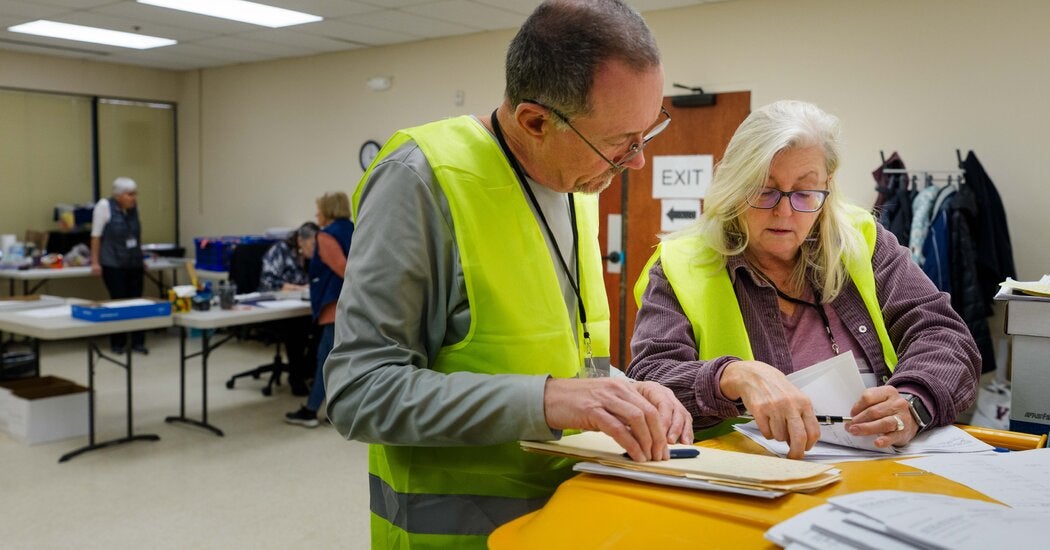
On an election day marked by historic outcomes for Democrats, Mississippi and Alaska remain the only states where Senate races are undecided. The counting of votes has attracted legal teams, campaign operatives, and media to county election offices, with intense scrutiny on the process as officials tally ballots.
“I’m glad that the country is starting to see what Mississippi values look like and what Mississippi’s potential is,” Colom stated during a press conference in Jackson.
Affidavit Ballots and State Regulations
The race’s outcome could hinge on a considerable number of affidavit ballots, cast by voters lacking proper identification or listed as inactive. The Secretary of State, Michael Watson, reported that around 3,300 absentee-by-mail ballots are still outstanding, which must arrive within five business days of November 3 to be counted.
Mississippi law does not permit recounts in statewide elections, placing additional emphasis on the current vote counting. Election officials began processing ballots early Thursday morning, facing the pressures of national attention. “To me, everything is going well,” said Jermal Clark, a commissioner involved in the ballot counting.
Legal Scrutiny and Campaign Strategies
Amid this backdrop, tensions have escalated between the two campaigns. Republican lawyers have expressed concerns regarding the handling of affidavit ballots, demanding strict preservation measures. Colom’s legal team countered, arguing that such measures could lead to unlawful voter identification.
Mike Hurst, the chairman of the Mississippi Republican Party, emphasized the unprecedented nature of this election’s affidavit ballot situation: “We’ve never seen this before in Mississippi — we’ve never seen this volume of affidavit ballots around this state.”
Get Out the Vote Efforts
In response to the increased number of affidavit ballots, civil rights organizations have implemented initiatives to assist voters. Cassandra Welchlin, executive director of the Mississippi Black Women’s Roundtable, mentioned efforts to provide transportation for individuals needing to verify their ballots and urging them to follow up on their voting status.
Campaign Highlights
Colom’s campaign has energized the voting base, notably among Black voters, while managing to attract some support from disillusioned conservatives. The message encapsulated in his campaign slogan “Mississippi Matters” resonates widely. Conversely, Hyde-Smith received substantial financial backing from national Republican entities, with endorsements from figures such as former President Trump.
Both candidates faced distinct challenges; Colom skillfully utilized Hyde-Smith’s previous remarks against her in advertising efforts, suggesting a strategic pivot to appeal to frustrated voters. “Pick another protein? Pick another senator,” became a rallying cry leading up to the election.
Conclusion
The Mississippi Senate race highlights not only a closely fought electoral battle but also the dynamics of voter mobilization and legal strategies that are significant to the state’s future political landscape. As the counting continues, the nation watches closely to see if Mississippi will indeed welcome a new direction.
