


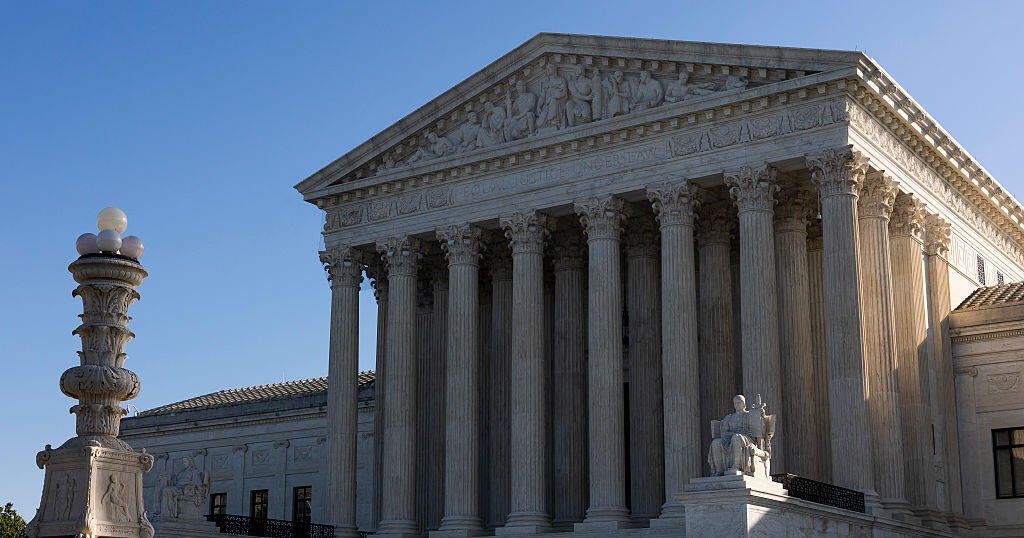
Potential Supreme Court Reforms Following Midterm Elections
As Democrats reclaim control of both the House and Senate, they are presented with a unique opportunity to advance legislation aimed at reforming the Supreme Court. This follows significant decisions from the court regarding contentious issues like abortion, presidential power, and voting rights.
Democratic Majority and Legislative Opportunities
With projections showing Democrats holding at least 54 seats in the Senate and around 250 members in the House, the legislative landscape has shifted. This newfound majority allows Democratic leaders to revisit proposals that previously stalled under Republican governance.
Focus on Reforms
House Democratic Leader Hakeem Jeffries, expected to be elected as speaker in January, has expressed concerns regarding the Supreme Court. In a communication to his colleagues, he stated, “We must root out corrupt price gouging, clean up the mess at the Supreme Court and ban Members of Congress from trading stocks. Accountability begins at home.”
Proposals for Supreme Court Reform
Throughout the years, various Democrat-led initiatives have sought to reshape the Supreme Court’s structure and accountability mechanisms. Among the most discussed proposals are:
- Ethics Reforms: Following reports on Justice Clarence Thomas’s undisclosed travel, legislation aimed at implementing an ethics code for the Supreme Court gained traction. Although a proposal by Senator Sheldon Whitehouse to instate these ethics requirements advanced in the Senate Judiciary Committee, it ultimately failed to reach a vote in the full Senate. Calls for an internal Office of Ethics Counsel have also emerged from various Democratic representatives.
- Term Limits: Some Democrats advocate for 18-year term limits for justices in an attempt to reduce political influence in judicial appointments. Several legislative proposals have been introduced to establish these limits, providing regular turnover in the Supreme Court.
- Expanding the Court: The number of justices on the Supreme Court is not fixed by the Constitution. Recent calls to expand the court, particularly in light of recent contentious rulings, have surfaced, proposing to increase the number of justices from nine to thirteen.
Challenges Ahead
Despite the Democratic majority in the House, significant hurdles remain, particularly in the Senate, where 60 votes are typically required to move legislation forward. With Democrats controlling 54 to 56 seats, bipartisan support will likely be essential for any comprehensive reforms to succeed.
Investigations and Oversight
Beyond reforms strictly related to the Supreme Court, a Democratic majority may also be equipped to investigate claims of judicial misconduct among federal judges. Recent accusations against some judges have raised concerns, prompting a potential push for enhanced accountability and ethical standards within the judiciary.
Conclusion
The changing composition of Congress offers Democrats a crucial chance to pursue reforms aimed at the Supreme Court, addressing ethical conduct and structural issues within the nation’s highest court. While intentions may be strong, the path to implementing these reforms will require navigating political complexities in a divided Senate.
