


New Insights into Fast Radio Bursts: Unraveling the Mystery of FRB 20240304B
Fast radio bursts (FRBs) have become one of the most enigmatic phenomena in astronomy, intriguing researchers since their discovery in 2007. These fleeting radio wave signals, often lasting mere milliseconds, have puzzled scientists as they seem to emerge spontaneously from various directions in space, eluding easy explanation.
A Glimpse into FRB 20240304B
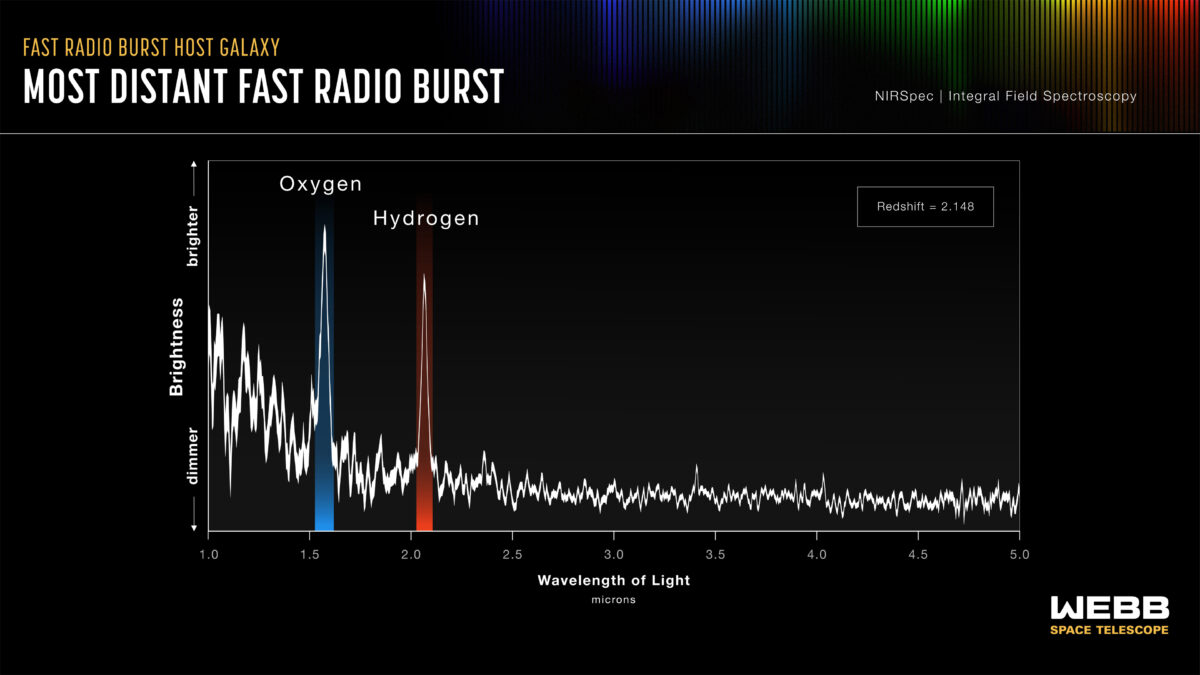
The most recent breakthrough involves FRB 20240304B, identified as the most remote FRB observed to date. This ancient signal was emitted in just one-thousandth of a second and has traversed a significant portion of the universe’s history, traveling for roughly 80% of the time since the Big Bang.
The Search for Origins
The origins of FRBs remain largely theoretical, sparking a variety of hypotheses about their generators. Lead author Manisha Caleb from the University of Sydney articulates, “What makes fast radio bursts interesting is that we don’t know what generates them. We have theories for what objects produce them, but we don’t have conclusive proof.”
One promising candidate for this specific FRB is a magnetar, an exceptionally dense neutron star known for its intense magnetic fields. While these celestial objects can emit immense energy—equivalent to 500 million suns in the blink of an eye—their energy output pales in comparison to phenomena like supernovae, complicating their classification and understanding.
“We observationalists can only kill models, never prove them. So, when you have 100 to kill, it takes a fair bit of time,” – J. Xavier Prochaska, an astronomer and astrophysicist at the University of California, Santa Cruz.
A Collaborative Investigation
Researchers utilized a coordinated global effort to analyze FRB 20240304B, employing a range of observatories to delve into the pulse emanating from what is termed ‘cosmic noon’—a period around 3 billion years after the Big Bang, characterized by peak star formation across the universe.
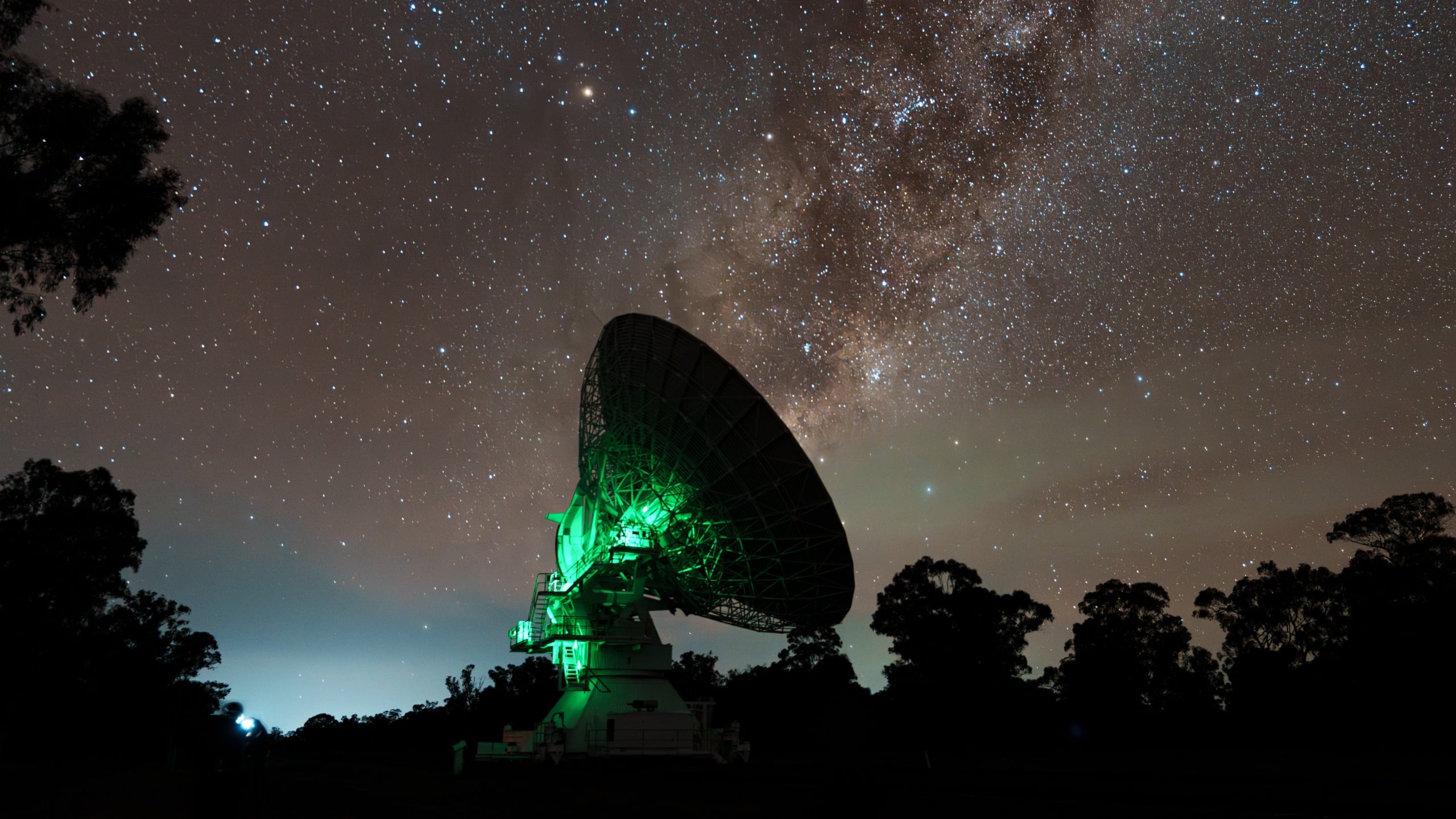
In March 2024, the MeerKAT radio telescope in South Africa first detected the burst. Attempts to locate its host galaxy using ground-based telescopes were met with disappointment; the area appeared unexpectedly vacant.
New Discoveries with Advanced Technology
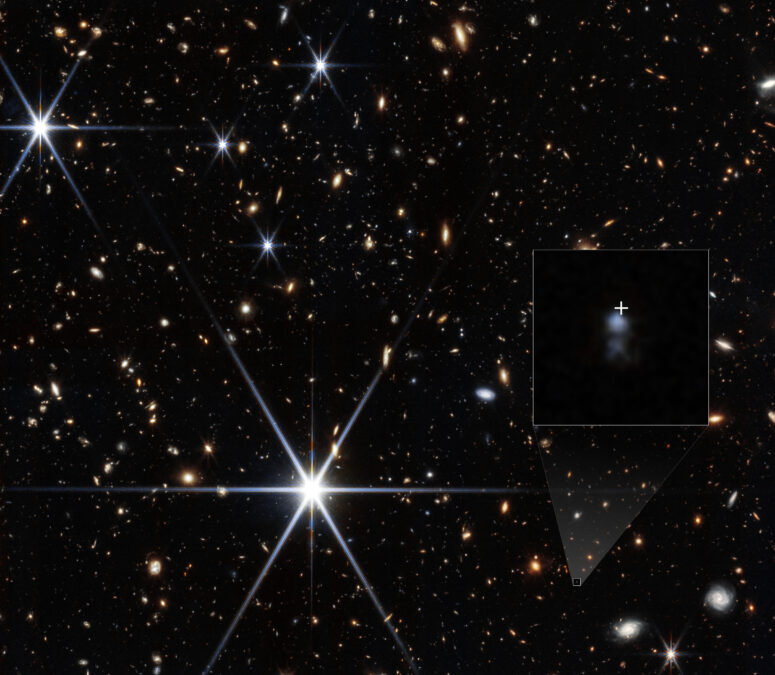
To further this inquiry, the research team turned to the James Webb Space Telescope (JWST), which ultimately identified the host galaxy of FRB 20240304B. Contrary to expectations, this galaxy was a dwarf type, significantly less massive than anticipated—about 1,000 times lower.
Implications for Cosmic Understanding
The discovery of this dwarf galaxy aligns with theories suggesting it is actively forming stars, with 90% of its current stellar mass generated in the last 30 million years. This observation supports the magnetar model as a likely source of the FRB.
Further alternatives, such as the collision of two neutron stars, remain unlikely within such a young galaxy context, as these stars typically interact over considerable timespans. With magnetars, rapid formation and energy release are more feasible, particularly in metal-poor galactic environments conducive to massive star creation.
FRBs as Cosmic Messengers
FRBs also serve as valuable tools for astronomical inquiry. As these bursts traverse cosmic gas, their signals get altered—lower frequency waves delay compared to their higher frequency counterparts, providing insights into the intervening astrophysical structures. FRB 20240304B’s signal illuminated previously unknown galaxy groups and revealed imprints of the nearby Virgo Cluster.
Future Directions
With only around 100 confirmed host galaxies for FRBs, the identification of FRB 20240304B represents a significant milestone in understanding these mysterious signals. Prochaska emphasizes the importance of this discovery, stating, “Now, we have proven it and this will drive new, dedicated studies to find others – and search even greater distances!”
The results of this extensive research have been published in the journal Science.
This article was fact-checked by Rebecca Dyer and edited by Rebecca Dyer. While we pride ourselves on our process, we acknowledge human error. If you notice any inaccuracies, please inform us.
