


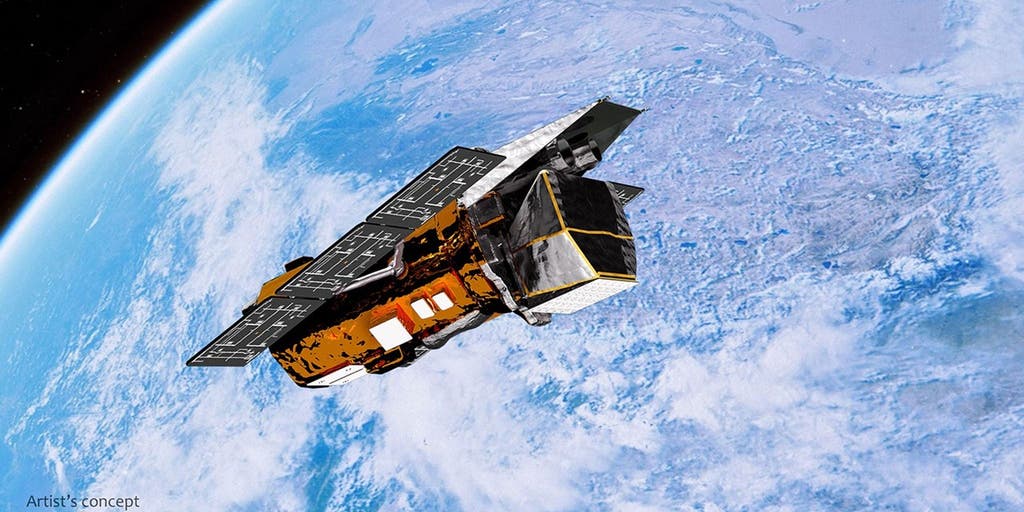
NASA Concludes Historic Mission of Neil Gehrels Swift Observatory
NASA’s Neil Gehrels Swift Observatory, which has significantly contributed to astrophysics since its launch in 2004, has officially concluded its mission. As of October 20, 2023, the observatory made its final observation, after which efforts to maintain its operations proved unsuccessful.
Final Observations and Future of Swift
The Swift Observatory is currently in a low Earth orbit, approximately 171 miles above the planet. Following its last observation, plans for its decommissioning were set into motion, with the spacecraft expected to re-enter Earth’s atmosphere in the coming weeks.
The Legacy of Swift
Shawn Domagal-Goldman, the Director of NASA’s Astrophysics Division, remarked on the observatory’s enduring legacy, noting, “Swift delivered an incredible, lasting return on investment for the nation, designed for a two-year primary mission but productive for more than 10 times as long.”
During its nearly two-decade operational lifespan, Swift played a pivotal role in various significant astronomical discoveries:
- Observations of over 2,000 gamma-ray bursts.
- Study of more than 1,400 supernovae.
- Detection of stars being torn apart by black holes.
- Monitoring of active galaxies.
- Execution of an all-sky X-ray survey.
Swift’s data has facilitated the publication of around 7,000 scientific papers, showcasing its vital role in advancing our understanding of the universe.
Innovative Technology and Rapid Response
Swift is unique in its capabilities as a multiwavelength observatory. It was specifically designed to quickly detect and locate gamma-ray bursts, allowing for timely observations of their afterglows. Mission Principal Investigator S. Bradley Cenko explained, “Swift needed to detect and locate gamma-ray bursts, communicate their position to other observatories, and then swing its telescopes around to image the burst locations before their afterglows faded out.” Typically, this procedure took only about a minute.
A Comprehensive Tool in Astrophysics
Swift’s adaptability allowed NASA to initiate ‘target-of-opportunity’ observations, enabling ground commands in as little as minutes. The observatory has amassed nearly 22 years of brightness measurements and more than 1.5 million images from its ultraviolet/optical telescope, becoming a versatile tool in modern astrophysics.
Conclusion
In the years following its launch on November 20, 2004, Swift emerged as an indispensable asset in astronomy. With its closure, John Nousek, the mission’s operations director, noted, “the unique speed of response of the Swift hardware, the extraordinary success of the rapid mission operations, and the closely knit teamwork of the Swift Flight and Science Operations teams placed Swift at the crossroads of burgeoning areas of research.” The observatory leaves behind a rich archive that will undoubtedly inspire future discoveries.
As NASA transitions to new missions, including the upcoming Artemis III program, the achievements of the Neil Gehrels Swift Observatory will be remembered as a significant chapter in the history of astronomical exploration.
