


Exploring the Cosmic Canvas: The Horsehead Nebula and Its Neighbors
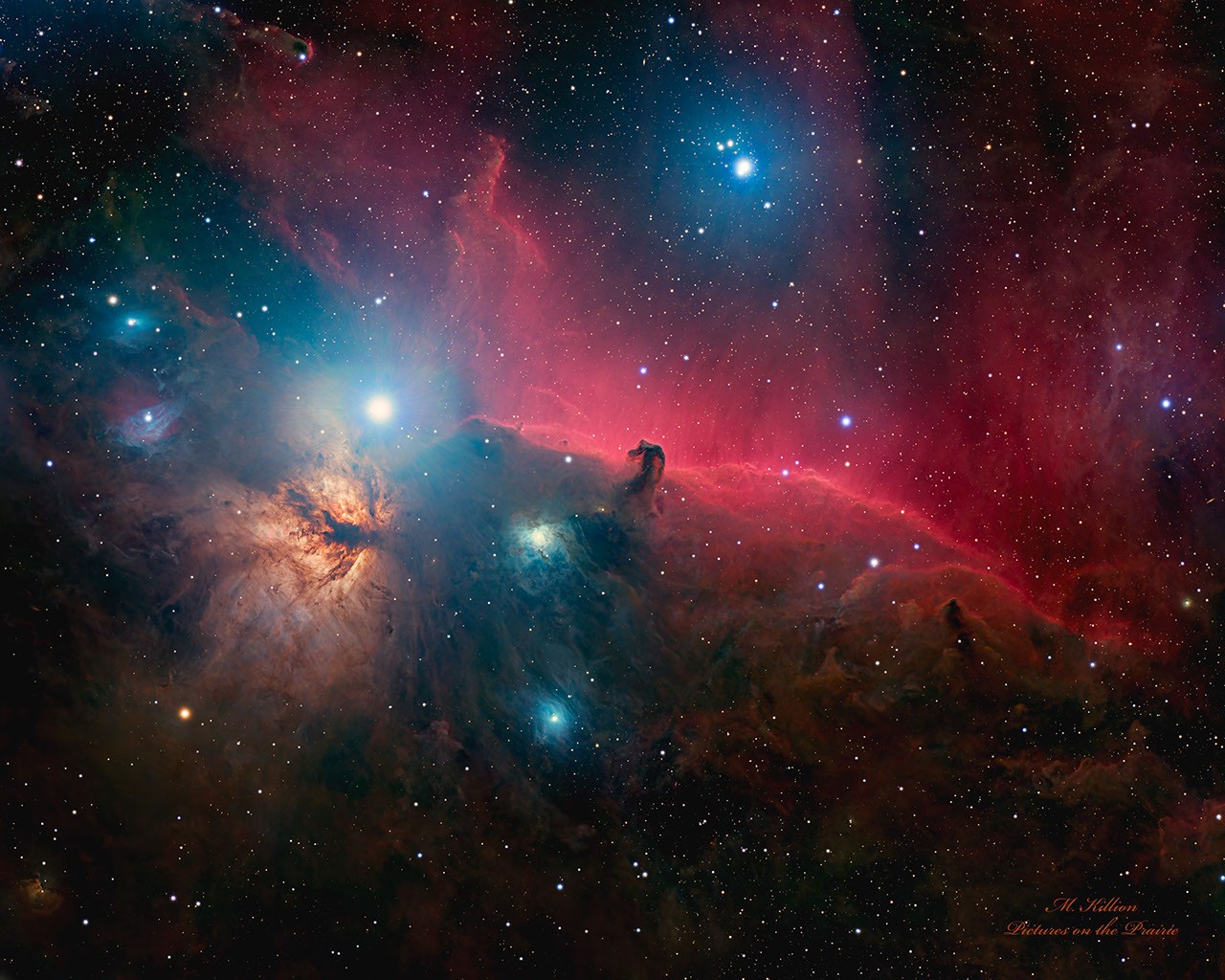
The universe is often described as a vast canvas painted with colors and shapes born from the intricacies of astrophysics. A recent image capturing this beauty offers a stunning glimpse into the Orion constellation, home to iconic celestial structures.
The Brightest Star: Alnitak
At the forefront of this astronomical artwork is Alnitak, a triple star system located to the left of the center in the image. As the easternmost star of Orion’s Belt, it stands out with its vibrant blue hue. Alnitak is significant not only for its brightness but also for its complex stellar architecture.
The Horsehead Nebula
Central to the image is the remarkable Horsehead Nebula, aptly named for its resemblance to a dark horse’s head. This prominent feature is about five light-years tall and lies approximately 1,500 light-years from Earth. Composed primarily of dust and gas, the Horsehead Nebula obscures the bright light of hydrogen gas glowing red in the background, ionized by the nearby star Sigma Orionis.
Surrounding Features: The Flame Nebula and NGC 2023
Adjacent to the Horsehead is the Flame Nebula, characterized by its fiery orange color and striking dark filaments. This region serves as a stellar nursery, where new stars are being born. Similarly, the blue reflection nebula known as NGC 2023, found in proximity to the Horsehead, is also rich in stellar formation activity, highlighting the dynamic processes occurring in this area of space.
Data Collection and Remote Photography
The impressive data that made this image possible was gathered over nearly six hours at the Utah Desert Remote Observatories. Remarkably, the astrophotographer who captured this scene operated the equipment from over 2,000 kilometers away in Illinois, showcasing the advancements in remote astronomical observation techniques.
Looking Ahead: What’s Next in Astrophotography?
As we marvel at this breathtaking depiction of the universe’s artistry, one can only wonder what future cosmic images will reveal. Continuous advancements in technology promise to unveil new layers of beauty and complexity in our understanding of the cosmos.
