


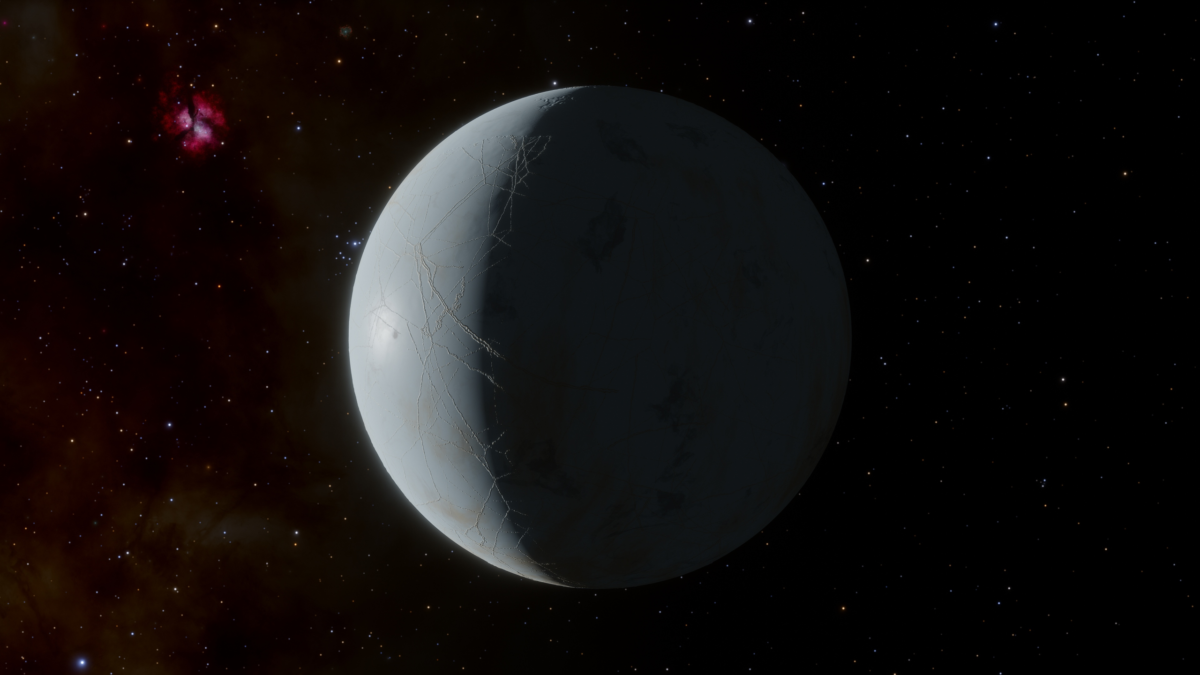
Unveiling the Mystery of Planet X2: A Potential Second World Beyond Neptune
The Outer Solar System: A New Frontier
Beyond Neptune lies a largely unexplored region of the Solar System, characterized by a frozen expanse filled with small icy bodies. This trans-Neptunian space is so distanced from the Sun that our current understanding, built primarily on the study of the inner planets, becomes increasingly tenuous.
The majority of our findings in this cold abyss stem from the gravitational interactions of the known giant planets. However, certain irregular orbital patterns of remote objects have sparked speculation about the existence of an additional large planet, informally dubbed Planet X2.
Evidence Suggesting Another Planet
Planetary scientist Jonti Horner from the University of Southern Queensland posits that the unusual orbits of some distant objects indicate a previously unaccounted-for mass, akin to “footprints in the snow” that point to unseen activity in the outer solar realm.
The dim light from the Sun, reduced to approximately 1/900th of what we experience on Earth at Neptune’s distance, complicates astronomical observations. Despite this, advancements in telescope technology over the years have enabled astronomers to catalogue several trans-Neptunian objects and analyze their orbits.
Some of the observed anomalies have given rise to theories about a potential Planet Nine. Recent data, however, suggests there might be a second undiscovered world, adding another layer of complexity to our understanding of the outer Solar System.
Understanding Orbital Patterns
Two distinct populations of trans-Neptunian objects feature prominently in this discourse: one exhibits highly tilted orbits, while the other shows orbits that extend beyond Pluto. Current computer simulations illustrate that these groups cannot be explained solely by the gravitational effects of known planets.
In recent studies led by researchers Patryk Sofia Lykawka and others, simulations have incorporated a hypothetical planet—possibly 1 to 2 times the mass of Earth—situated at distances ranging from 350 to 500 astronomical units from the Sun. This planet would maintain a distant path, never approaching closer than 200 astronomical units.
The Implications of Planet X2
If confirmed, the existence of Planet X2 could significantly revise our understanding of how the Solar System’s distant objects have come to occupy their current orbits. The possibility remains that the Solar System might harbor both Planet X2 and the previously hypothesized Planet Nine, each contributing to distinct orbital behaviors among trans-Neptunian bodies.
Horner highlights the importance of empirical validation of these theories: “This is one explanation, and you know, I encourage people to try and think of other explanations and test them and make predictions.” Predictions stemming from these theories will play a crucial role in guiding future observations.
Future Observations and Research
The Vera C. Rubin Observatory, currently under construction in Chile, is poised to boost our understanding of the outer Solar System with its highly sensitive observational capabilities. Once operational, it will facilitate the discovery of numerous new trans-Neptunian objects, allowing researchers to test the validity of the Planet X2 hypothesis against an expanded dataset.
While detecting Planet X2 itself remains a challenging prospect due to its faintness and distance, the knowledge gained from studying the unique orbital characteristics of newly identified objects may lend credence to the existence of this elusive planet.
