


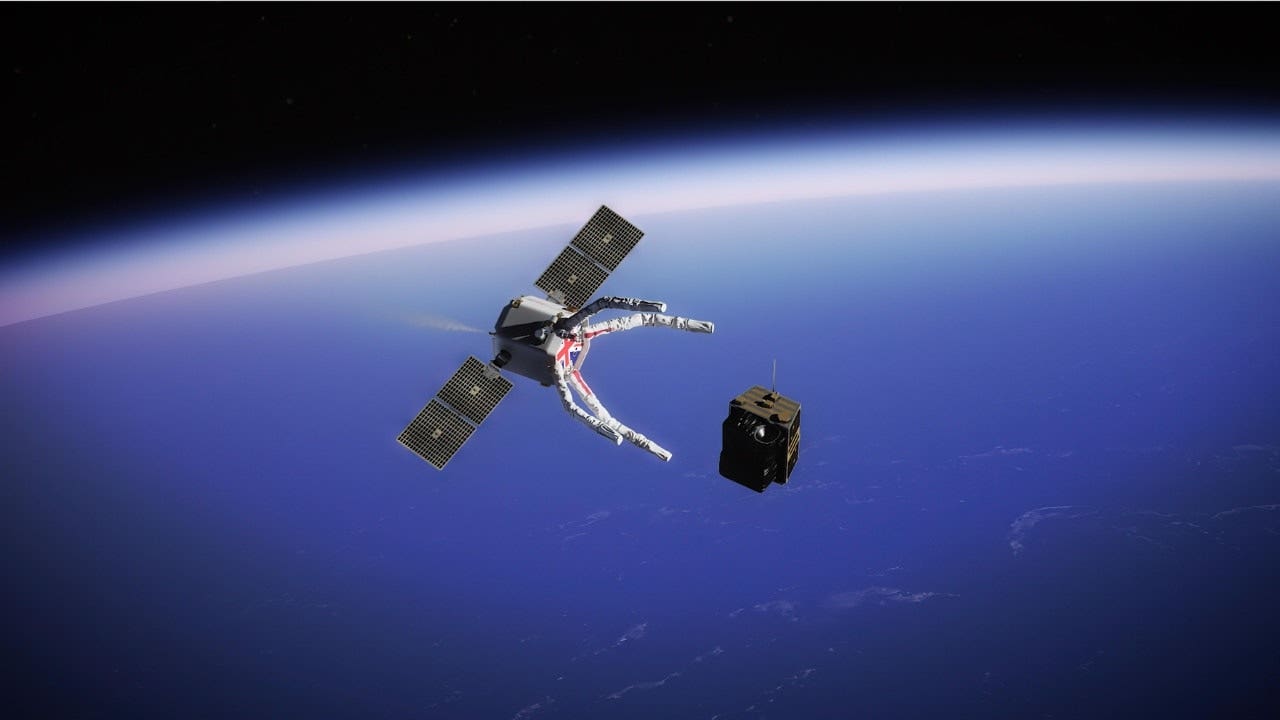
The UK’s $81 Million Plan to Clean Up Space Debris
As Earth’s orbit becomes increasingly crowded with defunct satellites and other debris, the United Kingdom is taking significant steps to address this pressing issue. The UK Space Agency has announced a contract worth approximately $81 million with aerospace company ClearSpace UK to develop innovative technology aimed at removing inactive satellites from orbit.
Set for launch in 2029 from the SaxaVord Spaceport in Scotland, the mission will initially focus on eliminating two defunct satellites registered in the UK, with a completion goal set for 2032.
The Challenge of Space Debris
The accumulation of space debris poses a growing threat to both active satellites and human occupants aboard the International Space Station (ISS). According to the European Space Agency (ESA), as of October 2026, over 47,140 objects are monitored in Earth’s orbit, including operational satellites, inactive spacecraft, and debris from prior collisions. This figure doesn’t even encompass millions of smaller fragments contributing to the hazard.
These objects travel at startling speeds—often exceeding 17,000 mph—highlighting the potential risk even small pieces of debris can pose to operational space missions.
Innovative Solutions: Robotics in Space Cleanup
ClearSpace’s mission employs a sophisticated robotic spacecraft equipped with specialized capture technology to securely grasp these abandoned satellites. This technology is designed to cope with the dynamics of low Earth orbit, where spacecraft face various challenges, such as tumbling debris and high-speed travel.
Once the spacecraft captures a dead satellite, it will maneuver it into a lower orbit where atmospheric drag will eventually facilitate its descent into the atmosphere, causing it to burn upon reentry.
The Implications of Space Junk
The dangers of space debris extend beyond the threat of satellite damage; they also jeopardize human safety aboard the ISS. In a notable incident in November 2021, astronauts were compelled to take shelter in their craft when debris resulting from a Russian anti-satellite test filled the orbit.
Furthermore, the prospect of larger debris falling back to Earth poses additional risks. Reports estimate that roughly 124 rocket stages reentered Earth’s atmosphere uncontrollably in 2024, contributing to an increased potential for serious accidents.
A New Era for Satellite Management
The UK’s initiative marks a pivotal change in how satellite ecosystems are managed. Historically, satellites were decommissioned and left in orbit once their missions were completed. With technologies like those being developed by ClearSpace, there’s potential to create a new market for space cleanup, fostering partnerships between satellite operators and specialized service providers.
This move toward responsible space management could encourage satellite manufacturers to consider end-of-life solutions in the design of new satellites, promoting longevity and safer orbits.
