


Apec Summit 2023: A Divided Welcome for World Leaders in Shenzhen
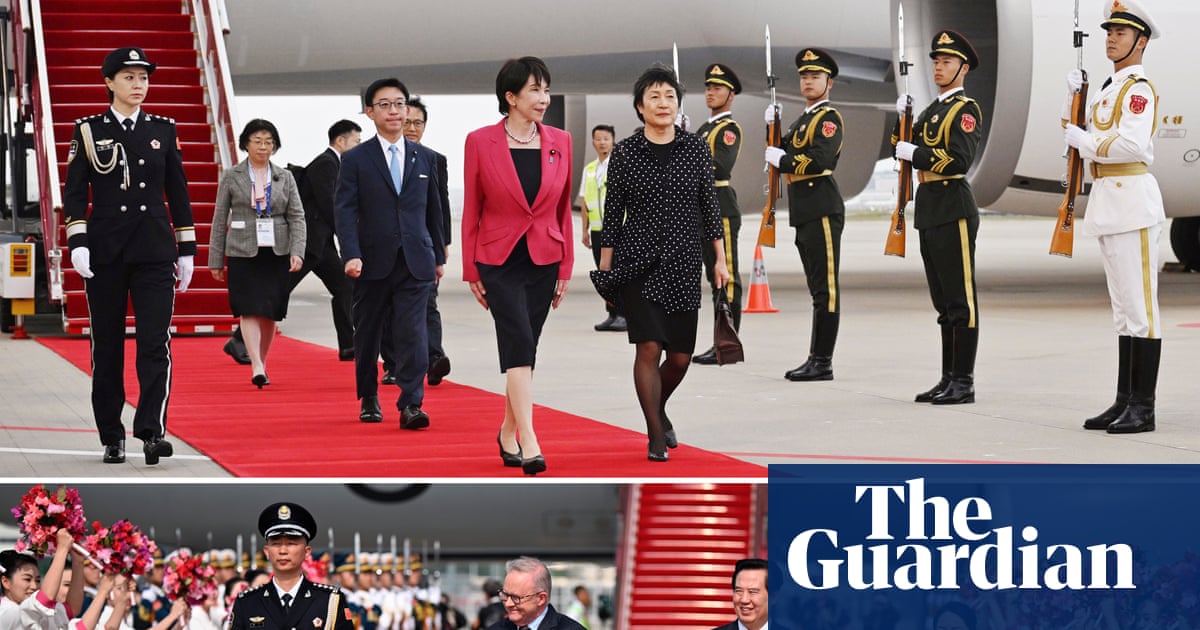
This week, Shenzhen warmly embraced global leaders at the Apec Summit, showcasing a grand display of hospitality. Military bands played while enthusiastic youth waved colorful bouquets, creating a vibrant atmosphere on the tarmac. However, one leader, Japan’s Prime Minister Sanae Takaichi, experienced a notably subdued welcome compared to her counterparts.
Reception Disparities
As Takaichi arrived at Shenzhen Bao’an International Airport, she was greeted with a modest honor guard and received by Zhang Qiyue, a former ambassador to Greece and a relatively junior official in the Chinese government. In contrast, other leaders, including Donald Trump and Vladimir Putin, were welcomed with high-profile receptions from top Chinese officials, including Xi Jinping himself.
High-Profile Arrivals
Leaders such as Australian Prime Minister Anthony Albanese enjoyed a cheerful welcome, featuring rows of elegantly dressed women and soldiers from the People’s Liberation Army. Similarly, South Korea’s President Lee Jae Myung and First Lady Kim Hea Kyung were also met with significant fanfare, highlighting a stark contrast to Takaichi’s experience.
Geopolitical Tensions
The tepid reception of Takaichi is believed to be linked to the ongoing tensions surrounding Taiwan. Shortly after her diplomatic debut at the Apec summit in South Korea, Takaichi made controversial remarks suggesting that Japan’s self-defense forces could intervene if a Taiwanese conflict posed a threat to Japan. This statement deeply displeased Beijing, which views Taiwan as a part of its territory.
China’s Response
Beijing’s foreign ministry condemned her comments as “wrongful and dangerous.” Consequently, the diplomatic climate soured, affecting economic and cultural ties between Japan and China. Chinese citizens were cautioned against traveling to Japan, citing safety concerns without substantiated evidence. Furthermore, cultural exchanges and planned releases of Japanese films in China were postponed.
Impact on Celebrated Diplomacy
The fallout has even impacted famous diplomatic gestures, such as “panda diplomacy.” In January, giant pandas previously kept in Japan were sent back to China, leading to a significant shift in the longstanding symbolic exchange initiated since the normalization of diplomatic relations in 1972.
Concluding Remarks
As the summit in Shenzhen proceeded, marked by the pivotal discussions involving Xi Jinping, Trump, and Putin, Takaichi’s lack of a substantial congratulatory interaction with Xi stood out as a reminder of the cold state of Japan-China relations. This scenario illustrates how diplomatic gestures can reflect and exacerbate underlying geopolitical tensions.