



Corvette Skidpad Performance: A Comprehensive Evolution Across Generations
The Chevrolet Corvette has long stood as America’s most notable sports car, competing head-to-head with European rivals for over seven decades. Introduced in 1953, the Corvette has undergone a remarkable evolution across eight generations. Harley Earl, the head of design at General Motors, initiated this project with a vision for an accessible two-seat sports car aimed at returning World War II veterans, who were beginning to bring European sports cars to the U.S.
Initially powered by a six-cylinder engine, the car saw a transformative shift as Zora Arkus-Duntov championed the adoption of V8 engines, cementing the Corvette’s status as a high-performance vehicle. Over time, the Corvette’s design has innovatively adapted—most notably with the recent shift to a mid-engine layout in the eighth generation, which has led to a heated debate among enthusiasts regarding its adherence to traditional Corvette values.
Understanding Skidpad Grip
Central to evaluating the performance of the Corvette is the concept of skidpad grip, a measurement expressed in g-force that indicates how effectively a vehicle can corner without losing traction. Essential to this metric are the tires, suspension, and chassis balance, rather than merely horsepower. This article primarily references skidpad results from Car and Driver, applying their standardized 300-foot pad for modern models and a 200-foot pad for older ones.
Generational Breakdown of Skidpad Performance
C7 Corvette (2014-2019)
Alexandre Prevot/Shutterstock
The C7 generation marked the peak of the front-engine Corvettes with exceptional skidpad results. Notably, the 2015 Z06 with the Z07 package recorded a remarkable 1.19 g on the skidpad, an unprecedented achievement for any production vehicle at its time. This model featured a supercharged 6.2-liter V8 that produced 650 horsepower and utilized Michelin Pilot Sport Cup 2 ZP tires. Besides impressive cornering prowess, it could accelerate from 0 to 60 mph in just 2.9 seconds and complete a quarter-mile in 11 seconds at 126 mph.
C8 Corvette (2020-present)

Benedek/Getty Images
The C8, representing a significant shift to a mid-engine configuration, had high expectations for performance. The Z06 version with a 5.5-liter V8 was expected to excel, but initial skidpad tests yielded up to 1.16 g, slightly below the previous generation’s best. In contrast, other C8 trims scored even lower, with the Stingray hitting just 1.03 g, indicating that despite advancements, the C7 Z06 remains unchallenged in grip performance.
C6 Corvette (2005-2013)
Sjoerd Van Der Wal/Getty Images
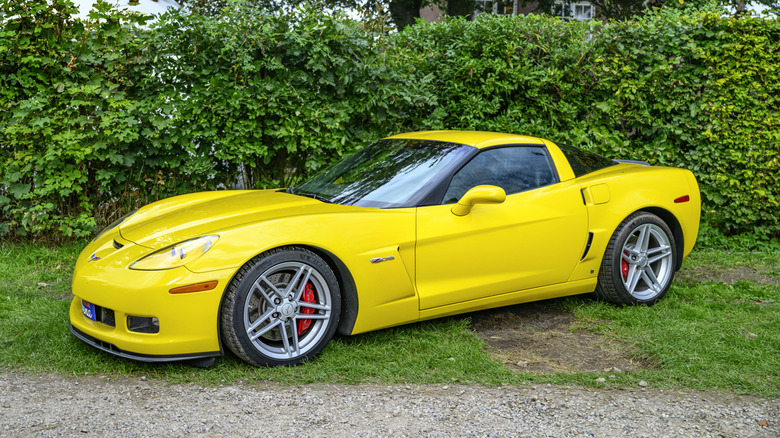
Securing third place, the C6’s finest skidpad performance stemmed from the ZR1 model, which achieved 1.07 g—exceeding GM’s own prediction. This generation, despite its lower figures compared to the C7, offered robust performance metrics and remains competitive against its contemporaries, particularly when compared to luxury brands.
C5 Corvette (1997-2004)
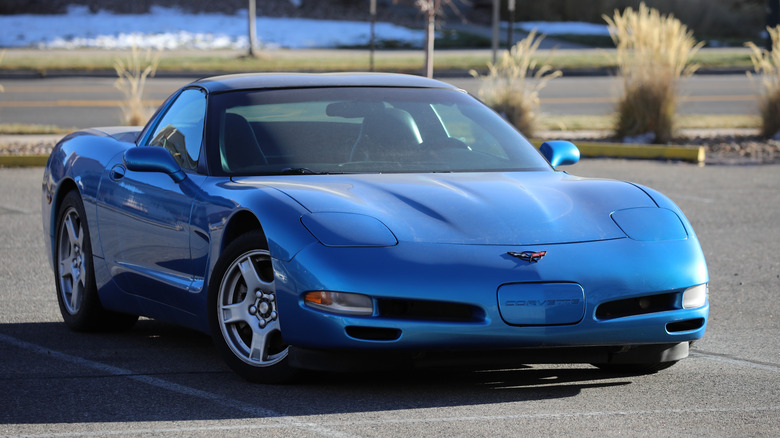
photo-denver/Shutterstock
The C5 generation introduced significant improvements in structural rigidity and weight distribution, with the 2001 Z06 model producing a commendable 0.98 g on the skidpad. This performance indicator underscored the C5’s innovative design approach that still resonates in today’s models.
C4 Corvette (1984-1996)
thebardens/Shutterstock
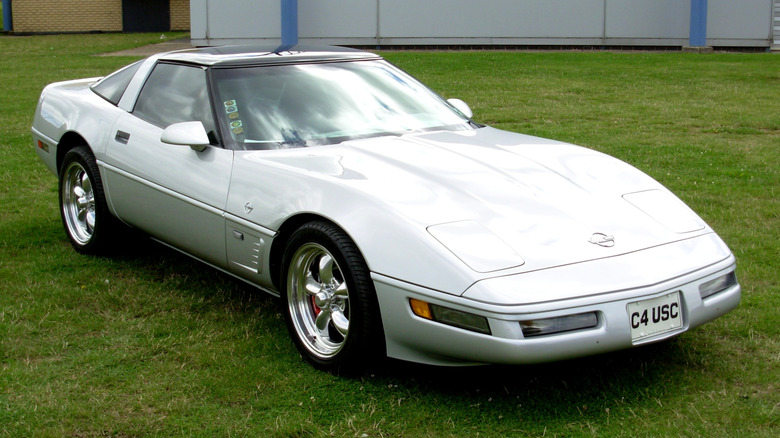
During its extensive production run, the C4 demonstrated variability in performance. The initial Z51 models offered a peak grip of 0.90 g by the late ’80s, illustrating the era’s advancements in tire and suspension technology despite some initial power deficiencies.
C3 Corvette (1968-1982)
Sjoerd Van Der Wal/Getty Images
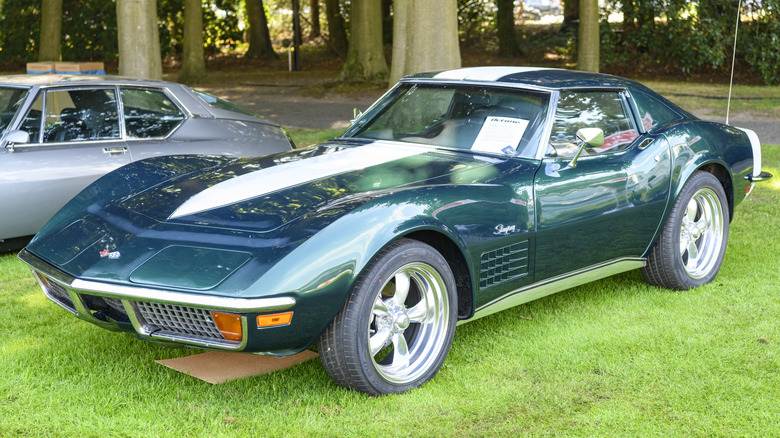
The C3 Corvette had a lengthy production span, with varying skidpad numbers, but typically hovered around 0.75 to 0.80 g. While not among the top performers, it did pave the way for future Corvettes to harness superior grip and performance attributes.
C2 Corvette (1963-1967)
Sjoerd Van Der Wal/Getty Images
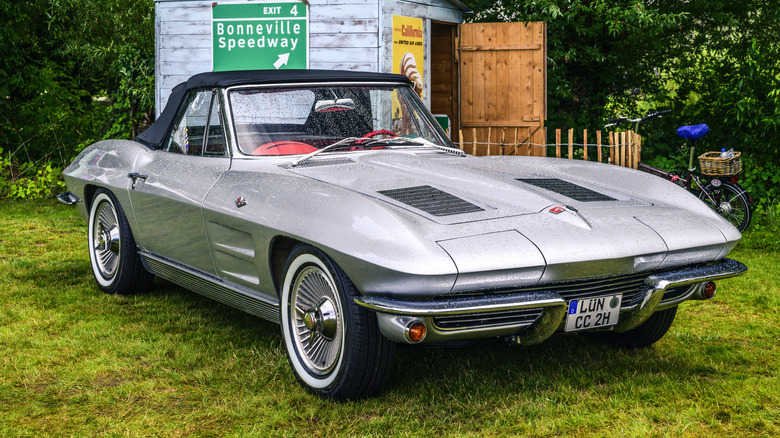
Among the C2 models, performance metrics were modest compared to modern standards, particularly with skidpad numbers peaking around 0.75 g. Nevertheless, the C2 laid important groundwork in both design and engineering for subsequent Corvette generations.
C1 Corvette (1953-1962)
John Keeble/Getty Images
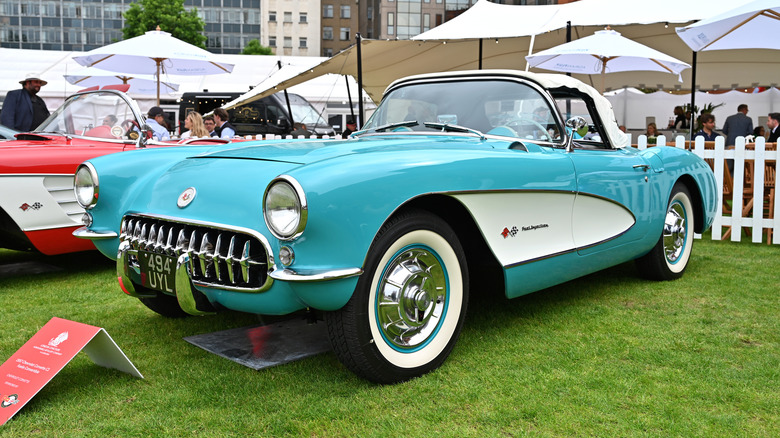
The original C1 Corvette featured a modest skidpad grip of 0.77 g—numbers that reflect the era’s technological limitations. Despite its early challenges, the C1 set a transformative course for future models, becoming a symbol of American automotive innovation.
Conclusion
The Chevrolet Corvette’s journey over the decades serves as a testament to continuous engineering and performance improvements. Each generation has built upon the successes and lessons of the past, demonstrating the commitment to excellence that has made the Corvette an enduring icon in the sports car world.
