


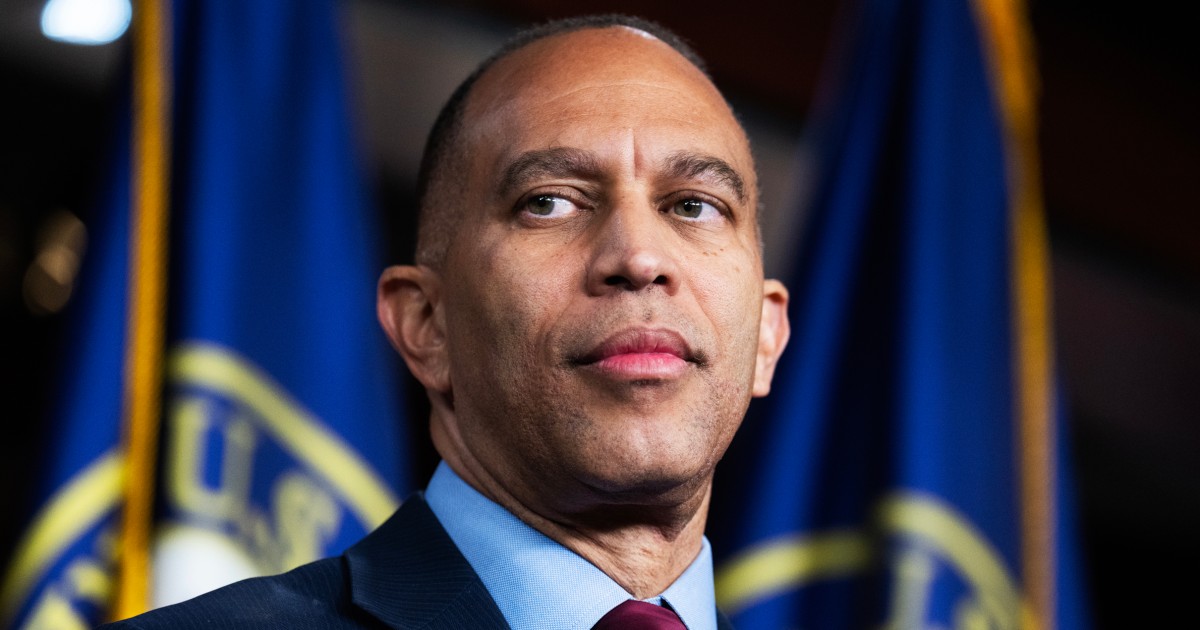
Rep. Hakeem Jeffries Wins Democratic Nomination for House Speaker
In a pivotal moment for the Democratic Party, Rep. Hakeem Jeffries from New York has been nominated as the party’s candidate for Speaker of the House, positioning him for election on the first day of the new Congress in January. After helping lead Democrats back to a majority, Jeffries received substantial backing from his colleagues.
Nomination Details
During a closed-door meeting, Jeffries secured the nomination with a commanding vote of 251-11. Despite pressure from progressive factions seeking a fresh leadership dynamic, no competing candidates emerged to challenge him.
Jeffries’ Stance on Leadership
Prior to the vote, Jeffries insisted on a recorded ballot, giving each member of the caucus a chance to express their views openly—a practice he noted was used during Nancy Pelosi’s return to the Speaker role following the 2018 midterms. He was quoted saying:
“It certainly seems to me to be appropriate that we take exactly the same approach, to give every single person the opportunity to weigh in one way or the other on who the caucus feels is best positioned based on track record, experience, vision, to help move us forward in the new Congress.”
Dissenting Voices
Following the outcome of the vote, seven of the eleven dissenting Democratic representatives issued a joint statement articulating their concerns regarding Jeffries’ leadership on critical issues such as healthcare, immigration, and foreign policy. They affirmed their commitment to engaging with Jeffries on topics of importance, noting:
“We have worked to secure commitments from Leader Jeffries in good-faith conversations. While we have seen meaningful progress, there is still work to be done to ensure that the direction our party takes this coming Congress reflects what our constituents are demanding of leadership.”
Meet the New Leadership Team
Jeffries’ nomination was endorsed by a diverse group of colleagues, illustrating the party’s broad representation. Among them were Rep. Teresa Leger Fernández (D-NM), Rep. Derek Tran (D-CA), and former Majority Whip Jim Clyburn (D-SC), who expressed the significance of the occasion by stating it felt like a “very surreal moment.”
Historical Significance
Should he be formally elected, Jeffries will be the first Black Speaker of the House. At 56 years old, he has a robust political background, having previously served as a state legislator and attorney. His recent campaign efforts contributed significantly to the Democrats winning a projected 259 seats, marking the party’s largest majority since 1988.
Upcoming Challenges and Responsibilities
As he prepares to lead, Jeffries is strategically meeting with various party factions, including progressives and moderates, to unify his party around key legislative goals. He recognizes the breadth of talent within the incoming class of representatives, remarking:
“It’s a great class, and they have a lot of wonderful ideas, fresh ideas, new ideas about how to advance the ball in a bold way for the American people.”
Other Leadership Appointments
The Democratic leadership reshuffle also includes Rep. Katherine Clark (D-MA) as majority leader, marking her as the first woman to hold this position, while Rep. Pete Aguilar (D-CA) was elected majority whip. Aguilar will make history as the highest-ranking Hispanic American in the House.
Contested Positions
The only contested leadership race within the Democratic Caucus is for the vice chair position, with Rep. Sara Jacobs (D-CA) running against Rep. Lauren Underwood (D-IL).
As Jeffries steps into this leadership role, he faces immediate tasks in uniting the party and steering it through crucial legislative battles, ensuring that Democratic priorities align with the expectations of their constituents.
