


Ethereum Withdrawals: Understanding the Recent Surge and Its Causes
Current Withdrawal Limits and Queues
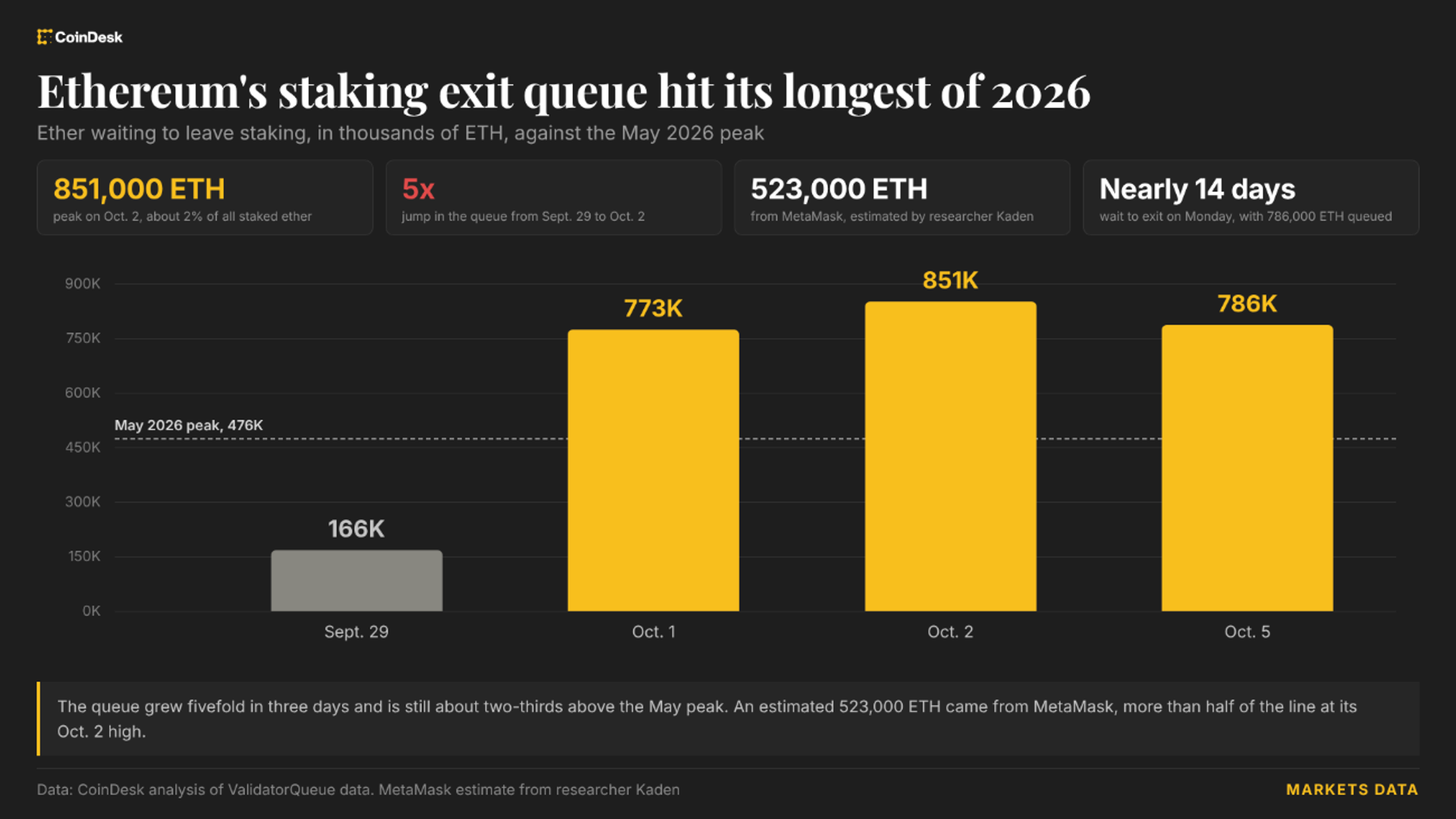
As it stands, the Ethereum network allows for a daily inflow and outflow of approximately 57,600 ETH. This limit has led to the formation of queues for larger transactions, as the amount of ETH that wishes to exit often surpasses the daily withdrawal capacity. Once ETH is removed, it must undergo a separate withdrawal process before arriving in the user’s wallet.
MetaMask’s Impact on Withdrawals
Recent data indicates a significant rise in withdrawals, primarily attributed to the actions of MetaMask. Widely known for its cryptocurrency wallet, MetaMask also operates validators for Lido, a platform that allows users to pool their ether for staking. Estimates from Ethereum security researcher Kaden suggest that precautionary withdrawals have involved approximately 17,000 validators, which collectively hold around 523,000 ETH. However, MetaMask has yet to verify these figures.
MetaMask Security Incident
On September 30, 2023, MetaMask reported a security breach that necessitated the withdrawal of affected validators from service. An update issued on October 1 reassured users, stating that their wallets and funds had not been compromised due to the incident.
Expectations for the Future of Withdrawals
The majority of the current exit queue is expected to be a temporary situation resulting from the actions of one operator. Lido anticipates that the ETH will be gradually reinvested as the affected validators resume operation, withdraw their balances, and re-enter staking. The entire process of reintegration may take up to 45 days, during which time the affected validators will miss out on potential rewards.
No Action Needed for StETH Holders
Lido has clarified that no immediate action is required from holders of stETH, a token representing their staking assets within the service. The focus remains on resolving the issue and returning to normal operations as soon as possible.
