


Space Rider Prototype Experiences Setback in Drop Test by ESA
The European Space Agency (ESA) has encountered a challenge during a crucial drop test of its Space Rider spacecraft prototype, an ambitious project aimed at establishing Europe’s first reusable orbital vehicle. The incident, which took place on October 6, was not the desired outcome for the agency.
Details of the Drop Test Incident
During the drop test, the Space Rider model was released from a height of approximately 2 miles (3 kilometers) from a helicopter over a military range in Sardinia, Italy. Although the initial activation of the drogue parachute was successful, complications arose during the deployment of the main parafoil, which detached prematurely. This led to the prototype falling uncontrollably, resulting in a crash upon impact with the ground.
ESA officials have confirmed that the cause of the failure is under active investigation. An ESA spokesperson stated, “Following several successful tests using representative vehicle masses, the latest system-level drop test in October was not completed as planned due to an anomaly during the parafoil deployment sequence.” The investigation aims to identify the root cause and guide subsequent steps in the development process.
Space Rider: A Groundbreaking Development
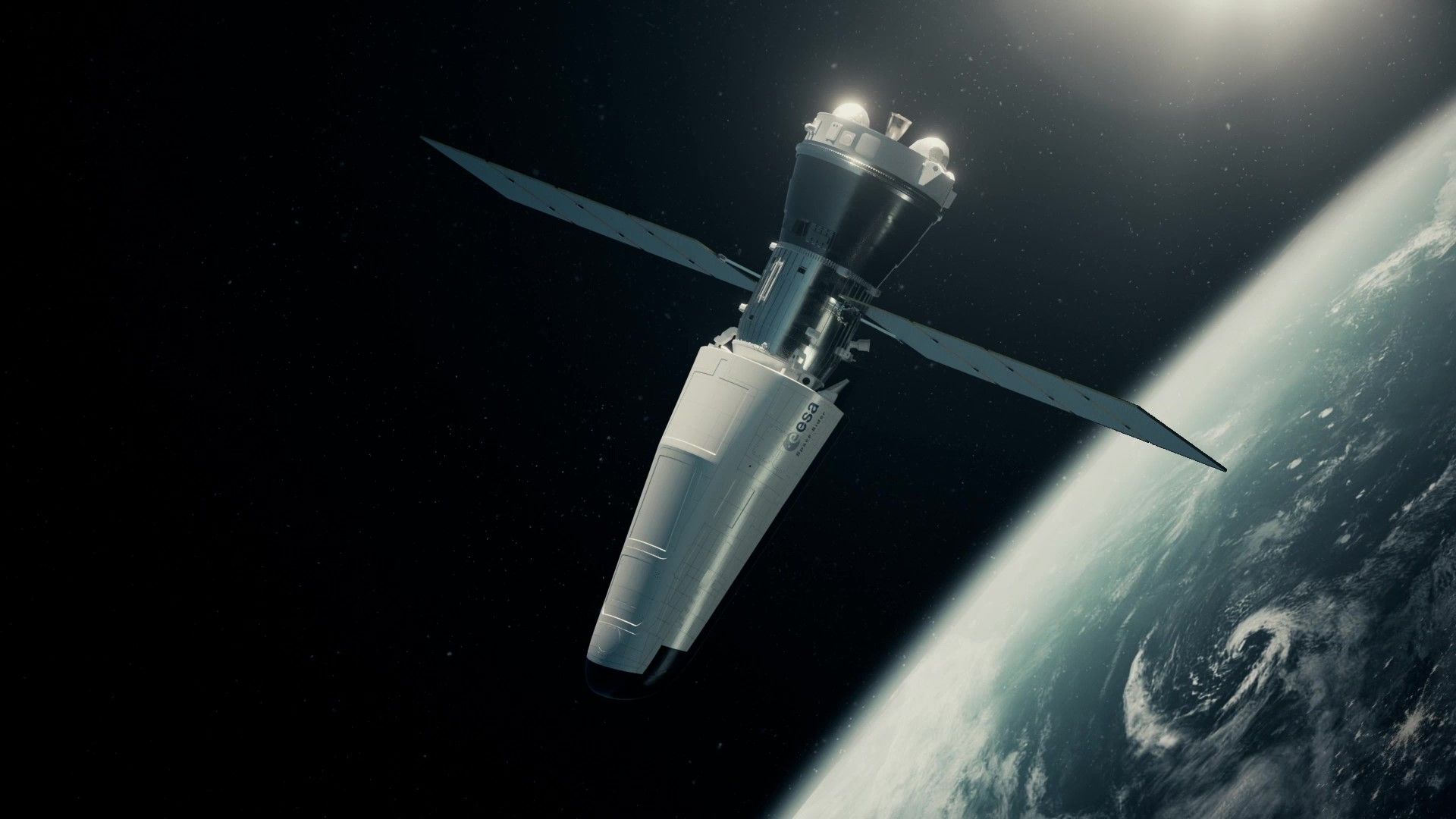
Space Rider is designed as an uncrewed spacecraft intended to carry scientific experiments into orbit for durations of up to two months before returning them to Earth for analysis. Its unique wingless, lifting-body design sets it apart from existing spacecraft, utilizing a steerable parafoil for a runway-style landing, a feature not seen in current space recovery methods.
According to Géraldine Naja, ESA’s Director of Space Transportation, the recent test’s failure is unfortunate but should not disrupt the overall development timeline of the spacecraft. “We hope that this test will not damage, or let’s say lead us to modify, the remaining schedule and qualification activities,” she noted. “The remaining qualification activities are not on the critical path of the development of the Space Rider.”
Looking Ahead
Despite this setback, ESA plans to continue with its qualification tests for the Space Rider. Previous successful tests have demonstrated the prototype’s parafoil deployment and autonomous navigation capabilities. A full-scale model has been crafted specifically for evaluating descent and landing systems, although it is not yet ready for space missions.
The spacecraft had previously experienced a disruption of its testing timeline due to the unavailability of the testing range from June through September. However, testing for the descent and landing systems is set to commence in 2025. Notably, other tests this year included thermal protection systems that withstood extreme temperatures of around 2,900 degrees Fahrenheit (1,600 degrees Celsius).
ESA has set its sights on launching Space Rider’s inaugural orbital mission later in the decade, marking a significant step for Europe in the field of reusable spacecraft.
