


Unveiling Gerrothorax maritimus: A Marine Amphibian from the Triassic Period
Significant Fossil Discoveries
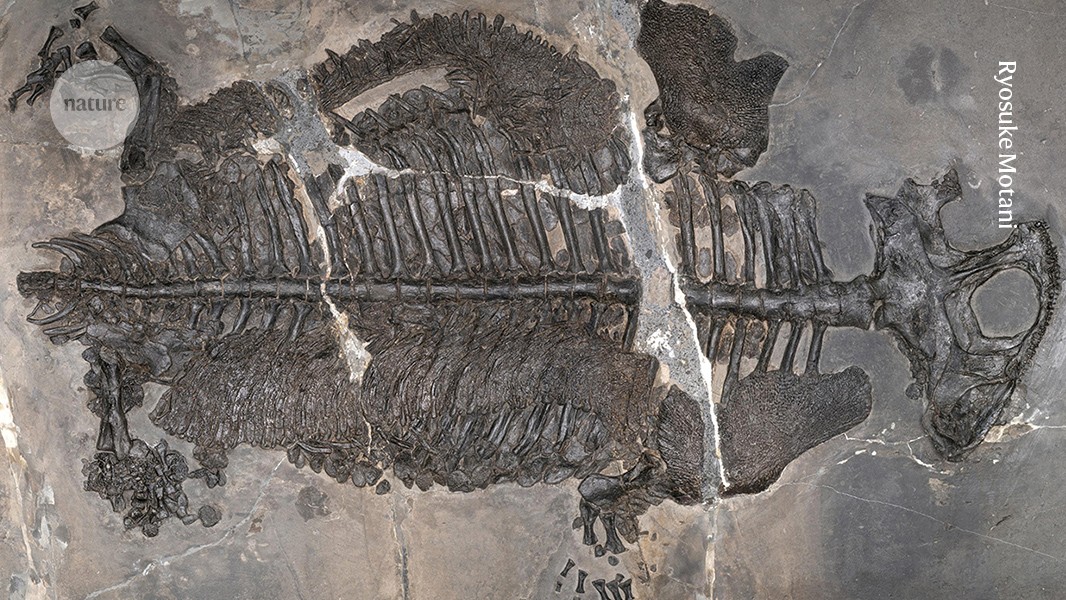
Recent research published in Nature Ecology & Evolution has unveiled compelling evidence that amphibians inhabited marine environments approximately 237 million years ago. The findings are centered on two well-preserved fossils of a newly identified species, named Gerrothorax maritimus, from the Guizhou province in China, which would have been submerged in a salty sea during the Late Triassic period.
Characteristics of Gerrothorax maritimus
This species measured around 74 centimeters in length, showcasing a flattened and heavily armoured physique. The discoveries indicate that, unlike modern amphibians—of which over 8,000 species exist—none of which are fully marine, Gerrothorax might have been an exception. This potential adaptation is being hailed as a game-changer in understanding amphibian evolution.
According to Steve Brusatte, a palaeontologist and evolutionary biologist at the University of Edinburgh, “If this Triassic amphibian, Gerrothorax, really was fully marine, then it is a game-changer.”
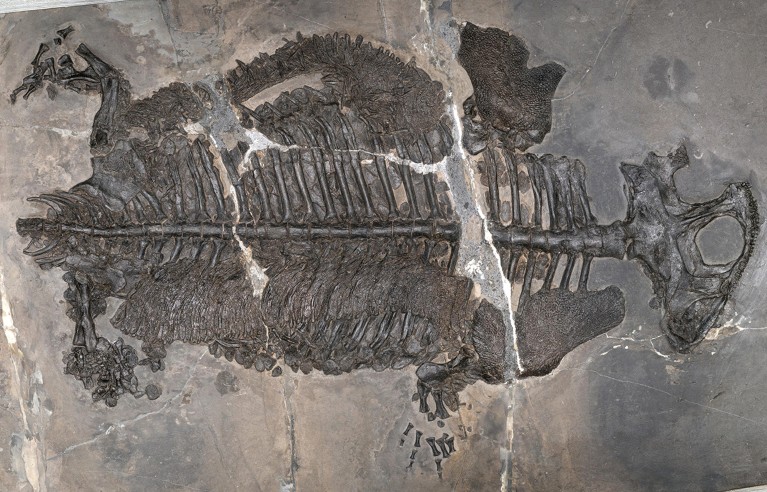
A newly discovered amphibian species called Gerrothorax maritimus was about 74 centimetres long and had a flattened, armoured body.Credit: Ryosuke Motani
Marine Adaptations and Salt Tolerance
Ryosuke Motani, a palaeobiologist at the University of California, Davis, and co-author of the study, explains that while modern amphibians exhibit varying degrees of salt tolerance, they typically need to counteract excess salt intake by consuming fresh water. However, this likely wasn’t feasible for G. maritimus.
Evidence suggests that these amphibians were not washed ashore but instead indicate they thrived in an entirely marine environment. The researchers analyzed strontium isotopes from the fossilized bones, revealing that the isotopes matched those found in the surrounding seawater, implying that these creatures “grew up drinking the seawater.”
Implications of the Discovery
The discovery of Gerrothorax maritimus not only highlights the evolutionary adaptability of early amphibians but also reshapes the narrative of amphibian history. If further studies confirm these findings, it may lead to a reconsideration of the ecological roles that ancient amphibians played in marine ecosystems.
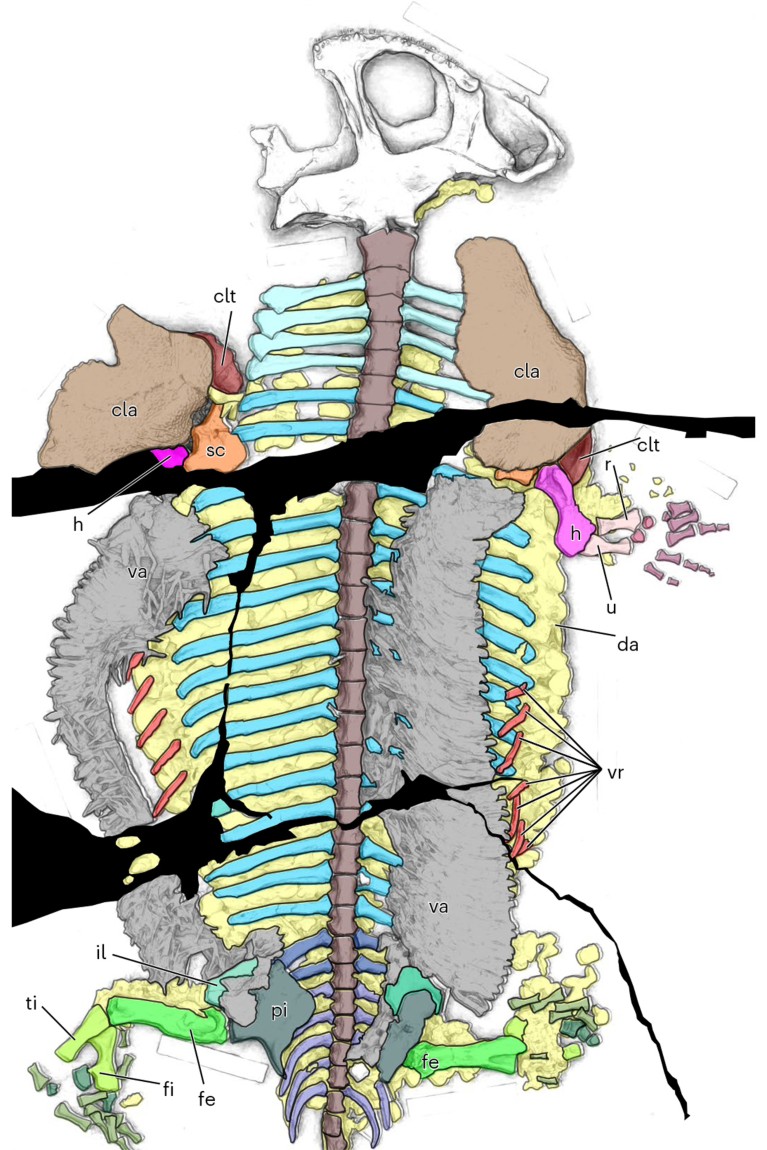
Schematic of one of the amphibian fossils, colour-coded on the basis of skeletal parts, and with bones labelled.Credit: Diao, L. et al./Nature Ecol. Evol.
