


Trump’s Trilateral Summit in Shenzhen: A Diplomatic Dilemma
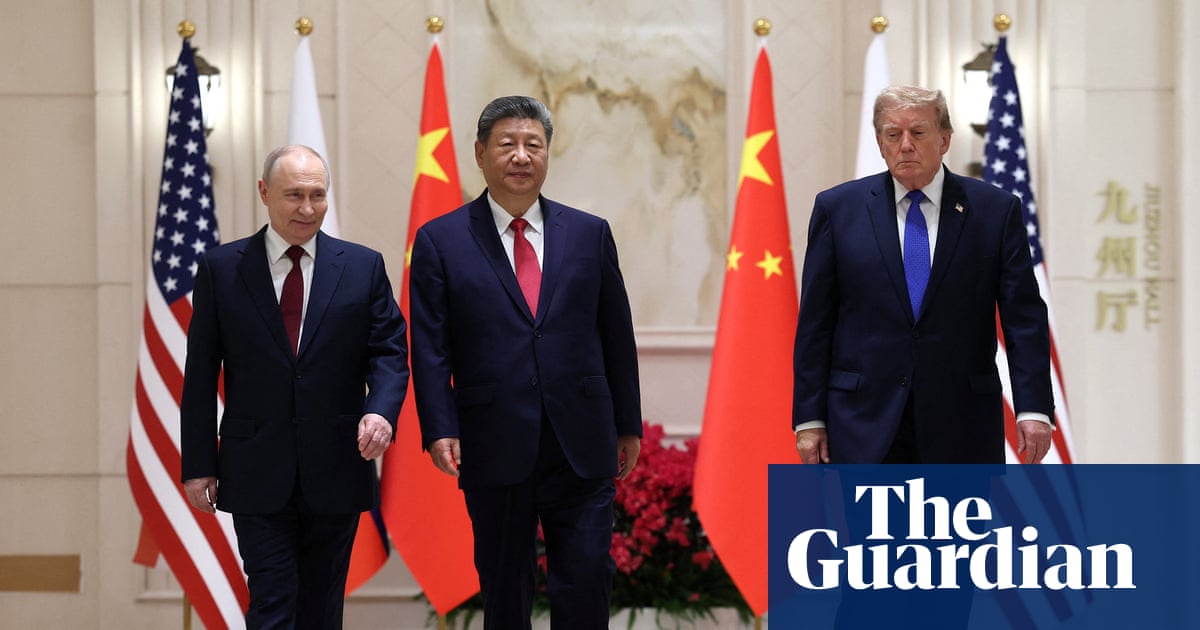
This week, President Donald Trump traveled to Asia, participating in a historic trilateral summit in Shenzhen, China, alongside leaders Xi Jinping and Vladimir Putin. The visit comes on the heels of a significant defeat in the recent midterm elections, casting a shadow over Trump’s political standing in the United States.
A Meeting of Autocrats
In a gesture of camaraderie, Trump engaged with Xi and Putin, stating, “He’s my friend,” referring to Putin, and later emphasized to Xi, “You’re my friend, and we have a very special relationship.” Their closed-door meeting lasted 70 minutes, culminating in a document titled “Declaration Toward Peace,” which notably excluded discussions on the ongoing conflicts in Ukraine and Iran.
Symbolism and Critique
The imagery of the meeting was striking, with the three leaders seated around a large circular wooden table adorned with pink flowers, symbolizing harmony in Chinese culture. However, critics in the U.S. highlighted the optics as a display of weakness for American values. Steve Schmidt, a former adviser to President George W. Bush, remarked, “It’s a repudiation of American values, American honour… and a betrayal of America’s allies all across the world.”
Warm Welcomes and Diplomatic Nuances
Upon arrival, Trump received an unusually warm welcome from Xi, who greeted him on the tarmac with an honor guard and a display of flags. Trump expressed his satisfaction with the visit, calling it a significant success for both nations and highlighting the enjoyment derived from a performance of his campaign’s theme song, “YMCA.”
Addressing Key Issues
During discussions, Trump and Putin touched upon the delicate situation in Ukraine, but no definitive commitments emerged from the dialogues. In a bilateral meeting with Xi, they discussed not only the Middle East but also the stability of U.S.-China trade relations, with Xi asserting China’s position on Taiwan as a domestic concern.
Trump succinctly remarked to Xi, “I think as long as you and I are in charge of things, we’ll never have a problem,” indicating his preference for direct relationships with authoritarian leaders.
Reactions to the Summit’s Outcomes
The final document from the summit, while vague, included agreements on reducing nuclear risks and increasing petroleum production. It sidestepped any mention of Russia’s military actions or U.S. conflicts. Ned Price, a former U.S. diplomatic official, noted that the joint statement reflects a desire for a less effective United Nations, undermining long-standing international principles.
Conclusions and Future Implications
The summit appeared more as a public relations effort than a platform for substantial diplomatic achievements. Observers noted that it rarely improved Trump’s international standing, particularly after experiencing a significant defeat in the domestic political arena. Brett Bruen, a former White House official, commented on the underlying desperation displayed, stating, “He’s returning from China with the luggage hold empty of any diplomatic accomplishments.”
Final Thoughts
As the leaders concluded their meeting, it was evident that both Xi and Putin viewed the encounter not just as a bilateral courtesy but as a strategic posture to enhance their influence. Trump departed claiming the visit was “Highly Consequential,” indicating a desire to maintain his image on the global stage, despite the challenges he faces back home.