


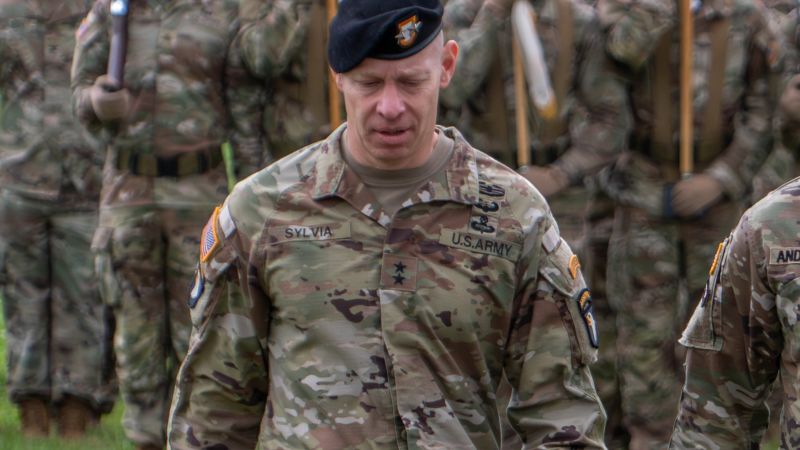
Dismissing a Key Pentagon Officer: The Case of Lt. Gen. Brett Sylvia
Location: Washington
Leadership Changes at the Pentagon
The Pentagon is undergoing another significant leadership shift as US Defense Secretary Pete Hegseth has expressed his intent to dismiss Lt. Gen. Brett Sylvia, the director of strategy, plans, and policy (commonly referred to as J5) for the Joint Chiefs of Staff. This development comes as President Donald Trump considers new military actions against Iran, according to sources familiar with the situation.
Details of the Dismissal
Hegseth’s decision has been confirmed by a spokesperson for Joint Chiefs Chairman Gen. Dan Caine, although no specific reasons for Sylvia’s removal have been disclosed. Furthermore, it remains uncertain who will take over Sylvia’s responsibilities following his exit from the role.
A Pattern of Changes
This dismissal adds to a growing list of senior officers who have parted ways with the Pentagon during Trump’s administration and Hegseth’s tenure. Their departures are part of a broader trend, with significant reductions in the top echelons of military leadership.
Role and Responsibilities of J5
The J5 position is vital for international military planning and strategy. Its primary focus is to advise the Chairman of the Joint Chiefs of Staff on strategies, plans, and policy recommendations that pertain to the United States’ military engagement globally.
As detailed on the Joint Chiefs’ website, “The Joint Staff J5 proposes strategies, plans, and policy recommendations to the Chairman of the Joint Chiefs of Staff to support his provision of military advice across the full spectrum of national security concerns to the President and other national leaders.”
Sylvia’s Background
Lt. Gen. Brett Sylvia previously led the Army’s 101st Airborne Division and was appointed to his position by former Defense Secretary Lloyd Austin at the conclusion of the Biden administration. His biography has since been removed from the Joint Chiefs’ website, emphasizing the abrupt nature of his departure.
Implications for Military Operations
Sylvia’s removal is particularly concerning as tensions mount regarding potential US military operations in the Middle East. CNN has reported that US forces may be poised for action against Iran, with readiness confirmed to execute orders within a short time frame.
Several officials suggest that plans for military engagement could evolve rapidly, with some anticipating an action could come shortly after the upcoming midterm elections.
A History of Dismissals under Hegseth
Hegseth’s tenure has already seen the departure of numerous high-ranking officials, including Army Chief of Staff Gen. Randy George, whose retirement occurred shortly after Trump indicated intentions to escalate hostilities with Iran. In total, more than two dozen senior military officers have been reported dismissed during Hegseth’s leadership.
Future Considerations
While Trump has assured that no military action will occur before the midterm elections, the situation continues to evolve, and officials express caution regarding his decision-making processes.
Sylvia joins a series of Pentagon officials removed during Hegseth’s administration, demonstrating a significant reshaping of military leadership in line with the administration’s strategic objectives.
Conclusion
The dismissal of Lt. Gen. Brett Sylvia represents not only a pivotal change in military leadership at the Pentagon but also illustrates broader strategic shifts as the United States navigates its foreign policy and military engagements in regions like the Middle East.
