


2026 Midterm Elections: Critical Insights on Advertisement Spending and Competitive Districts
Final Countdown: Ad Spending Trends
As the 2026 midterm elections approach their conclusion, current advertising expenditure indicates a strategic focus on how deeply the Democrats can influence the House races, rather than merely preventing a resurgence of Republican strength.
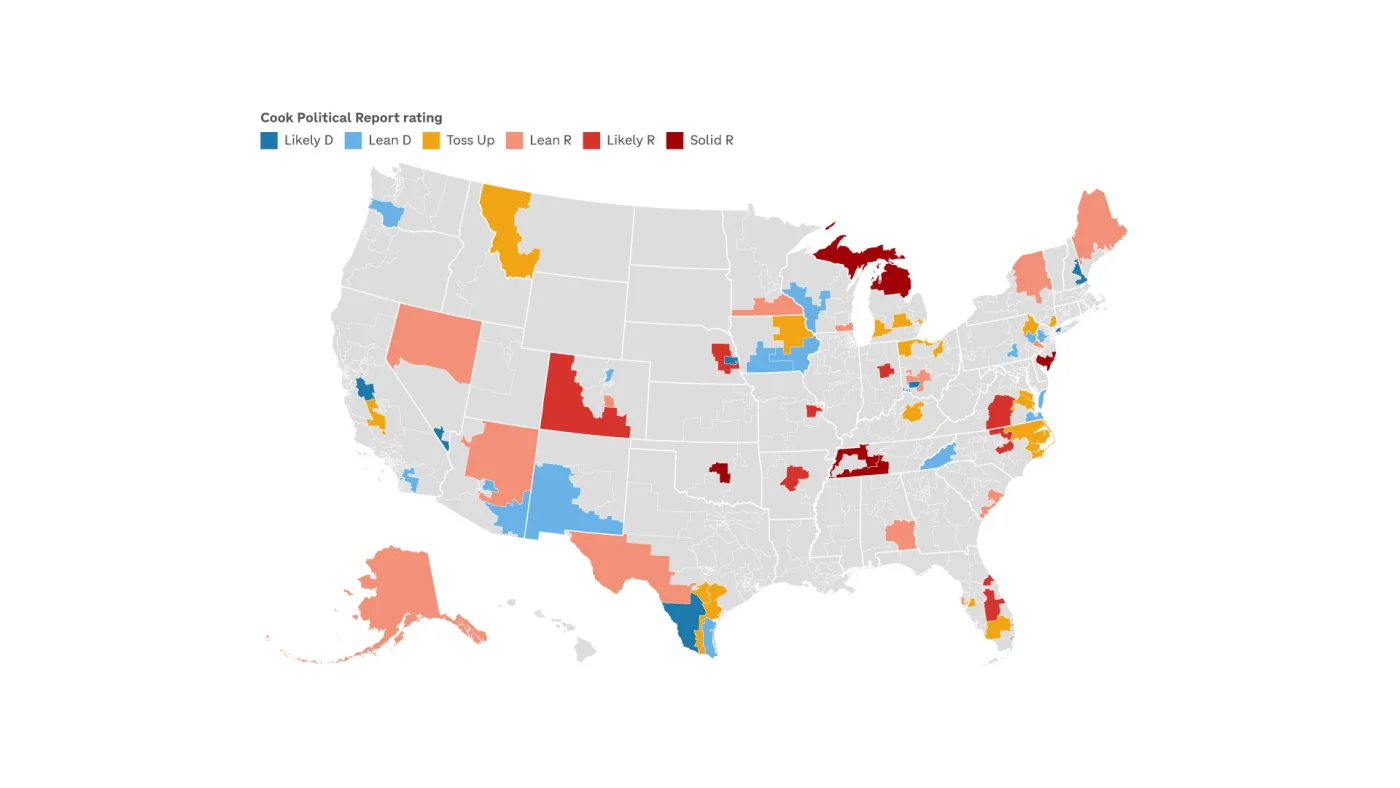
An analysis by NPR reveals that over 70 election districts are receiving substantial financial backing from both parties, each spending at least six figures as the campaign draws to a close. Key investments are observed in toss-up areas across states such as Michigan, North Carolina, New York, and Florida, where over $10 million has been allocated.
Key Developments and Historical Context
The political landscape suggests a possible shift toward Democratic control as the party seeks to overcome the traditional challenges often faced during midterm elections. According to the Cook Political Report, the Democrats are favored in 220 seats, with 17 races categorized as toss-ups.
Competitive districts are exhibiting significant changes, particularly those where results were close during the 2024 presidential election. Those races include seats held by Democratic Representatives Adam Gray (CA-13), Nellie Pou (NJ-09), and Marie Gluesenkamp-Perez (WA-03), among others. Data from AdImpact corroborates a trend of reduced advertising from Republicans in these areas.
Concerns Driving Voter Sentiment
The cost of living tops voter concerns, with rising gas prices and economic uncertainties influenced by tariffs and global conflicts, particularly in Iran. Concurrently, a noteworthy number of congressional retirements and increasing anti-incumbent sentiment in primary elections have also reshaped the electoral environment.
Recent redistricting, spurred by a significant Supreme Court ruling, has further complicated electoral dynamics. Redrawing boundaries aimed to consolidate conservative voter bases in traditionally Democratic areas, exemplified by districts like Ohio’s Marcy Kaptur (OH-09) and others across North Carolina, Alabama, and Florida.
Intense Advertising Battles
With early voting already underway, numerous districts are seeing heavy investment from both Democrats and Republicans in the final stages of the campaign. Notable among them are Michigan’s 7th District and North Carolina’s 1st District, each slated for over $12 million in advertising. Other critical racing includes several districts in Florida and New York that remain competitive or lean toward the Democrats.
In total, there are approximately 70 districts where candidates from both parties are significantly investing, many of which supported Donald Trump by about 9 points during the previous presidential election in 2024. The focus on high-ad spending positions reflects the broader discontent with the current political climate and Trump’s legacy.
Looking Ahead
While many strategies are being implemented across various districts, not all races are projected to be closely contested, and changes in party control may not be realized in every case. Significant districts giving heavy margins to Trump are seeing limited funding, suggesting disparities in expectations regarding their competitiveness in the current electoral cycle.
