


The Human Impact on Arctic Ice Caps and the Future of Glaciation
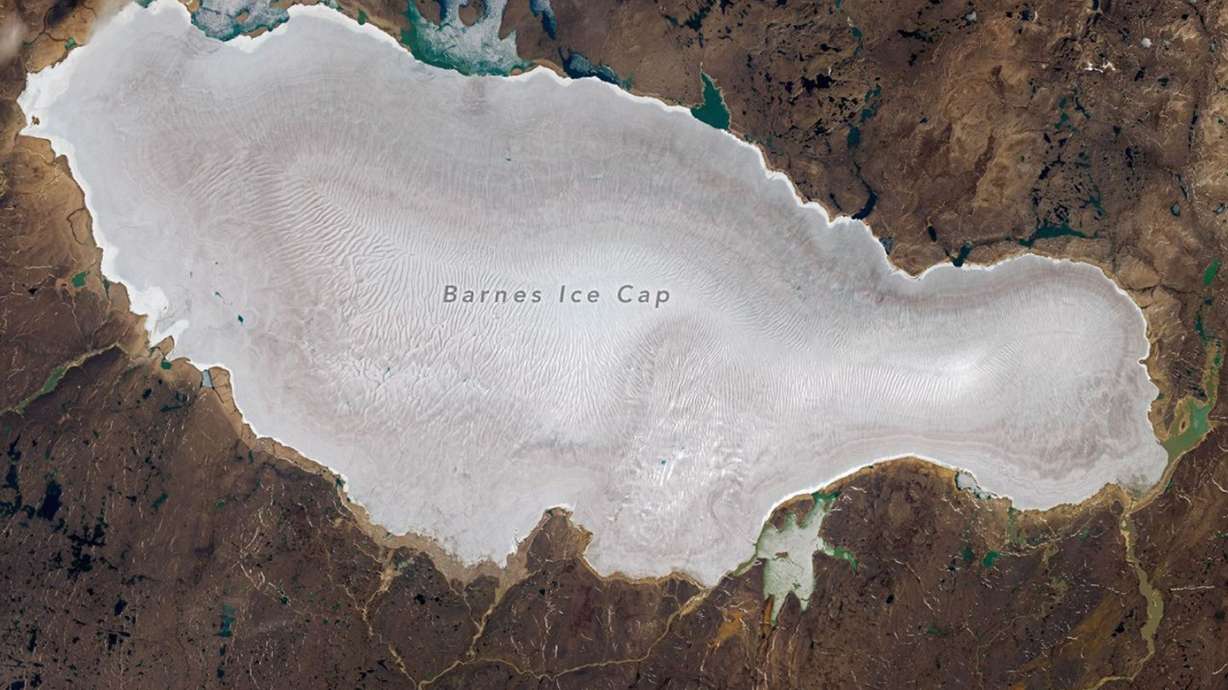
POND INLET, Nunavut — Recent research reveals a compelling link between human activity and the disruption of natural climate cycles, specifically the potential onset of a new ice age, highlighted by changes to the Barnes Ice Cap in Arctic Canada.
The Historical Context of the Laurentide Ice Sheet
Approximately 20,000 years ago, the mighty Laurentide Ice Sheet extended from the Arctic Circle to regions as far south as Illinois, boasting thicknesses up to two miles in some areas. Today, only remnants like the Barnes Ice Cap on Baffin Island remain, showcasing the dramatic changes in the Earth’s climate over millennia.
The Ice Cap’s Expansion and Recent Decline
Following a period of gradual re-expansion that began about 2,000 years ago, the Barnes Ice Cap was poised to mark the initiation of what scientists refer to as a new glacial period. This change, however, was swiftly reversed around 1960 due to the effects of human-induced climate change, which raised summer temperatures significantly.
Research Findings and Methodology
According to Nicolás Young, a geochemist at Lamont-Doherty Earth Observatory and co-author of the study published in Science, the rapid decline of the ice cap serves as a stark reminder of humanity’s influence on the climate system: “It was just getting started… and yet it stopped.” The researchers conducted an extensive analysis of ancient moss remains encased by the ice to determine their last living conditions and utilized rock samples to assess how long they had been exposed. This approach revealed that about 3,000 years ago, the ice cap had reached its minimum extent before beginning to regrow due to cooler climatic conditions.
The Role of Greenhouse Gases
The implications of this ice cap’s decline are significant. The research suggests that the increase in greenhouse gas emissions since the mid-20th century has effectively halted the natural progression towards another ice age. Young indicated that this contributed to a powerful overhaul of Earth’s climate mechanisms: “Climate pollution has essentially overpowered the other factors that want to make that region cool.”
Scientific Perspectives and Ongoing Debate
While the findings indicate the early stages of an ice age were underway, other experts, including Andrey Ganopolski from the Potsdam Institute for Climate Impact Research, caution that various modeling studies project that natural ice age cycles would not emerge for about 50,000 years, highlighting the need for broader comparisons among glaciers worldwide to understand the dynamics at play.
Reflecting on Climate Predictions of the Past
This research also prompts a reevaluation of the 1970s assertions that the Earth might be on the brink of a new ice age—a concept that gained media attention at the time and has often been misused by climate change skeptics. Young argues that the new findings suggest that the early signs of a glacial period indeed began before being abruptly interrupted by climate change.
The Long-Term Implications for Earth’s Climate
Ultimately, Young underscores that while this research should not suggest that global warming has “saved humanity from an ice age,” it does highlight the staggering extent to which human activity has altered Earth’s climate cycles. He notes, “We’ve probably put off any chance of any other future glaciation for a very, very long time.”
