


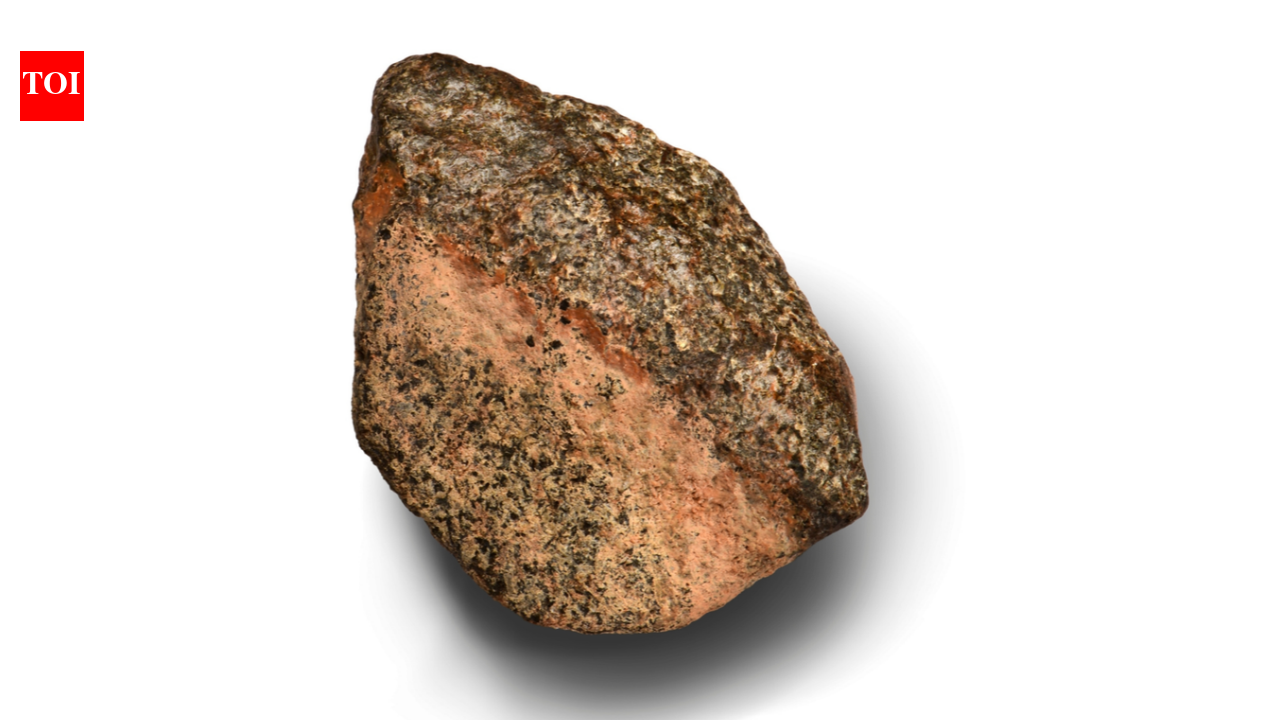
The Ancient Martian Meteorite Unearthed in the Sahara: Teghaza 001
Introduction to Teghaza 001
A remarkable discovery in the Sahara Desert has unveiled a rock that holds potential secrets about Mars’ distant past. Initially appearing as an unassuming pink stone, this 800-gram meteorite, designated Teghaza 001, has been confirmed by NASA-funded researchers to be approximately 4.1 billion years old and hails from the Martian surface. The findings offer invaluable insights into the planet’s early geological conditions and the presence of water.
Discovery and Identification
Discovered in 2022, the Teghaza 001 meteorite initially puzzled researchers regarding its origin. However, scientists from the University of New Mexico utilized oxygen isotope analysis, essentially geochemical fingerprints, to establish its Martian lineage. Planetary scientist Yang Liu from NASA’s Jet Propulsion Laboratory noted that while previous Martian meteorites have been studied, Teghaza 001’s unique texture and mineral composition set it apart as a significant specimen.
Geological Insights
Teghaza 001 is part of a select group of about 435 Martian meteorites found on Earth, ranking among the three oldest known specimens. Its mineral structure, rich in igneous minerals, provides crucial information about the formation of Mars’ crust and volcanic activity. Additionally, the presence of zircon crystals is noteworthy, as they are key to understanding the geological history, including the conditions present at the time of the rock’s formation.
Innovative Dating Techniques
To assess the age of Teghaza 001, researchers employed an advanced method called in-situ rubidium-strontium dating. This technique allows for the examination of individual mineral grains, requiring only a minuscule sample of less than a fingernail’s size, thus preserving the majority of the meteorite for further analysis. The results suggested that water altered the rock around 4.1 billion years ago, indicating a potentially earlier formation era.
Water’s Role on Early Mars
The implications of the Teghaza 001 meteorite extend beyond its age. The mineralogical and chemical analysis suggests that water played a significant role in shaping early Martian geology. According to co-author Lee Saper, the meteorite represents a rare sample from a Martian region not previously covered by Earth’s meteorite collections, providing new insights into the interactions between water and rock during Mars’ formative years.
Determining the Birthplace of Teghaza 001
Despite establishing that Teghaza 001 originated from Mars, pinpointing its exact location on the planet remains a challenge. The research team utilized data from NASA’s Mars Reconnaissance Orbiter to identify 13 potential sites where the meteorite could have been formed, indicating similarities to materials found in Mars’ southern highlands. However, further research is needed to confirm the specific location of its origin.
Future Research Directions
As studies continue, Teghaza 001 is poised to address crucial questions about Martian crust formation, the interaction of water with geological materials, and the evolution of the planet’s environment over eons. By analyzing this Martian fragment, researchers aim to enhance our understanding of the geological processes that shaped not only Mars but potentially other rocky planets within our solar system and beyond.
