


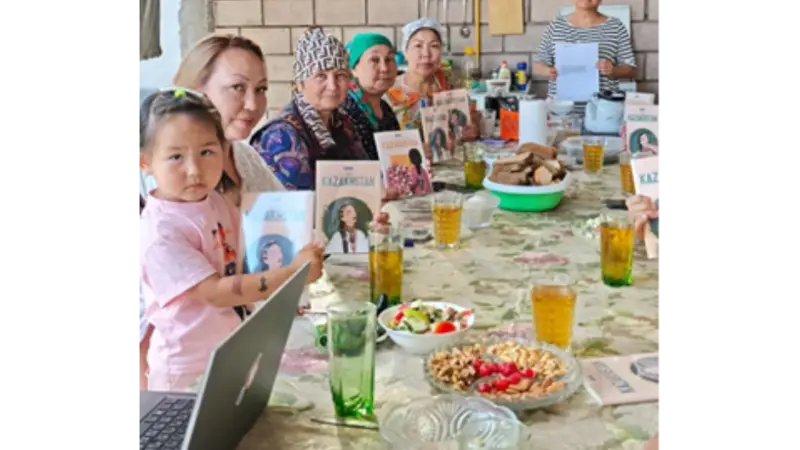
Empowering Women in Qyzylsay, Kazakhstan Through Digital Training
Participants of the project in Qyzylsay, Kazakhstan. Photo by Nazgul Aidabossynova. Used with permission.
Introduction to the Initiative
The Digital Spark grant scheme, part of the Regional Support Mechanism for Eastern Europe, the Caucasus, and Central Asia (EECA), aims to facilitate civic engagement and digital empowerment in various communities. In Kazakhstan, where rural women face heightened challenges due to climate change and water scarcity, the initiative signifies an important step towards improvement.
The Water Crisis in Qyzylsay
In southern Kazakhstan’s Qyzylsay village, water shortages have become increasingly problematic, particularly affecting women who bear the brunt of water collection. As traditional agricultural practices rely heavily on irrigation, the lack of access to water not only disrupts daily activities but also adversely impacts health and well-being within households.
The limited availability of water during the summer months compels women to engage in labor-intensive activities that often go unrecognized and unpaid. Furthermore, rural isolation restricts their access to essential information and governmental support systems.
Project Overview
In 2026, community activist Nazgul Aidabossynova launched a project aimed at equipping local women with skills to engage with governmental structures and advocate for their needs. The project saw participation from ten rural women, focusing on enhancing their digital literacy as a tool for community betterment.
Training and Activities
Workshop 1: Maximizing Smartphone Use
The initial training session introduced participants to the idea of smartphones as multifunctional tools, teaching them how to utilize features beyond simple communication. This included setting reminders and creating digital records of agricultural activities.
Workshop 2: Understanding Water Rights
In the second phase, the women learned about their rights concerning water access and how to document water supply issues using photographic evidence that includes timestamps and geographic data.
Workshop 3: Economic Valuation of Labor
The third workshop concentrated on quantifying unpaid labor and understanding the real costs associated with agricultural production. Participants calculated how time spent on irrigation could be transformed into economic value.
Workshop 4: Building Community Trust
The final session emphasized collaboration and peer support, encouraging women to map out local resources and each other’s strengths in addressing water challenges collectively.
Impact of the Project
The initiative significantly altered perceptions of digital technology among participants. Many women now regard their smartphones as effective alternatives to traditional methods of communication and advocacy.
They have also begun to document water-related issues systematically, making their concerns more tangible when communicating with local authorities. This newfound confidence allowed them to articulate the economic implications of their labor more effectively.
Some participants have started sharing the acquired skills with other local women, fostering a spirit of cooperation and knowledge-sharing within Qyzylsay.
Future Directions
The project’s ongoing endeavors will focus on continuing the peer-to-peer training model established among participants. The group plans to collaboratively tackle water access issues through advocacy and potential communal infrastructure improvements.
Integrating digital literacy with women’s economic empowerment remains a priority, as their experiences and contributions to the community are increasingly recognized and valued.
