


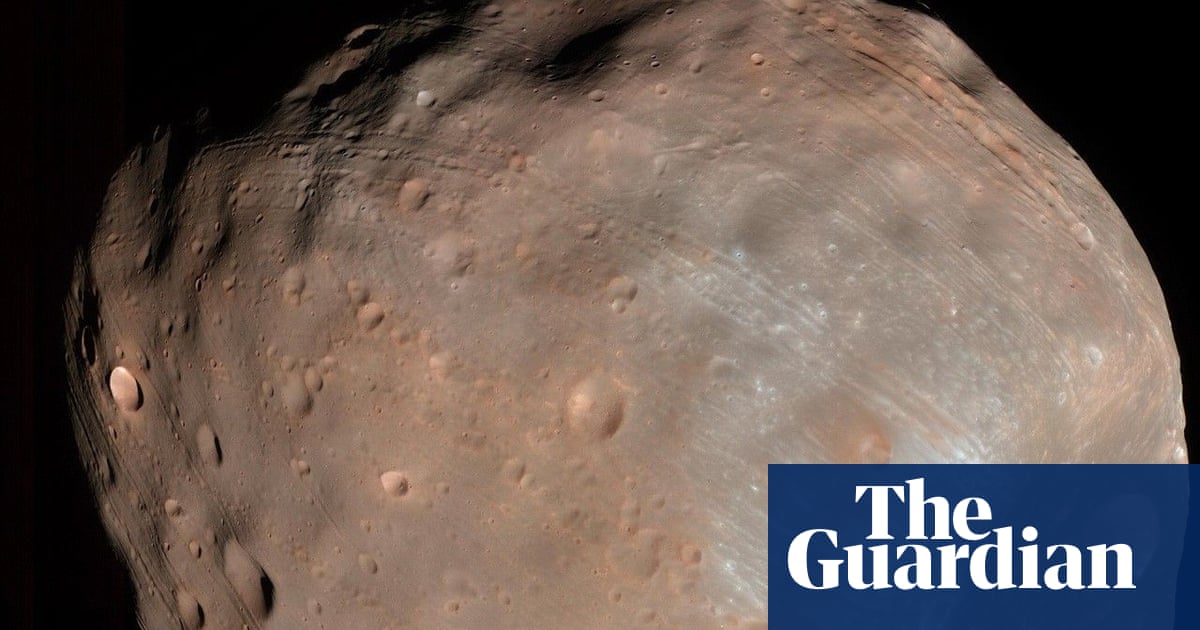
Japan’s Historic Mission to Phobos: A Quest for Cosmic Understanding
The Japan Aerospace Exploration Agency (JAXA) is set to undertake the world’s first mission to gather samples from Phobos, one of Martian moons. Scheduled for launch on a new H3 rocket, the mission is anticipated to last approximately five years.
Mission Objectives and Scientific Importance
This ambitious Martian Moons eXploration (MMX) mission aims to unveil the formation of Phobos and its companion moon, Deimos. By collecting and returning samples from Phobos, scientists hope to gain insights into not just the moons themselves, but also the origins of life within our solar system.
“Despite their potential importance, Martian moons have never been fully investigated,” said project manager Yasuhiro Kawakatsu. “They are known as the most important unclimbed mountains in the solar system.”
International Collaboration and Historical Context
This mission marks a significant global collaboration, involving support for equipment and communication from NASA and other international space agencies. While various missions have explored Mars since the 1960s, the study of its moons remains a largely uncharted territory, highlighted by the failure of multiple Russian attempts to land on Phobos.
Formation Theories of Phobos and Deimos
Phobos and Deimos, whose names derive from Greek mythology symbolizing fear and terror, present intriguing questions regarding their formation. The prevailing theories suggest they may either consist of debris from a collision with Mars or could be captured asteroids.
Sample Collection and Mission Timeline
The spacecraft is expected to reach the Mars region by August 2027, followed by three years of data collection and sample retrieval from Phobos. According to JAXA, approximately 0.1% of the collected material may originate from Mars itself, as the moon is situated closer to the planet compared to Deimos.
Planned exploration includes a flyby of Deimos, adding further value to the mission by enabling scientists to make comparative observations of both moons.
Sample Retrieval Techniques
The MMX spacecraft comprises three functional modules: propulsion, exploration, and sample return. It will carry 13 distinct instruments, including a joint French-German rover called Idefix. This rover will perform initial surface exploration before the main sampling operation, ensuring the selection of a suitable landing site.
JAXA aims to retrieve at least 10 grams of soil, employing both American and Japanese methodologies. NASA’s sampling device will utilize pressurized gas to gather surface dust, while JAXA’s coring approach will collect subsurface samples from depths of about 2 centimeters.
Technological Innovations and Challenges
Landing on Phobos, with a gravitational pull just two-thousandths that of Earth, introduces significant challenges. The MMX’s exploration module is equipped with specialized landing gear designed to absorb shocks during touchdown. The rover has been engineered to move slowly and maintain traction in low-gravity conditions.
The samples collected will be stored in a heat-protected capsule intended to survive the reentry process to Earth, with a planned landing in Australia before the samples return to Japan.
