


Lawmakers Demand Security Reassurances Amid Tech Outages and Threat Reports
In light of a tumultuous week marked by widespread technology outages and alarming reports regarding potential threats from Iran, U.S. lawmakers have urged leading security officials to provide assurances to the public regarding any coordinated attacks against the homeland.
Assurances from Security Officials
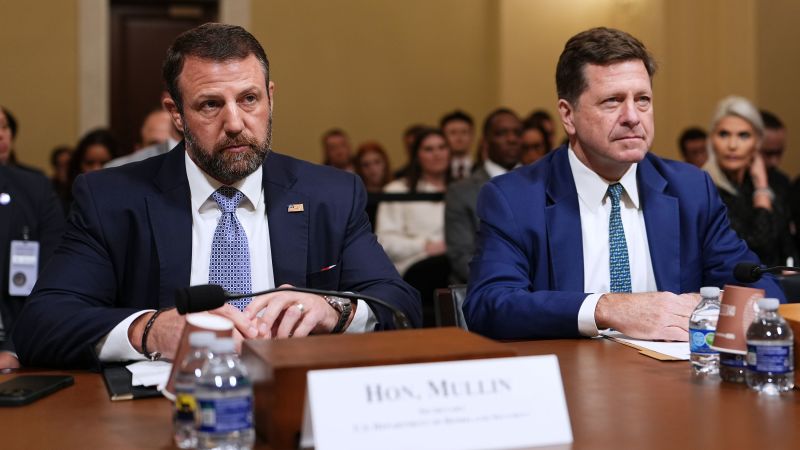
During the annual Worldwide Threats hearing held by the House Committee on Homeland Security, Homeland Security Secretary Markwayne Mullin affirmed that the likelihood of an organized attack is minimal: “We’re 98% confident that there is no nefarious activity going on,” he stated.
Further corroborating this assertion, Jay Clayton, the Director of National Intelligence, expressed “a very high level of confidence” that recent outages involving both private and government entities were not attributable to cyberattacks. He elaborated on the investigation findings, noting that each incident stemmed from distinct causes that lacked any digital signatures typically associated with hacking attempts.
Concerns about Iranian Threats
While addressing inquiries regarding reports of Iran’s intentions to execute attacks in the U.S., including a potential dirty bomb plot in Washington, Clayton indicated the existence of various threats aimed at causing mass civilian casualties: “A suite of threats has been around for a long time.” He highlighted the sophisticated global network capabilities exhibited by Iran, underscoring the need for robust countermeasures.
Lawmakers Press for Accountability and Oversight
Beyond discussions of current threats, lawmakers expressed their concerns over agency operations, the handling of past administrative decisions, and specific issues regarding training for Immigration and Customs Enforcement (ICE) agents. This scrutiny was particularly directed at Mullin, who faced criticism for flying on a government aircraft to attend a football game shortly after a national air traffic control outage resulted in a ground stop across the country.
Defending his actions, Mullin emphasized that his attendance at the game, where he was scheduled to meet with the state governor, was essential for maintaining trust. He rationalized, “If we cancel something with the airspace completely open, it could bring confusion.” He stated that he reimbursed the government for the flight expenses associated with his official duties.
Training and Oversight of ICE
The session also brought to light the training cuts experienced by ICE recruits during Mullin’s predecessor’s tenure. Mullin assured lawmakers that previous training standards had been restored while addressing the need to clarify decisions made prior to his appointment: “A lot of these decisions were made prior to me coming to office,” he stated.
Mullin also navigated delicate questions concerning ongoing investigations into actions taken by ICE officers involved in fatal incidents. While he could not divulge confidential details, he highlighted the need to consider broader implications such as violence perpetrated by unlawful migrants.
FBI Leadership and Political Influence
In a separate segment of the hearing, FBI Deputy Director Christopher Raia emphasized that President Donald Trump had not directed the Bureau to investigate particular individuals or instances, despite ongoing allegations of politically motivated inquiries influenced by Trump’s public statements.
In response to inquiries about Trump’s comments prompting investigations, Raia noted, “Absolutely not,” yet acknowledged the complex relationship between political discourse and operational decisions within the FBI. Testimonies from agents indicated that Trump’s calls for investigations significantly shaped subsequent actions, leading to cases being pursued based on perceived political motives.
Conclusion
The hearing highlighted critical issues surrounding national security protocols, the impacts of political influence on investigations, and the need for accountability in the operations of significant agencies. As threats evolve, the dialogue between lawmakers and security officials will remain paramount in addressing public concerns while maintaining confidence in the nation’s safety.
