


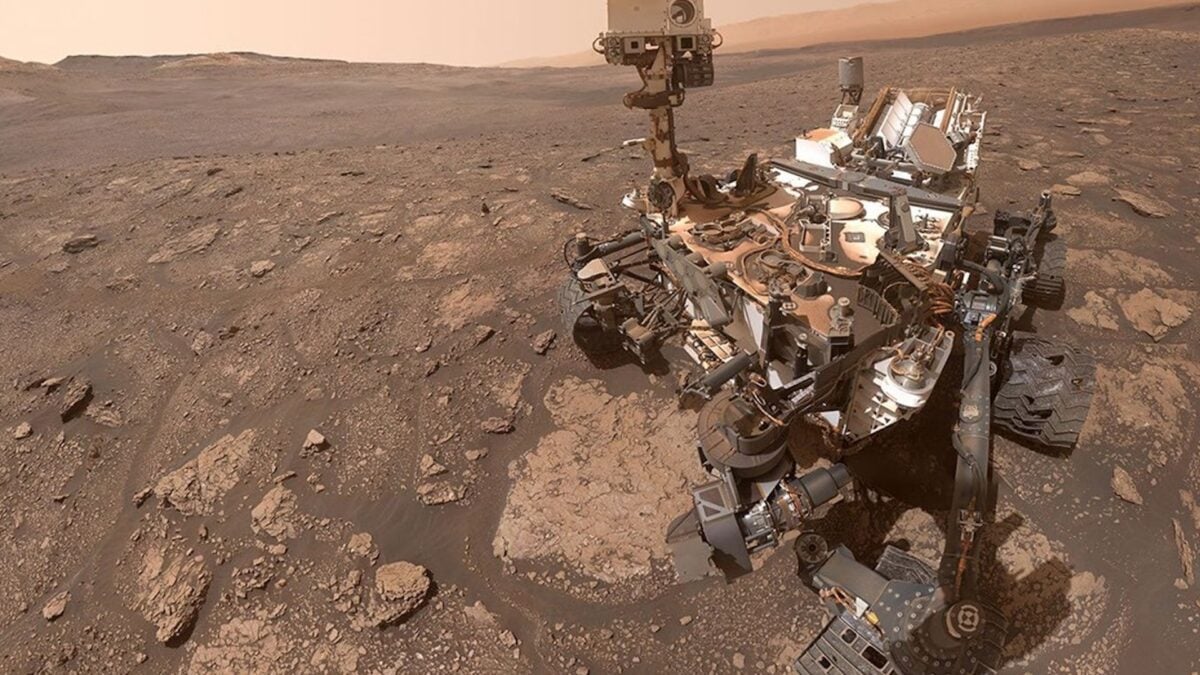
Curiosity Rover Finds Evidence of Current Water on Mars
NASA’s Curiosity rover, which has been exploring the Gale Crater for nearly 15 years, has made a significant discovery that suggests the presence of liquid water on Mars today. Although past findings indicated that Gale Crater once contained liquid water, a new study points towards the existence of water in a different form at present.
Groundbreaking Study on Atmospheric CO2
A research team published their findings in the Proceedings of the National Academy of Sciences today, analyzing atmospheric carbon dioxide (CO2) data collected by Curiosity from 2012 to 2025. This comprehensive dataset offers the first long-term record of the isotopic composition of CO2 in Mars’s atmosphere, revealing unexpected seasonal phenomena that imply the presence of thin films of water on the Martian surface or adhering to subsurface soil grains.
Examining Isotopic Ratios for Clues
The ratios of carbon and oxygen isotopes in atmospheric CO2 serve as indicators for potential water sources on Mars’s surface. Curiosity has consistently measured these atmospheric gases using its Sample Analysis at Mars (SAM) instrument suite, allowing for detailed insights into their chemical and isotopic makeup.
Using over a decade’s worth of data, lead author Heather Franz, an isotope geochemist at NASA’s Goddard Space Flight Center, directed her team to investigate any seasonal variations in the atmospheric CO2 isotopic composition, as well as differences between day and night readings. While no notable differences were seen between day and night, the analysis did reveal an increase in oxygen-18 isotopes during the spring and summer months.
A Unique Exchange of Molecules
Research models were employed to understand these seasonal changes, and the authors concluded that the only viable explanation involved an isotopic exchange between atmospheric CO2 and extremely thin, liquid-like films of water present in the Gale Crater region.
“Exchange of oxygen isotopes between CO2 and water is the only one that our models found capable of producing the level of oxygen-18 enrichment seen in the atmosphere at the Gale Crater,” said Franz.
Implications of the Findings
This indirect evidence suggests that during the warmest periods of the Martian year, there may be water capable of interacting with atmospheric CO2. Unlike the ice-bound water seen at the polar caps of Mars, these films may consist of layers just a few molecules thick, allowing individual water molecules to engage in the observed exchanges.
In her communication, Franz expressed excitement about the findings, noting, “Our data represent the first time measurements of this type have been possible on Mars, through long-term operation of Curiosity.” She emphasized the potential for future missions to collect similar data across different Martian locations, which could further illuminate the subsurface water composition across the planet.
