


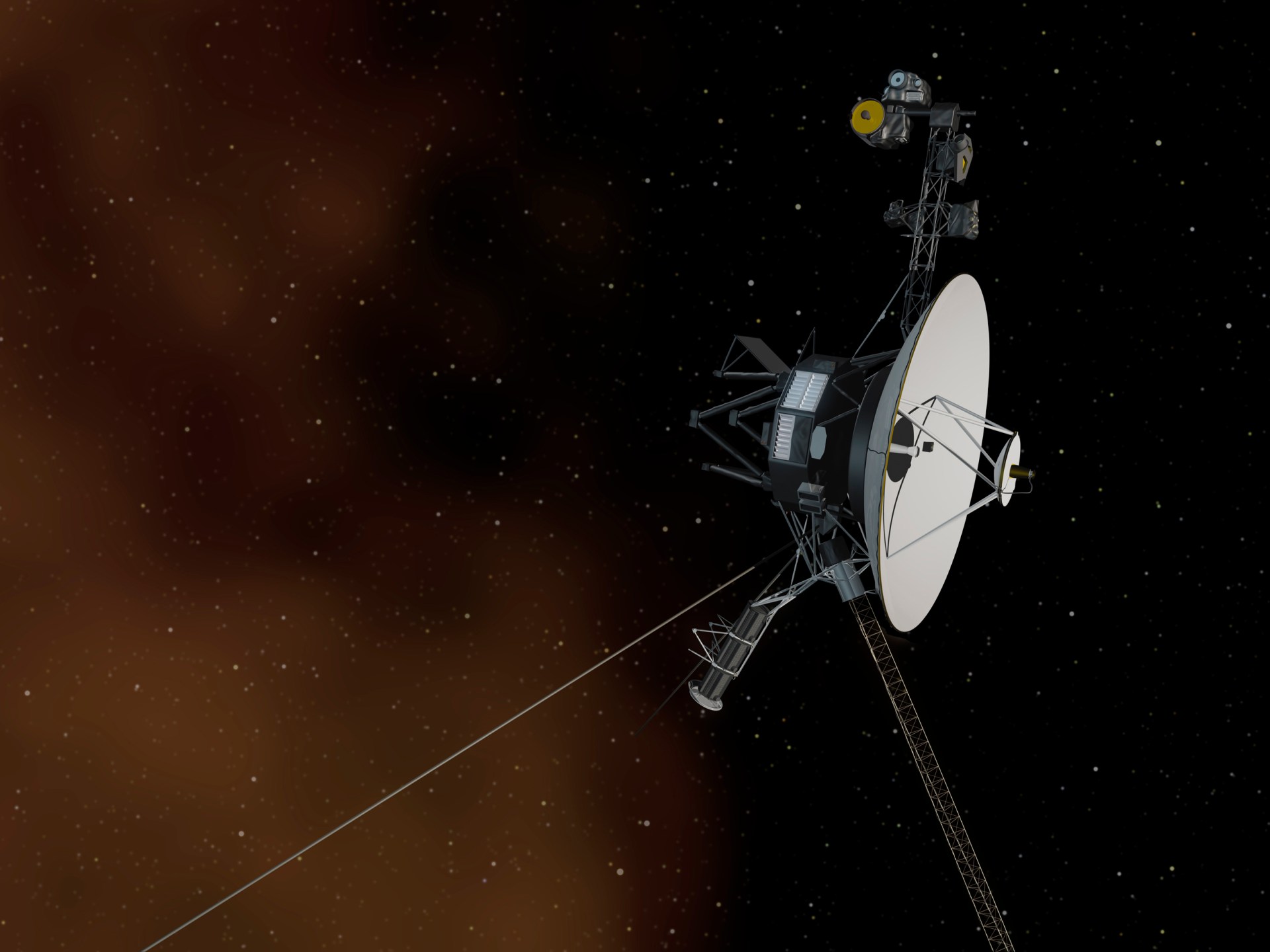
Voyager 1 Approaches Milestone in Interstellar Journey
Published on 14 Nov 2026
Voyager 1 Reaches New Distance Record
Nasa’s Voyager 1 probe, which was launched in 1977, is on the verge of a historic achievement: it will become the first human-made object to travel a distance equal to one light-day from Earth, approximately 16 billion miles. This remarkable milestone is set to be reached when the probe is officially recognized for covering this vast distance.
Current Status of Voyager 1
Having completed its primary planetary mission with a notable flyby of Saturn in 1980, Voyager 1 is now hurtling through the expanse of interstellar space at a speed of about 36,000 miles per hour (58 km/h). Despite the immense distances involved, the probe continues to communicate valuable scientific data back to a dedicated team of NASA scientists on Earth.
Data transmitted from Voyager 1 includes crucial information regarding the strength and direction of the surrounding magnetic field, as well as measurements of pressure, cosmic dust, and galactic cosmic rays.
Future Projections
NASA estimates that it will take Voyager 1 approximately 18,000 years to reach the next light-year, and another 36,000 years before it approaches another star, showcasing the incredible scale of interstellar space.
Meanwhile, Voyager 2, its sister probe, is projected to reach the one light-day milestone in 2035, demonstrating the pioneering spirit of both spacecraft.
The Role of Ground Teams
Both Voyager missions remain operational thanks to a small team of engineers who send commands weekly. In recent months, there was a temporary communications loss with Voyager 1, prompting concerns and ongoing investigations to resolve the issue, although the exact cause remains undetermined.
Cultural and Scientific Impact
Voyager 1 has left a profound cultural imprint on humanity, most notably through the iconic “Pale Blue Dot” photograph, taken in 1990, which captures Earth from a distant vantage point.
Bill Nye from the Planetary Society highlighted the mission’s importance, stating, “All of us — everyone on Earth — have been touched by these missions,” underlining their significant contribution to our understanding of the universe.
