Innovative VBIOS Modification Tools for NVIDIA Graphics Cards
Overview of New Development
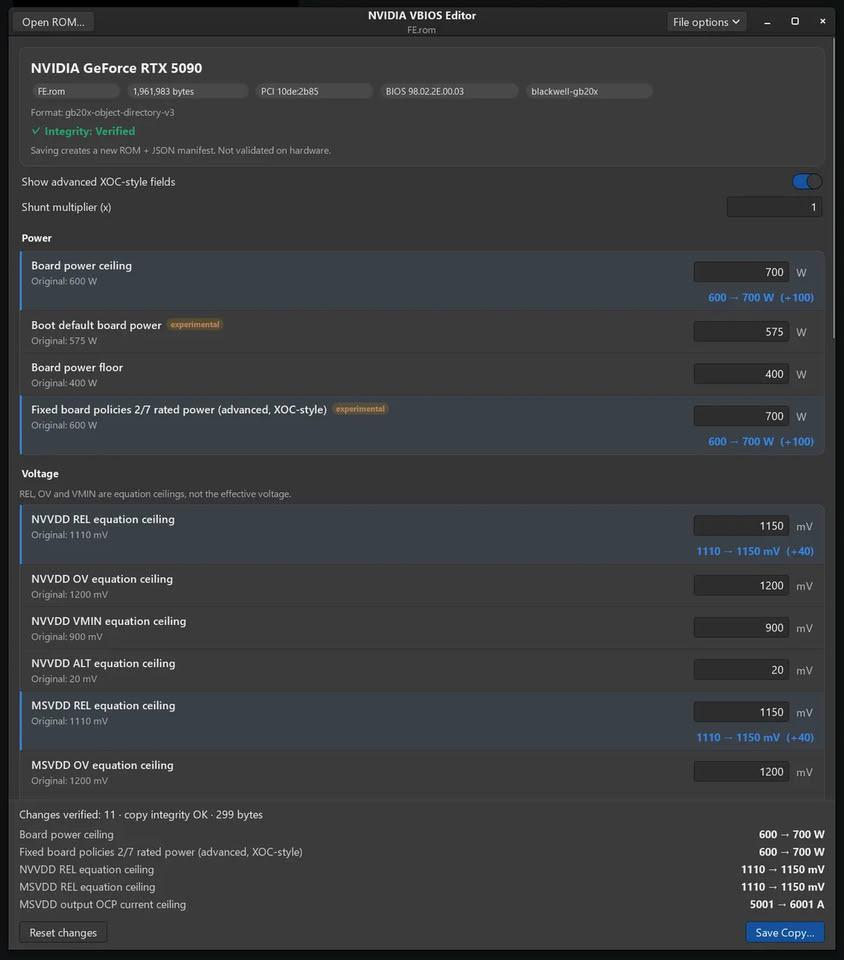
Developer Panchovix has unveiled a suite of three tools specifically designed for users of NVIDIA’s GeForce RTX 30, 40, and 50 series graphics cards. These tools enable modifications to the Video BIOS (VBIOS) without the need to write directly to the card’s flash chip, a significant advancement that enhances usability for enthusiasts and professionals alike.
Functionality of the Tools
The initial tool is a VBIOS editor compatible with both Windows and Linux platforms. Users can alter several parameters, including:
- Power limits
- Voltage ceilings
- Current (Overcurrent Protection – OCP) limits
- Fan channels
- Core and memory offset ranges
It is important to note that while the edited VBIOS images maintain NVIDIA’s original signatures, they cannot be flashed using the conventional nvflash tool due to a mismatch in signatures. However, this innovative method bypasses the need for flashing entirely.
How It Works
The operation differs between operating systems:
- Windows: The modified VBIOS image is stored in the GPU’s driver registry key. This allows the driver to recognize the override on each device startup, requiring only a quick GPU restart for activation.
- Linux: The loader modifies NVIDIA’s open kernel modules to start the GSP firmware with the custom image. So far, this method has been tested successfully with Fedora 43 on actual hardware.
Performance Enhancements in Testing
In recent tests, users have experienced significant performance boosts. For example:
- An RTX 5090 Founders Edition saw its board power ceiling increase from 600 W to 700 W.
- An RTX 4090 had its power limit raised from 550 W to 671 W, with core offset ranges expanded up to +2,000 MHz.
- Tests indicated an RTX 5090 peaking at 800 W and the RTX 5080 improved from 360 W to 500 W.
- The RTX 5060 Ti went from 185 W up to 300 W.
Considerations for Use
It is crucial for users to proceed with caution when adjusting power and voltage limits, as these modifications carry inherent risks. It is recommended to:
- Keep a backup of the original VBIOS ROM.
- Test changes on a GPU that does not power a display to mitigate potential issues.
Also, the Windows loader requires driver version 616.56 or newer. Interestingly, this was the version following NVIDIA’s efforts to disable related modifications through the mVolt+ tool earlier this year.
Conclusion
Panchovix’s new tools offer a groundbreaking approach to VBIOS modifications for NVIDIA GPU users, facilitating customization without the risks associated with flashing. As the landscape of GPU tuning continues to evolve, these utilities could pave the way for further innovations in performance enhancement.