


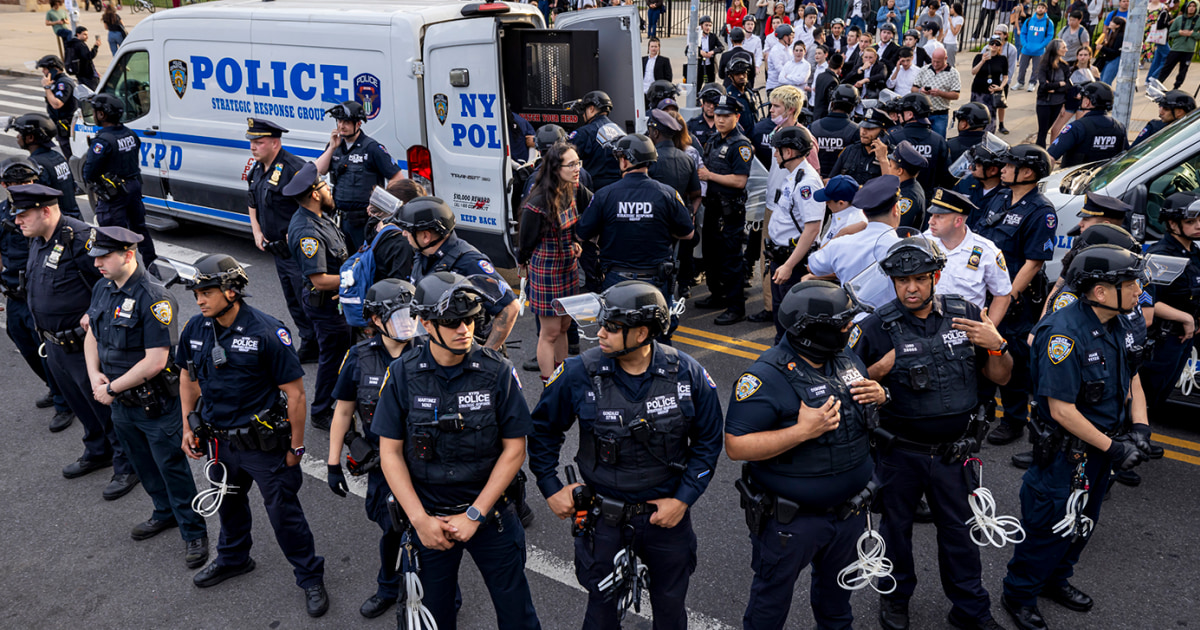
New York City Disbands Police Strategic Response Group
In a significant shift in public safety strategy, New York City Mayor Zohran Mamdani and NYPD Commissioner Jessica Tisch have announced plans to disband the Strategic Response Group (SRG), a move aimed at responding to critiques surrounding its militaristic approach during protests.
Key Developments in Public Safety Reform
The disbanding of the SRG, which has been a focal point of criticism, aligns with Mayor Mamdani’s campaign pledge made during the lead-up to the 2025 election. He has articulated that responsibilities relating to counter-terrorism and First Amendment protections should not reside within the same unit.
Under this new initiative, counter-terrorism duties will transition to the NYPD’s Intelligence and Counterterrorism Bureau, separating them from operations addressing public protests.
Civilian-Led Approach to Protests
Starting in the upcoming year, a newly formed division, the Community Dialogue and De-escalation Division (CDDD), will oversee the management of protests. This division, operating under the Mayor’s Office of Community Safety, will consist of civilian members and will not possess arrest powers or firearms, as emphasized by Mayor Mamdani during the announcement.
Mamdani noted, “New Yorkers exercising their constitutional right to protest should not be met with the same police response as a terrorism threat. We are establishing a new, civilian-led approach that prioritizes dialogue, engagement, and de-escalation.”
NYPD’S First Amendment Support Team
To facilitate a smooth transition and to ensure immediate support in managing public demonstrations, the NYPD will establish a First Amendment Support Team (FAST). This team will consist of 30 trained officers specializing in communication strategies and de-escalation techniques until the CDDD becomes fully operational.
Revised Use of Police Tactics
The reforms also include specific restrictions on police tactics utilized during public gatherings. Notably, the use of pepper spray as a means of crowd control will be prohibited, and the volume of long-range acoustic devices must remain below 90 decibels to minimize disruptive effects on the public.
Commissioner Tisch affirmed the NYPD’s commitment to effective policing, stating, “I would never support changes that diminish the NYPD’s ability to protect New Yorkers, or that put our officers in a position where they lack the resources necessary to confront a serious threat.”
Background on the Strategic Response Group
The SRG, which comprises about 600 officers, has been involved in various high-profile incidents, including accusations of excessive force during protests related to the George Floyd case in 2020. These incidents led to a legal settlement in 2023 and critiques surrounding the group’s aggressive tactics.
The dissolution of the SRG, anticipated to be completed by mid-February, has sparked mixed reactions. Police unions voiced their discontent, with Detectives Endowment Association President Scott Munro arguing, “Why change it? It doesn’t need to be changed. It’s working.”
Conversely, advocacy groups have praised the decision, believing it enhances public safety and aligns with First Amendment rights. Donna Lieberman from the New York Civil Liberties Union noted, “Good news for New Yorkers. Good news for public safety. Good news for the First Amendment.”
Future Implications
In concluding the discussion on public safety measures, Mayor Mamdani reassured the public that there would be “absolutely” no reduction in police response times to large-scale events. He reiterated that the goal of these reforms is to improve safety while also upholding the constitutional rights of all New Yorkers.
