


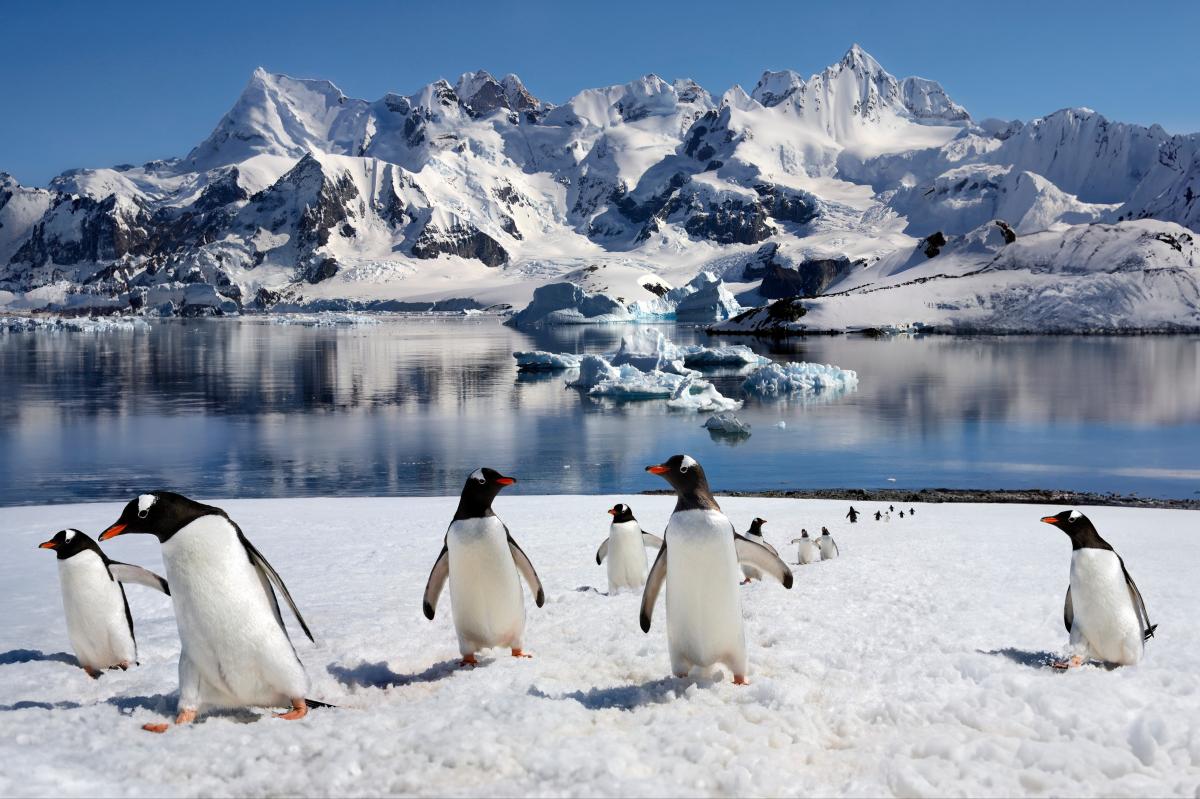
Penguin Poop: An Unexpected Factor in Antarctica’s Snow Melt
In recent studies, researchers have uncovered a surprising contributor to the melting ice in Antarctica: penguin feces. While human activity is largely responsible for climate change, the droppings of these flightless birds are fertilizing algae blooms on the Antarctic Peninsula, leading to significant ecological shifts.
The Role of Penguin Droppings
A study published in the Journal of Geophysical Research: Biogeosciences highlights how penguin guano is enriching the snow algae population. As these birds march across the ice, they distribute fecal matter, promoting the growth of green algae that thrive under favorable conditions. This green snow absorbs significantly more sunlight, approximately 40% more than white snow, accelerating the melting process.
Impact on Climate Predictions
The study’s senior author, Alia Khan, who is a cryosphere biogeochemist at the University of Colorado Boulder, emphasized the importance of understanding the link between wildlife, nutrients, and snow algae. According to Khan, failing to account for these biological factors could lead to significant underestimations regarding the rate at which Antarctic snowpacks are melting and the expansion of ice-free areas.
Last year, the world’s largest penguin colony—home to over a million chinstrap penguins on Zavodovski Island—suffered a dramatic decline, with numbers halving due to rising sea temperatures that have affected their food sources. This migration further complicates ecological dynamics in the region.
The Life Cycle of Snow Algae
Khan’s research focused on how snow algae adapt to their environment. When conditions are harsh or nutrients are limited, these organisms produce red pigments for UV protection. Conversely, when nutrients—such as those from penguin droppings—are abundant, the algae flourish, taking on green pigments to maximize photosynthesis during the brief Antarctic summer.

Environmental Implications
This nuanced relationship between penguin poop and snow algae represents a critical element in understanding the dynamics of snowmelt in Antarctica. The research team’s method involved collecting algae samples, an endeavor Khan described as “stinky work,” due to the proximity to penguins spreading their droppings everywhere.
The findings illuminate how nutrient contributions from penguins can feed these algae blooms, establishing a direct link between the marine food web and terrestrial snow ecology. This marks a critical advancement in climate research as the pace of Antarctic greening could accelerate in tandem with the movement of penguin populations.
Contrasting Research Findings
Interestingly, prior studies have shown that penguin excreta could also play a role in slowing the glacier retreat. Research in Finland indicated that gases emitted from penguin waste can lead to cloud formation, which consequently helps to block sunlight, thus mitigating heat on the Antarctic ice.
Nonetheless, the overall effects of these processes on the climate are complex and warrant further investigation to gain a clearer understanding of their implications on a global scale.
Conclusion
As research continues, it is evident that the interaction between wildlife, ecosystems, and climate is intricate. Efforts to disentangle these relationships are imperative for accurate climate predictions and responses. Understanding how factors like penguin feces contribute to the broader ecological canvas of Antarctica will be crucial for future conservation efforts.
