


Rubio on Republican Setbacks: A Call for Enduring Ideological Strength
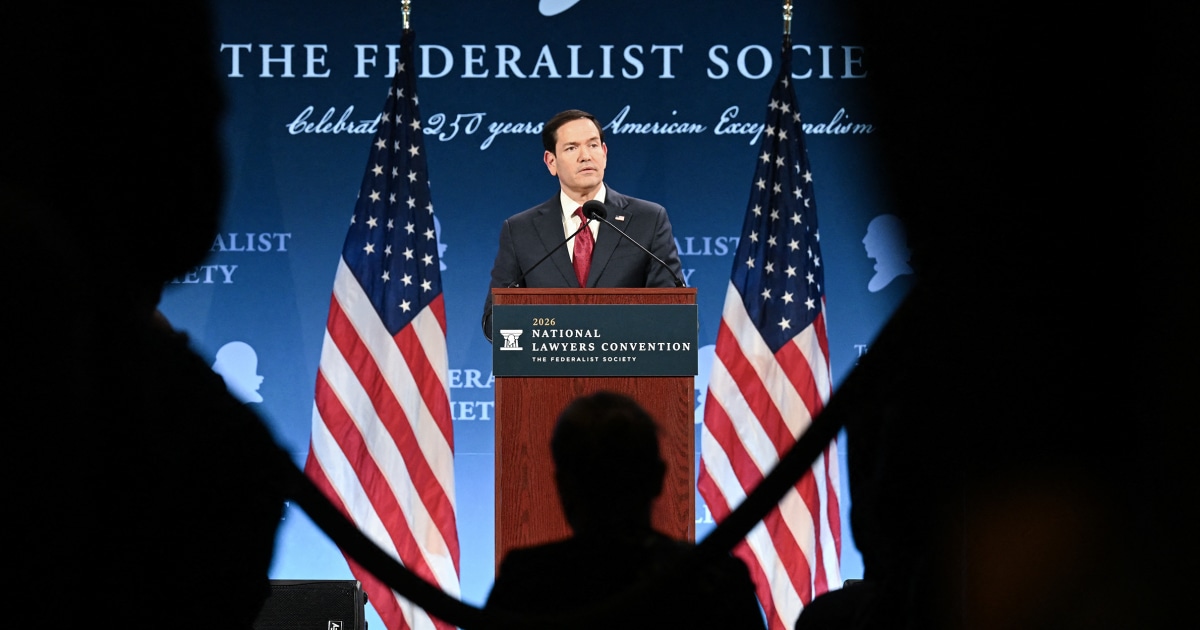
On Friday, Secretary of State Marco Rubio addressed supporters at the National Lawyer’s Convention in Washington, D.C., reflecting on recent Republican losses in the midterm elections.
A Reminder of Political Resilience
During his keynote address, Rubio encouraged his audience to view political setbacks as temporary and not indicative of the end of the republic. He stated, “Politics requires more than simply winning elections,” urging members of the conservative Federalist Society to draw inspiration from past defeats.
“Great things that last are built in decades, not election cycles,” he added, reminding attendees that political victories fluctuate over time.
The Role of Conservative Ideology
Rubio emphasized the need to maintain and advocate for conservative ideology despite electoral disappointments. He pointed out that political power extends beyond government positions, noting the significant influence of institutions such as universities, the media, and various facets of civil society.
“Elections decide who holds office for a season, but they do not determine the teachings of our institutions or the beliefs of our legal professionals,” he explained, underscoring a broader concept of political engagement.
International Law and American Sovereignty
In his remarks, Rubio also addressed the complexities of international law. He criticized what he described as a continual onslaught of claims regarding America’s violation of global regulations. Addressing recent controversies, he defended actions taken against vessels involved in drug trafficking in the Caribbean and the immigration policies of the Trump administration.
“None of this has anything to do with any real higher standard of justice,” Rubio stated, asserting that international law is often manipulated by a global elite to suit their interests rather than upholding universal principles.
Critique of Global Institutions
Rubio openly criticized the United Nations and the International Criminal Court (ICC), arguing that these institutions overstep their mandates. “Americans have never agreed to submit to the ICC’s authority,” he asserted, claiming that the court operates with unchecked power and aligns itself against U.S. interests.
This criticism follows recent actions by the Trump administration which imposed sanctions on the ICC, particularly in response to the court’s investigations into U.S. actions.
The Domestic Impact of “Activist Courts”
In addition to his commentary on international law, Rubio cautioned against what he termed “activist courts” within the United States, which he argued seek to govern through judicial injunctions. He warned that such judicial behavior poses a threat to the Constitution and American sovereignty.
Rubio characterized these courts as allies of those undermining fundamental legal principles in an effort to weaken the nation. “For these people, the fundamental purpose of the law, American law and international law alike, is to weaken the United States,” he said.
Conclusion: A Call to Action
Rubio concluded his address by calling for renewed commitment among conservatives to uphold their principles and influence within various societal institutions. His remarks echoed a sentiment of resilience, encouraging supporters to view setbacks as part of a broader struggle for ideological strength and continued engagement in both domestic and international landscapes.
