


BepiColombo Mission Reaches Mercury: A New Chapter in Space Exploration
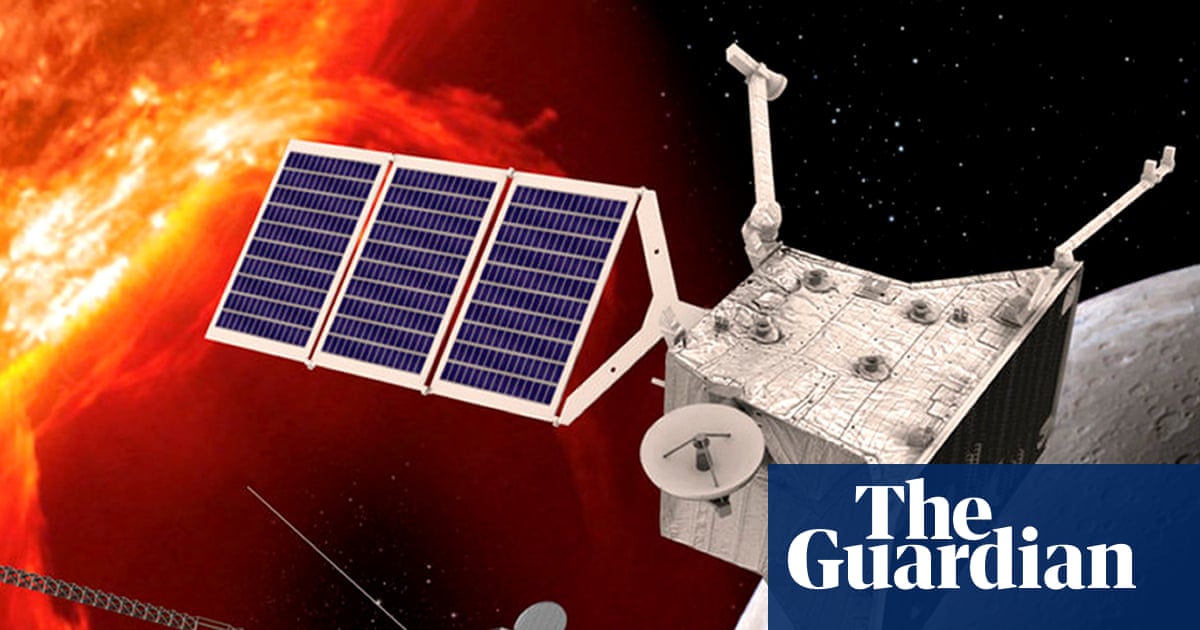
After an extraordinary journey spanning over eight years and covering a distance of 6 billion miles, the BepiColombo mission has successfully reached Mercury. This ambitious project, a collaboration between European and Japanese space agencies, is now on the brink of entering orbit around the solar system’s smallest planet.
About the BepiColombo Mission
Pledging a total investment of €1.6 billion (£1.4 billion), the BepiColombo mission stands as only the second endeavor in history to orbit Mercury. It is poised to unlock secrets about the planet’s formation, its magnetic field, and the enigmatic frozen ice found in its shadowy craters. Flight controllers are set to ignite the spacecraft’s thrusters on Saturday, initiating its orbital insertion.
The Challenges of Reaching Mercury
Exploring Mercury poses unique challenges due to its proximity to the sun. As spacecraft accelerate under the sun’s immense gravitational pull, they must also account for the need to decelerate significantly to avoid overshooting their target. “It’s a very complex and challenging mission,” said Prof Emma Bunce from the University of Leicester, the principal investigator for the Mercury Imaging X-ray Spectrometer (MIXS), an instrument designed to analyze the planet’s surface composition.
Scientific Endeavors Ahead
The scientific operations on the BepiColombo mission will commence in early December when the spacecraft separates into two distinct orbiters: one European and one Japanese. These will maneuver into separate polar orbits around Mercury, with full-scale scientific observations expected to begin by April of the following year.
- The Mercury Planetary Orbiter (MPO) will focus on mapping Mercury’s surface and investigating its interior characteristics, particularly its unusually large core.
- The counterpart Japanese orbiter will examine the planet’s magnetic field and explore its sodium exosphere, a thin layer of gas enveloping Mercury.
Despite being only 50% larger than the Moon, Mercury has a mass four times greater. The mission seeks to understand this density anomaly.
Expectations from the Mission
Anticipation for the scientific findings continues to drive excitement among researchers. Prof Geraint Jones, the lead project scientist at the European Space Agency, emphasized the potential for groundbreaking discoveries: “We’re expecting to learn a huge amount, bringing more powerful instruments on two spacecraft to study all aspects of the planet – its interior, surface, and the space around it.”
Mercury’s Environmental Extremes
Mercury is characterized by extreme conditions. The planet takes 58 Earth days to complete a rotation, resulting in surface areas experiencing enduring daylight followed by prolonged darkness. The temperatures vary drastically, soaring to 450°C during the day and plummeting to -180°C at night.
“As well as cameras that cover a wide range of wavelengths to study the surface, we’ll be ‘tasting’ the gases around the planet, sensing the magnetic field, probing the interior with ultra-sensitive instruments, and mapping the shape of the whole planet with a laser,” Jones stated, highlighting the advanced technologies deployed in this mission.
Future of the Mission
The BepiColombo spacecraft are anticipated to stay in orbit around Mercury for approximately three years before depleting their fuel reserves and ultimately impacting the surface. “Sadly, they are not coming back,” said Prof Bunce, lamenting the end of their journey but optimistic about the wealth of knowledge expected to emerge from this unparalleled mission.
