


SpaceX’s Starship Test Flight Encounters Challenges
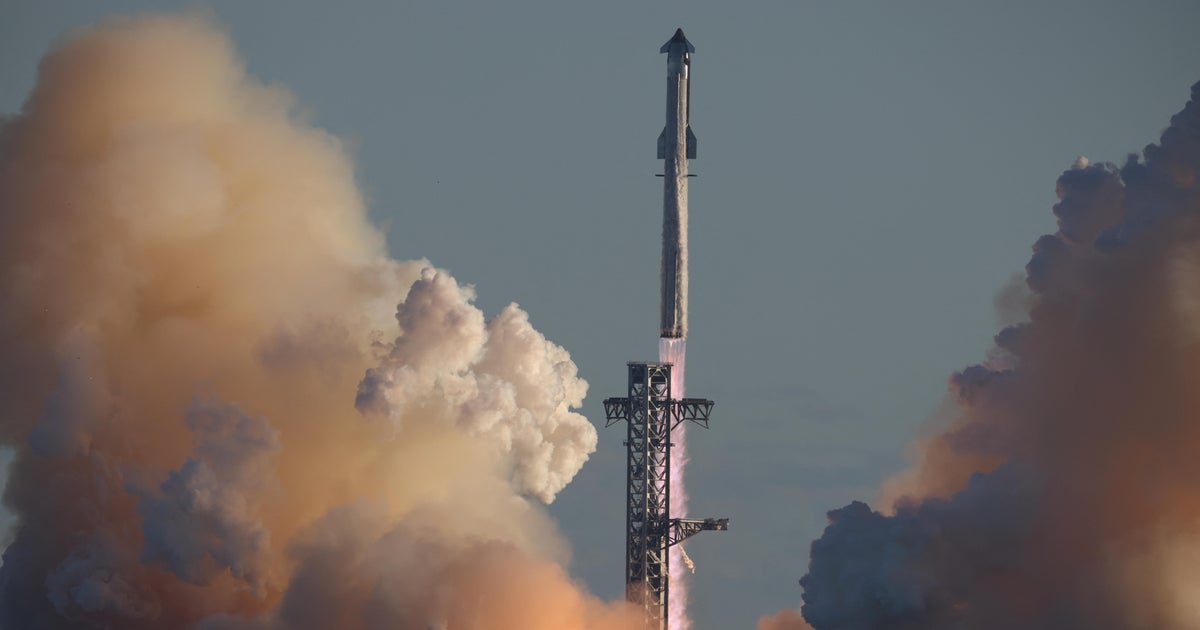
On November 13, 2026, SpaceX launched its 15th test flight of the Starship rocket, a mission intended to demonstrate the ambitious capabilities of both the booster and upper stages. The flight, which lasted approximately 22 hours, aimed to achieve the first-ever capture of the Starship’s booster upon its return to the launch pad.
Launch Summary
The massive Starship rocket lifted off from the SpaceX facility, known as “Starbase,” located in Boca Chica, Texas, at 5:47 p.m. ET. The impressive 236-foot-tall Super Heavy booster, equipped with 33 Raptor engines, powered the craft into the skies, successfully propelling the Starship towards its intended orbit.
Unexpected Splashdown
However, shortly after the booster’s separation, a technical issue disrupted plans for a return-to-launch-pad capture. Instead of returning as intended, the booster was diverted to a splashdown in the Gulf of Mexico, where it unfortunately exploded just moments before contact with the water. Long-range cameras captured its descent, displaying a dramatic fireball as residual propellant ignited.
Mission Control Response
Following the booster’s separation, the Starship continued its flight, initially maintaining a suborbital trajectory. This design allowed mission controllers to evaluate the vehicle’s health before attempting the final orbit insertion. After a successful assessment, the Starship executed a brief burn with a single Raptor engine, enabling it to enter its planned orbit successfully.
Plans for Upper Stage Capture
Despite the setback with the booster, SpaceX is set to proceed with plans for the first catch of the upper stage on November 14, 2026. This phase aims to showcase the full reusability of the Starship system, a critical step in advancing space travel capabilities. The Starship will follow a meticulously calculated reentry path, designed to avoid populated areas while maneuvering towards a landing at Starbase.
Future Considerations
With a return check scheduled for Saturday afternoon, a Raptor engine is expected to ignite for a controlled descent into the atmosphere. As the Starship maneuvers, it will utilize its four control flaps to guide itself accurately toward the launch pad, preparing for a potential catch by the gantry’s mechanical arms.
Conclusion
SpaceX continues to explore the development of reusable rockets, describing this pursuit as “the holy grail of rocketry.” This aligns with the company’s broader goals, which include NASA’s reliance on a modified version of the Starship for upcoming lunar missions. Despite the recent challenges, SpaceX’s ongoing tests are essential in paving the way for future advancements in space exploration.
