


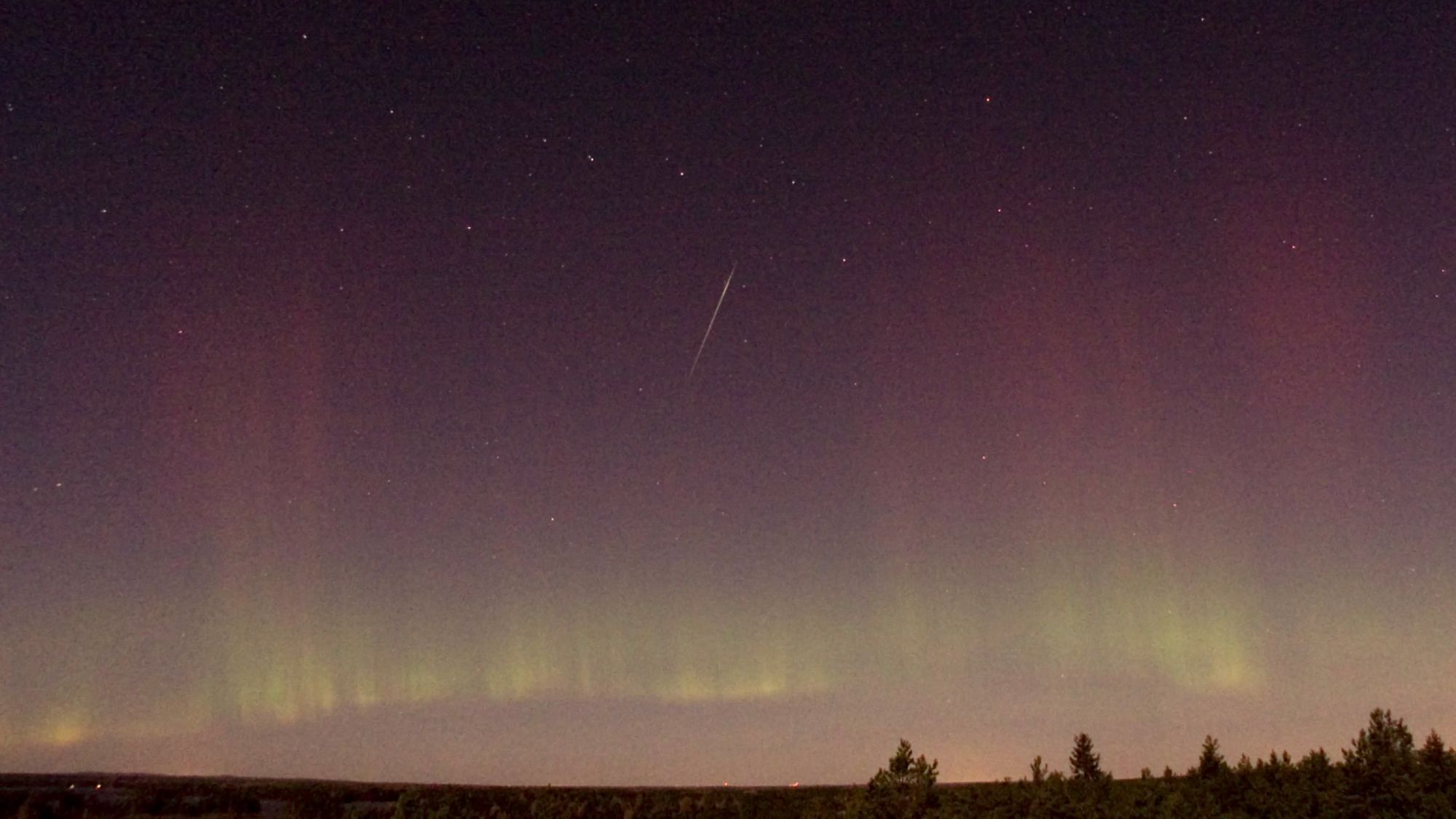
Spot the Draconid Meteor Shower: Viewing Guide for October 2023
Attention, stargazers! The Draconid meteor shower is set to reach its peak on the evening of October 8, 2023. Unlike many meteor showers that are best viewed in the early morning hours, the Draconids offer a unique opportunity to enjoy shooting stars shortly after sunset.
What Are the Draconids?
The Draconid meteor shower occurs annually as Earth passes through the debris trail shed by Comet 21P/Giacobini-Zinner. This comet orbits the sun approximately every 6.6 years, leaving behind a path of meteoroids that create the Draconids when they enter the Earth’s atmosphere. This year, the shower is active from October 6 to October 10.
Optimal Viewing Conditions
The ideal time for observing the Draconids will be around 9 p.m. EDT (0100 GMT on October 9). At this time, the meteors will be at their most active, especially for viewers situated in the Northern Hemisphere, as reported by NASA.
Locating the Radiant
Draconid meteors appear to emanate from the constellation Draco, which translates to “the dragon.” You can find this constellation in the night sky towards the northwest after sunset during October. To maximize your viewing experience, look for a patch of sky about 40 degrees away from the radiant point where the meteors will be most visually striking.
Prepare Your Eyes for Viewing
Before immersing yourself in meteor watching, allow your eyes to adjust to the dark for approximately 30 minutes. Under ideal conditions, viewers can expect to see up to five meteors per hour during the peak. However, rare events have been recorded, such as in 1933 when up to 500 shooting stars were observed in just a minute, or in 2018 when counts soared above 100 meteors per hour.
Future Draconid Displays
As the debris from Comet 21P is temporarily concentrated when the comet nears the inner solar system, the potential for heightened meteor activity increases. The next pass of the comet is expected in March 2025, which could lead to future stunning displays. Stargazers in 2026 will benefit from excellent observing conditions highlighted by a nearly dark crescent moon.
Photography Tips
If you’re interested in capturing the beauty of the Draconid meteor shower, consider using a camera like the Canon EOS R8. It features a 24MP full-frame sensor and excels in low-light conditions, making it an excellent choice for astrophotography.
For more detailed shooting guidance, consult resources tailored to capturing meteor showers, alongside recommendations for suitable cameras and lenses for such occasions.
As an engaging finale, if you capture any images of the meteor shower, we invite you to share your photos and details with our community at spacephotos@space.com.
