


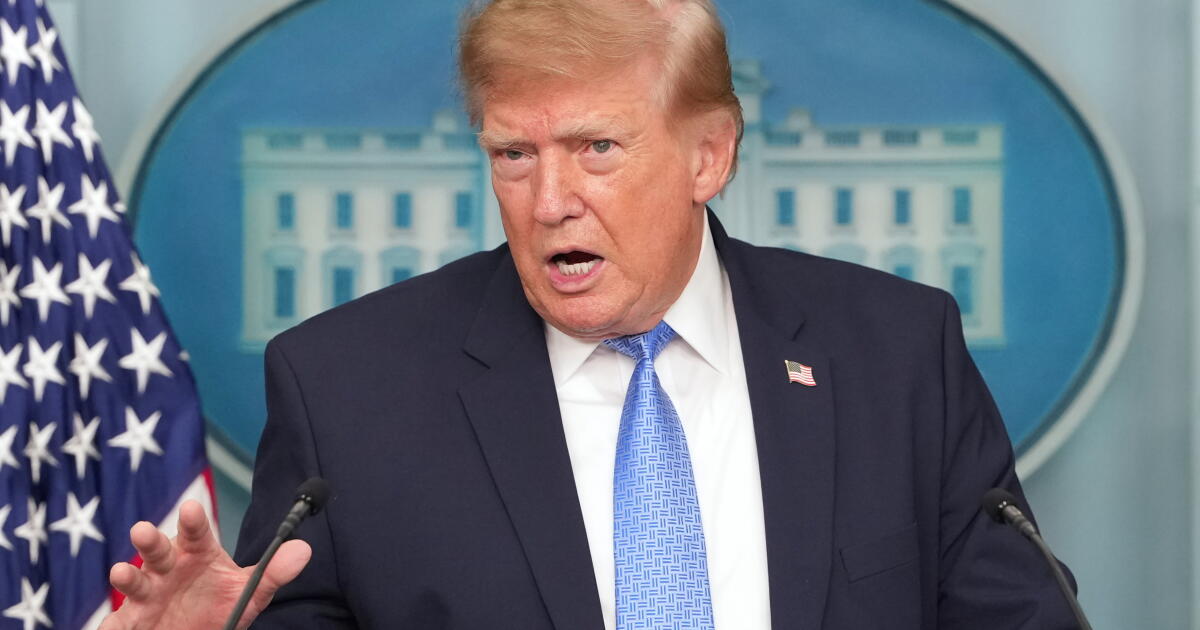
Trump’s Tactics Amid Congressional Investigations
As President Trump braces for increased scrutiny from congressional Democrats beginning in January, he and his allies have adopted a strategy reminiscent of tactics often employed by authoritarian regimes. Experts are noting a distinct pattern where the absence of evidence seems to pave the way for baseless allegations against political adversaries.
Rhetoric of Corruption
In a series of social media posts, Trump has claimed that the Democratic Party is dominated by “one of the most Corrupt and anti-American groups of political leaders in the history of our Country.” He further alleged that “Massive Corruption and Crime is taking place in Democrat-run Cities and States.” According to Trump, the party allegedly cheated to secure victories in the midterms and now aims to intimidate Republicans with what he describes as “knowingly false accusations and charges.”
Trump has specifically targeted six Democratic lawmakers, dubbing them the “Seditious Six” for advising military personnel against following potentially illegal orders, calling for their prosecution. He has described Democrats as “CORRUPT AND EVIL,” positioning himself as their antithesis.
Threats of Legal Action
These allegations come in the backdrop of warnings issued by White House Counsel Will Scharf to Democratic representatives, asserting that investigating Trump could lead to criminal repercussions. This is compounded by recent actions from the Justice Department, which cautioned state and local election officials regarding potential prosecution for handling ballots cast by allegedly noncitizen voters.
Political analysts argue that Trump’s accusations are a reaction to a pivotal moment—heightened vulnerability as he faces looming investigations that reflect a growing public concern about corruption in government. Barbara Geddes, a political science professor at UCLA, states that such accusations are common among authoritarian leaders and are often a method to discredit challengers during periods of political instability.
Accountability and Dueling Claims
Trump’s administration has leveled accusations against various political figures, ranging from Democratic officials to journalists and military leaders. Notably, some of these claims are based on relatively inconsequential documentation errors. For instance, Trump accused Senator Adam Schiff (D-Calif.) of mortgage fraud over property listings. Additionally, he’s scrutinized past immigration paperwork related to Rep. Ilhan Omar (D-Minn.), despite such allegations not constituting legitimate crimes.
As recent midterm elections saw a significant rejection of Trump’s party, many voters pointed to issues of government corruption as significant factors in their decisions. Polling data indicated that over half of voters found corruption to be a pivotal concern during the congressional elections.
Responses from Democrats
Democratic leaders, anticipating increased oversight responsibilities, assert their commitment to investigating Trump’s conduct while dismissing the accusations aimed at them. For instance, Rep. Robert Garcia has pledged to investigate a range of financial dealings connected to Trump, including explorations into his real estate ventures and substantial transactions involving foreign entities.
Senator Richard Blumenthal emphasized that the administration’s tactics resemble those of authoritarian leaders. He affirmed the commitment of Congress to uphold oversight responsibilities mandated by the Constitution and the electorate.
Analyzing the Political Landscape
According to experts, both right and left factions globally use anti-corruption charges to rally support and marginalize opposition. Daniel Treisman, co-author of “Spin Dictators,” highlights this trend across various political systems, citing examples from authoritarian leaders who leverage accusations of corruption to consolidate power. Trump’s approach serves as a preemptive strategy to undermine the credibility of his opponents, especially in the light of rising allegations against his administration’s integrity.
California Attorney General Rob Bonta criticized the administration for manipulating legal frameworks to diminish opposition, characterizing their actions as indicative of autocratic behavior. Yet, legal experts maintain that courts have so far resisted many of Trump’s claims, indicating a potential check on his strategies.
Conclusion
As investigations loom on the horizon, the political environment remains charged. Trump’s response mechanism—casting suspicion on adversaries—reflects broader themes seen in various political contexts globally. The coming months will likely reveal how these tactics resonate with the electorate and impact governance in the United States.
