


Advancements in Semiconductor Interconnect Technologies
Overview of Interconnect Challenges
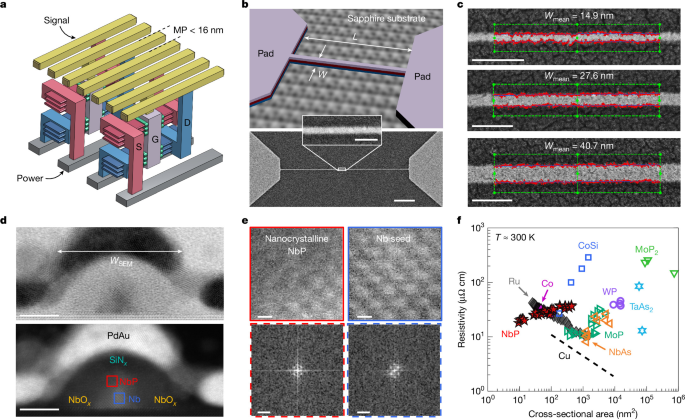
The rapid evolution of semiconductor devices has highlighted the pressing challenges associated with interconnects. Recent research by Kim et al. (2024) underscores the need for innovative solutions to enhance computing performance. As devices continue to shrink, traditional interconnect materials are reaching their limits, necessitating a reevaluation of materials science to accommodate increasing demand.
The Push for Scalable GPU Technology
With the demand for more powerful GPUs fueled by advancements in artificial intelligence, Liu and Wong (2024) discuss the journey towards developing chips that accommodate up to a trillion transistors. This ambitious goal emphasizes the urgent need for new interconnect technologies that can handle increased data loads and improve signal integrity.
Material Innovations for Enhanced Performance
Exploring Topological Materials
Topological materials are gaining traction for their unique electronic properties. Research from Kim et al. (2024) explores how these materials can be utilized in next-generation interconnects. These materials, such as Weyl semimetals, promise enhanced conductivity and reduced resistivity, thereby potentially overcoming the limitations of traditional interconnect materials like copper.
The Role of Ruthenium and Cobalt
Ruthenium and cobalt are emerging as promising alternatives for interconnect materials. Notably, Penny et al. (2025) demonstrated the viability of ruthenium interconnects at advanced technology nodes. Meanwhile, Khan et al. (2025) reported improvements in electrical performance in ultrathin noncrystalline cobalt silicide interconnects, indicating their potential for next-generation applications.
Challenges in Scaling and Reliability
Despite promising advancements, significant challenges remain in scaling interconnect technologies. Kiani and Cha (2025) discuss the difficulties faced when shrinking interconnect dimensions beyond traditional materials. Their research emphasizes the importance of reliability in new materials, highlighting the balance between performance and fabricability.
Future Directions
The next frontier in interconnect technology lies in the development of novel materials and fabrication techniques. Future research is likely to focus on:
- Refining the properties of topological semimetals and their application in interconnects.
- Developing techniques for the efficient integration of advanced materials into existing manufacturing processes.
- Improving the electromigration resistance of copper through innovative techniques, as demonstrated by Li et al. (2019).
- Exploring hybrid materials that combine the benefits of various conductive elements.
