


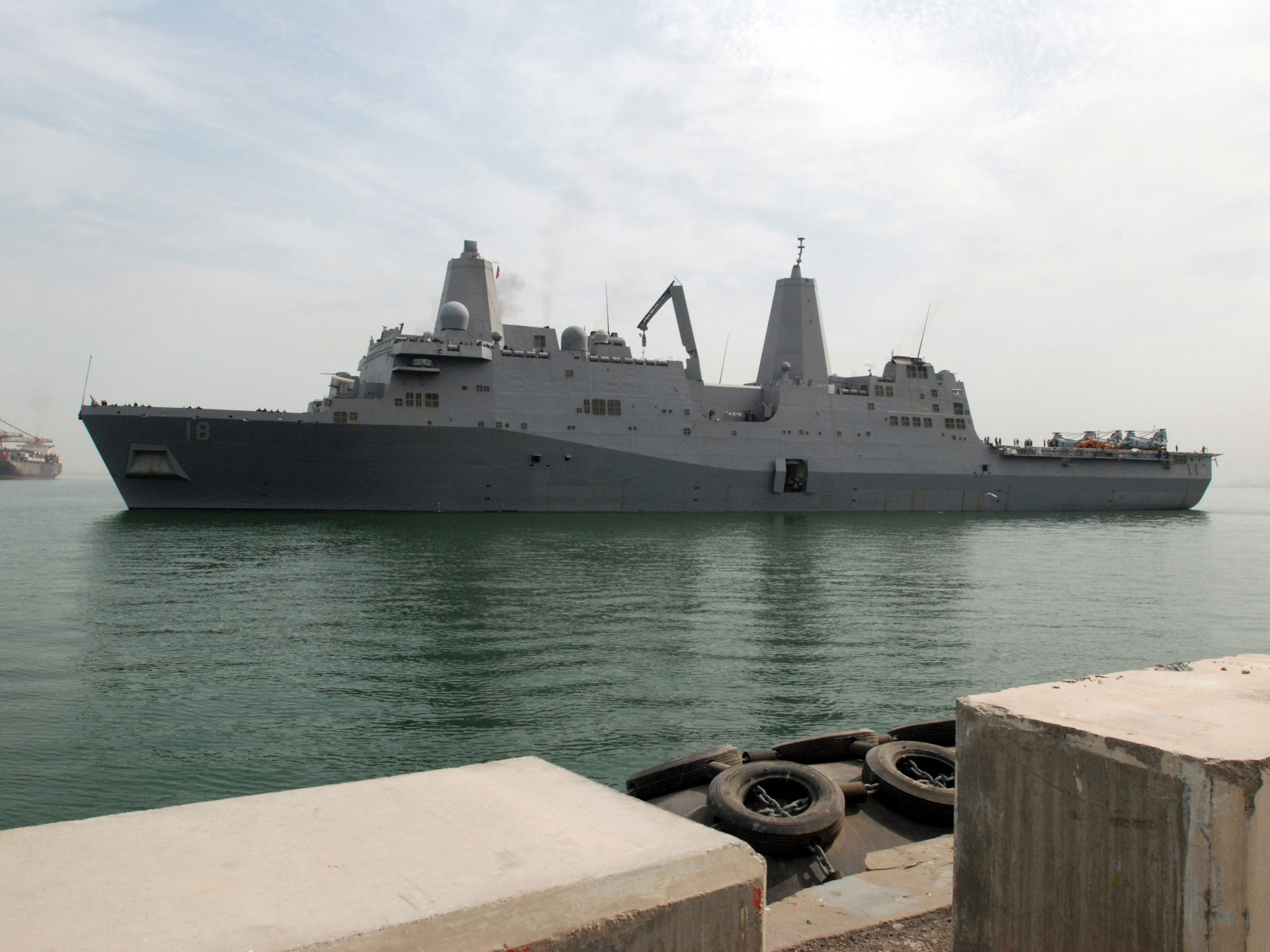
Escalating Tensions: Iran’s IRGC Targets U.S. Radar in Bahrain
Published On 13 Nov 2026
Recent Drone Strikes and Retaliation Claims
The U.S. Central Command (CENTCOM) recently reported intercepting two attack drones launched by Iran’s Islamic Revolutionary Guard Corps (IRGC), with no reported injuries or damages. The incident occurred on Friday, following an IRGC statement claiming responsibility for attacking a U.S. early-warning radar installation in Bahrain.
This retaliatory strike was purportedly in response to what the IRGC described as an airstrike on a telecommunications tower located in southern Hormozgan province, Iran.
Conflicting Accounts and Regional Implications
In reporting the developments, Al Jazeera’s Alan Fisher noted that neither the U.S. nor Iranian claims could be independently verified. CENTCOM stated that the drones were downed as they approached Iranian territory, marking a significant escalation in military actions.
According to Al Jazeera’s Resul Serdar, while the U.S. has occasionally targeted Iranian telecommunications at military sites, this instance represents Iran’s first direct attack on U.S. military assets in the region, raising concerns about potential new conflict fronts.
Warnings from the IRGC
The IRGC’s announcement followed reports from Iran’s state news agency IRNA, which indicated that the port city of Sirik in Hormozgan province had been subjected to what they termed “enemy fire.” The IRGC issued a stark warning to what it identified as the “aggressor enemy,” urging an end to a series of aerial provocations and oil smuggling operations within the strategic Strait of Hormuz.
“Should these violations and acts of aggression recur, the IRGC Aerospace Force stands in full readiness to engage without limits,” stated the IRGC. They added that the operation had successfully targeted and destroyed the radar facility.
Contextualizing the Attack
This event marks the first time since September that Iran has claimed to have attacked U.S. military assets based in a Gulf nation. Reports indicate that tensions have consistently escalated; Israel’s security cabinet has also reportedly intensified military preparations for potential strikes against Iran.
Iran’s security chief, Mohsen Rezaei, expressed that any future military actions by the U.S. would render every involved base from West Asia to Europe a legitimate target for Iranian strikes.
A recent Pentagon report highlighted significant damage inflicted by Iranian attacks on U.S. installations across several countries, including Bahrain. Analysts note that this has led to the deterioration of some U.S. bases in the region.
U.S. Response and Diplomatic Efforts
U.S. President Donald Trump indicated a willingness to resort to military action should diplomatic negotiations, notably those led by Qatar, fail to yield results. In contrast, U.S. Secretary of State Marco Rubio emphasized that economic sanctions on Iran are sufficiently effective, reducing the immediate need for large-scale military engagement.
In an exclusive interview, Iran’s parliament speaker, Mohammad Bagher Ghalibaf, asserted that conditions in the Strait of Hormuz would not revert to pre-war status, signaling that the balance of negotiations now largely rests with the U.S.
Conclusion
As the U.S. maintains strict naval blockades on Iranian ports, these recent developments underscore the fragile and volatile nature of U.S.-Iran relations in the Gulf region, potentially heralding further military confrontations if diplomatic avenues fail to materialize.
