


Florida’s Dengue Fever Outbreak: Harnessing AI for Mosquito Control
Florida is currently experiencing its most significant dengue fever outbreak in decades, with over 290 reported locally acquired cases. Experts highlight the urgency of understanding transmission risks and implementing preventative measures, particularly as mosquito management teams in Hillsborough County resort to aerial spraying to combat the mosquitoes responsible for the disease.
Dengue Fever: The Situation in Florida
Despite November’s arrival, the mosquito season continues in Florida, complicating public health responses. Recent data from the Florida Department of Health indicates that Hillsborough County has documented 407 cases of locally acquired dengue in 2026—the highest on record. Statewide, 524 cases have been identified, showing significant community transmission rather than importation from travel.
Notably, the outbreak has impacted the Tampa region significantly, prompting ongoing health advisories about dengue symptoms, which can include high fevers and severe muscle pain. As of November 13, local authorities extended the state of emergency to enhance mosquito control operations across the area.
Innovative Solutions: AI in Mosquito Surveillance
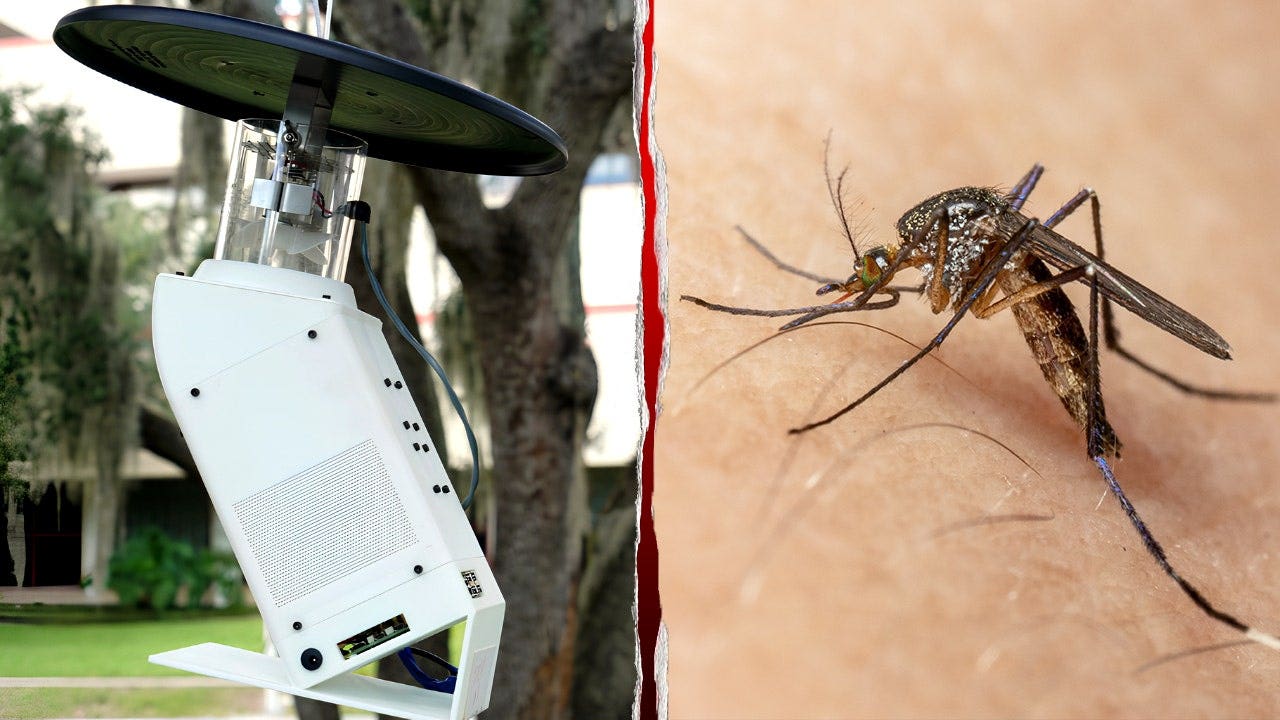
To assist in combating the outbreak, researchers at the University of South Florida have introduced an innovative AI mosquito trap capable of accurately identifying mosquito species. The trap utilizes built-in cameras and AI algorithms to determine species with over 98% accuracy in controlled conditions. This advanced technology is timely given the ongoing threat posed by dengue in Florida.
How the AI Mosquito Trap Functions
The AI trap, developed by Digitomy, a startup affiliated with USF, can be easily deployed in various locations. It operates by attracting mosquitoes with bait or light, drawing them into the device where they adhere to a sticky pad. The cameras photograph the captured insects, and the AI compares the images against an extensive database to identify species.
This technology not only identifies the specific mosquito species but can also discern whether a mosquito is male or female and if it has recently ingested blood—information crucial for understanding disease transmission risks.
The Impact of Faster Identification
Traditional methods of mosquito surveillance can take several days, delaying critical responses during disease outbreaks. Digitomy aims to significantly reduce this timeframe, potentially allowing for same-day identification of mosquito species in the event of an outbreak. This accelerated process enables health officials to quickly ascertain the presence of dangerous species like Aedes aegypti, which spreads dengue.
The information from the traps can feed into a mapping dashboard, giving mosquito control teams real-time updates on mosquito populations, enhancing their ability to target interventions and reduce disease transmission risks.
Benefits of AI-Driven Mosquito Control
The implementation of these AI mosquito traps could serve as an early warning system for communities. By integrating captured data into existing surveillance frameworks, officials could react swiftly to emerging threats. Although identifying mosquito species does not confirm the presence of disease, having timely information can guide more effective control measures.
Future of Mosquito Surveillance Technology
Currently, Digitomy has begun field trials for this AI technology, partnering with local mosquito control districts to validate and further refine its capabilities. The startup is also seeking to license its identification system to established manufacturers to facilitate broader availability of smart mosquito traps in the marketplace.
Staying Safe from Mosquito-Borne Diseases
While advanced technologies offer promising solutions, personal precautions remain essential for individuals, particularly in warmer regions. Residents are advised to eliminate standing water where mosquitoes breed, utilize EPA-registered insect repellents, and wear protective clothing when outdoors.
