


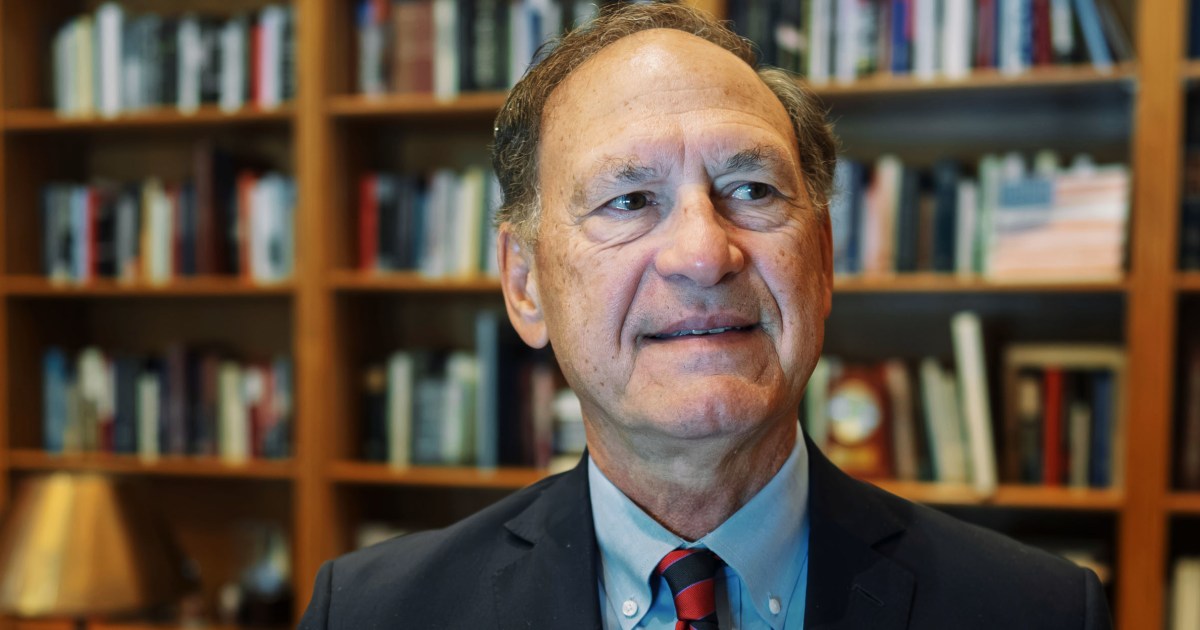
Justice Alito Raises Alarm on Judicial Independence at Federalist Society Event
Supreme Court Justice Samuel Alito voiced significant concerns regarding the potential legislative actions that could impact the independence of the judiciary during remarks made at a recent Federalist Society dinner in Washington, D.C.
Concerns of Legislative Influence
In a conversation with conservative writer Mollie Hemingway, Alito elaborated on the judiciary’s vulnerabilities, describing it as the “least dangerous” branch of government, primarily because of the greater powers wielded by Congress and the Executive. “Congress can turn off the lights of the Supreme Court and stop everything from happening if they will not fund their activities,” he emphasized, highlighting the gravity of potential congressional actions against the court.
The Context of the Remarks
While Alito’s comments did not directly address the outcomes of the recent midterm elections, they came shortly after Democrats gained control of both houses of Congress, reflecting a heightened concern over the shifting power dynamics in Washington.
Judicial Independence and Risks
Despite underscoring the necessity of judicial independence, Alito noted that this does not preclude the judiciary from potentially becoming dangerous. He analogized the court’s influence to a “hand grenade” rather than a “nuclear weapon,” indicating it holds potential risks even if it is not the most formidable entity in government.
Critique of Judicial Practices
Alito expressed concern that some federal judges have strayed from appropriate judicial practices, which has contributed to the growing use of an emergency docket over recent years. This development has increasingly allowed swiftly enacted judicial rulings to impact the federal government’s operations while cases are still pending resolution. Alito, who was nominated by President George W. Bush, mentioned that the Trump administration, in particular, has benefited from the conservative majority on the so-called “shadow docket,” executing significant initiatives unilaterally.
The Implications of Unilateral Actions
“Presidents have become very frustrated with their inability to get Congress to enact their legislative agenda,” he stated, acknowledging that they often seek to utilize their unilateral powers to advance their goals. This dynamic has led to opponents seeking judicial intervention against those directives, with litigators strategically selecting judicial districts expected to favor their positions.
Conclusion: The Future of the Judiciary
Alito concluded his remarks by acknowledging that while lower court judges are dedicated and skilled, they are not infallible. He pointed out that judicial mistakes can have significant long-term effects, potentially hindering executive initiatives throughout a president’s term. With the evolving political landscape and judicial activism, Alito’s concerns call for ongoing scrutiny of the relationship between the branches of government and the paramount importance of maintaining judicial independence.
