


The Great Debate: Is 1998 KY26 a Lost Soviet Spacecraft?
Harvard astrophysicist Avi Loeb argues that the mysterious near-Earth object known as 1998 KY26 may not be an asteroid, as claimed by NASA Administrator Jared Isaacman.
Overview of 1998 KY26
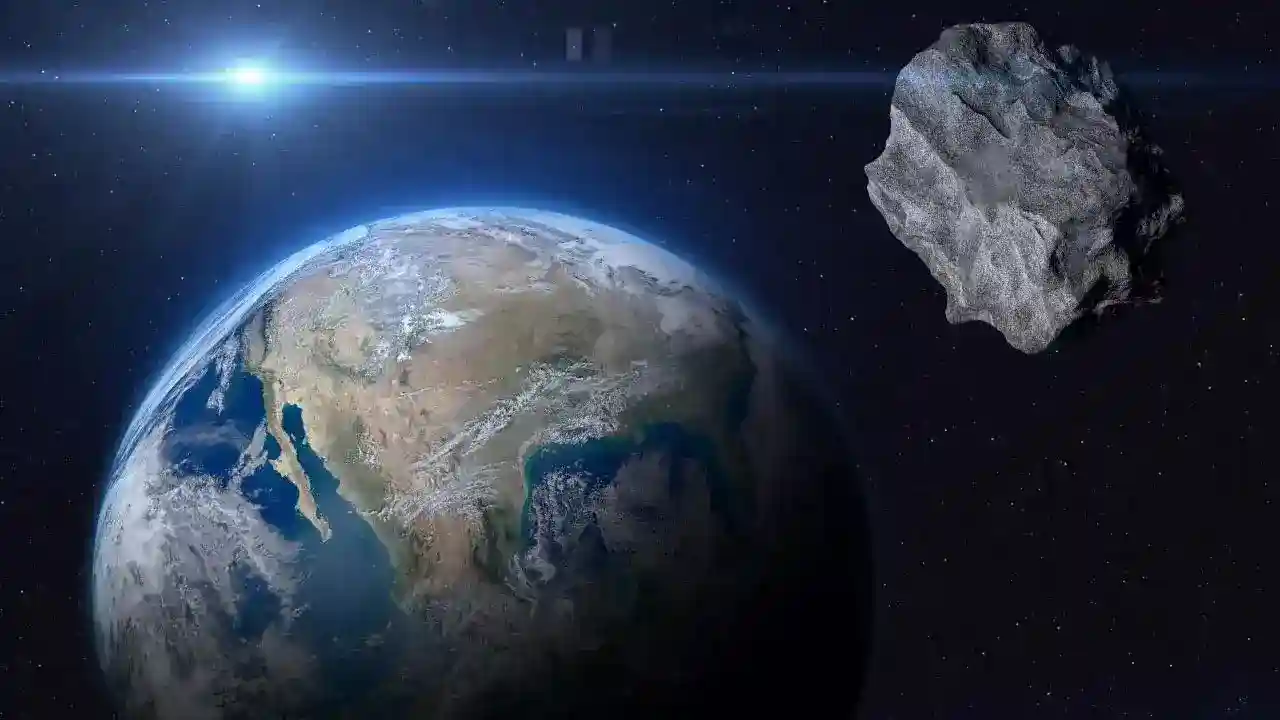
The object in question, designated 1998 KY26, measures approximately 36 feet in diameter. Initially categorized as a near-Earth asteroid, its unusual acceleration raises questions that gravity alone cannot elucidate. Loeb highlights that this acceleration suggests the object is influenced by forces other than mere gravitational pull.
NASA’s Perspective
During an appearance on “Fox & Friends,” Isaacman stated, “I’ve not seen any evidence to suggest this is…anything other than an asteroid.” This assertion sparked further investigation into the physical properties and behavior of 1998 KY26.
Loeb’s Alternative Theory
Loeb presents a provocative hypothesis: he suggests that 1998 KY26 could be the remnant of the Soviet spacecraft Phobos 1, which lost contact in 1988 while en route to Mars. He asserts that the trajectory of KY26 closely resembles that of Phobos 1, and the object’s reflective nature and rapid rotation offer additional clues. His team has proposed that solar radiation could be responsible for the observed non-gravitational acceleration.
Competing Explanations
Scientists have explored several potential explanations for the peculiar behavior of KY26, including the notion of it being a “dark comet.” This concept implies that the object could behave like a comet, albeit without the distinct tail or visible outgassing typically associated with comets. However, recent findings from Georgia Tech indicate that KY26 may not contain enough ice to fulfill the dark comet criteria, further complicating the understanding of the object’s nature.
Upcoming Research and Implications
A significant milestone in this investigation is set for 2031, when the Japan Aerospace Exploration Agency’s Hayabusa2 spacecraft is scheduled to encounter KY26. Loeb has expressed optimism that this mission may yield definitive evidence. “We predict that when they land on it, instead of seeing an iceberg, they will find the label ‘Made in the USSR,’” he stated.
Loeb maintains that should the Hayabusa2 mission reveal the object to be a natural body, it would mark the end of his theory.
The Need for Open-Mindedness in Science
In his discussion of the ongoing debate, Loeb emphasized the importance of considering hypotheses beyond traditional classifications. He remarked, “Innovation in science requires some imagination,” advocating for flexibility when confronting anomalies that do not fit within established scientific categories.
