


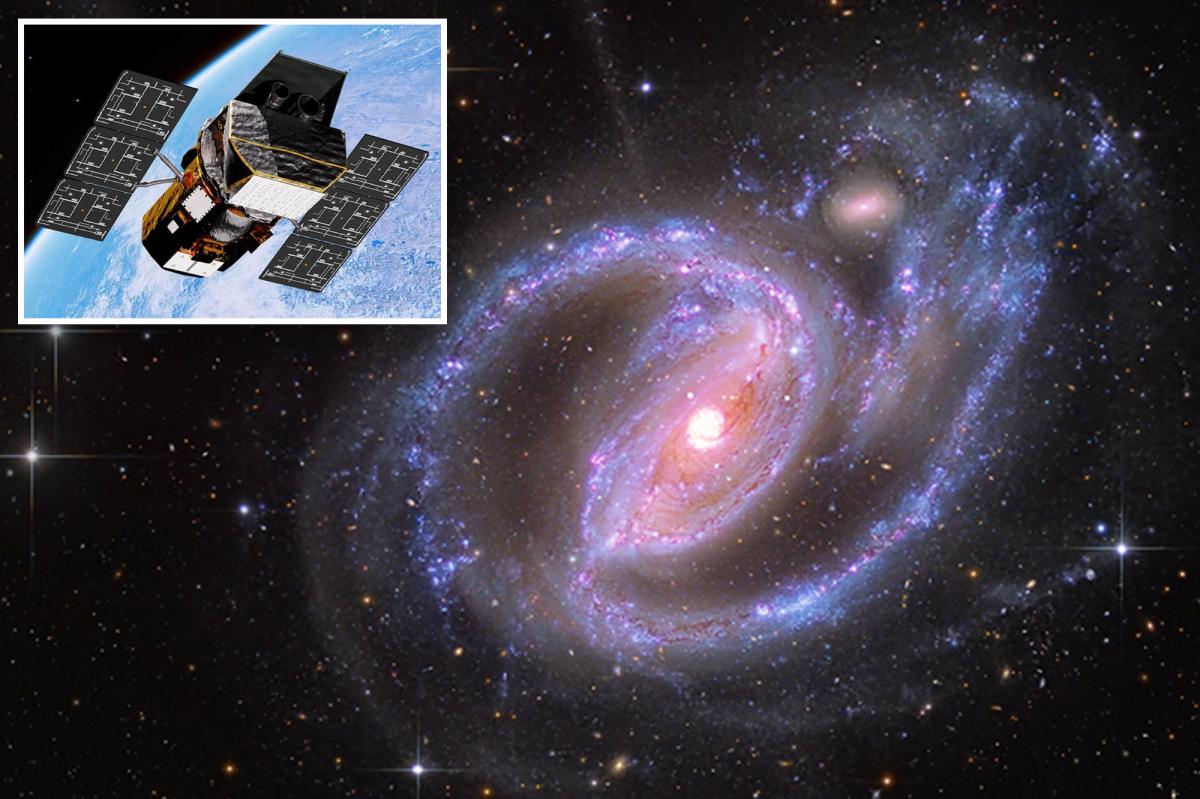
Nasa’s Neil Gehrels Swift Observatory: Cosmic Insights and Impending Re-entry
Overview of the Neil Gehrels Swift Observatory
Launched in 2004, NASA’s Neil Gehrels Swift Observatory was specifically designed to detect and monitor gamma-ray bursts. After an impressive 21 years of scientific operations, the observatory is on the verge of re-entering Earth’s atmosphere due to issues stemming from increased solar activity that has negatively impacted its low-Earth orbit.
Current Status and Future Predictions
Currently orbiting approximately 200 miles above the Earth, the 1,470 kg observatory is anticipated to re-enter the atmosphere later this year, with estimates pointing towards November. While the spacecraft is expected to break apart and mostly incinerate upon re-entry, NASA has not confirmed whether any debris will reach the Earth’s surface.
Failed Rescue Mission
Earlier this summer, an attempt to shift the Swift Observatory to a higher orbit using Katalyst Space’s LINK robotic servicing spacecraft was unsuccessful. The mission faced significant challenges, particularly ongoing attitude-control issues that ultimately hindered the capture of the observatory.
New Cosmic Discoveries Shared
On October 9, 2026, NASA unveiled an exciting new collection of images captured by Swift and the Chandra X-ray Observatory. This collection showcases an array of cosmic phenomena, including:
- NGC 1097: A spiral galaxy located approximately 48 million light-years from Earth that houses a supermassive black hole, roughly 140 million times the mass of our Sun.
- Small Magellanic Cloud: A neighboring galaxy of the Milky Way, located about 200,000 light-years away.
- NGC 4151: A spiral galaxy featuring an actively growing supermassive black hole at its center.


Conclusion
The impending re-entry of NASA’s Neil Gehrels Swift Observatory marks the end of an era after two decades of invaluable contributions to our understanding of the universe. As we anticipate this event, the images shared reflect the significant legacy of exploration and discovery that the observatory has provided to the scientific community.
