


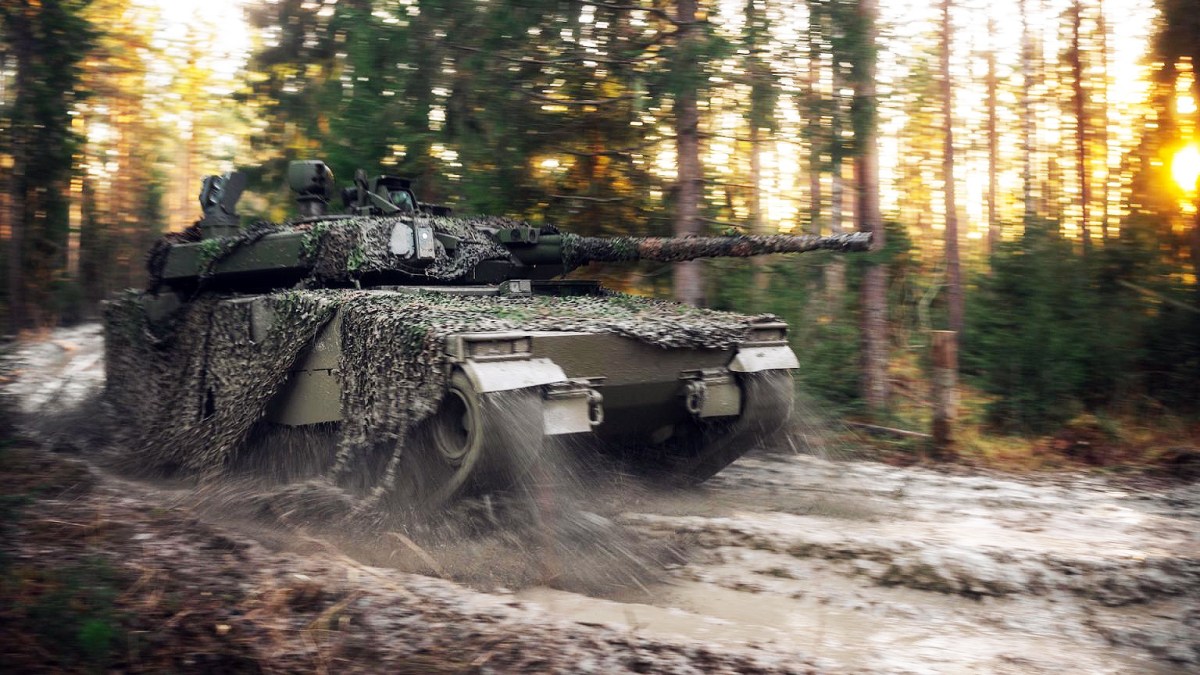
European NATO Members Collaborate on Major CV90 Vehicle Agreement
In a significant collaborative effort to enhance military capabilities, five European NATO countries have formalized a landmark agreement to procure more than 400 CV90 infantry fighting vehicles. This contract, valued at approximately $6 billion, represents one of the most extensive multinational land systems acquisitions in European history and could serve as a model for armored force revitalization across the continent in response to escalating geopolitical tensions, particularly with Russia.
The Agreement and Its Participants
Signed in Stockholm at the Swedish Army Museum, this agreement includes the participation of Sweden, Finland, Norway, Lithuania, and the Netherlands. The vehicles will be produced by BAE Systems Hägglunds, featuring a standardized CV9035 MkIV Nordic Edition configuration. However, each nation will customize its vehicles with specific equipment related to communication, electronic warfare, and battle management systems.
Overcoming Historical Challenges
This agreement marks a pivotal shift from the traditional approach of separate national procurements for military equipment, which has often resulted in inefficiencies and higher costs due to varied configurations and supply chains. The unified vehicle configuration aims to streamline production and support logistics, enhancing operational cooperation among NATO allies.
“This joint procurement of the CV90 strengthens NATO’s capabilities and creates opportunities for both effective and close cooperation around the system between our five countries,” stated Swedish Minister of Defense Pål Jonson.
Historical Context and Significance
Historically, European nations have struggled to achieve uniformity in armored vehicle procurement, with past efforts frequently hampered by competing national interests and divergent requirements. This initiative takes a more pragmatic approach by leveraging an existing platform, allowing countries to align their defenses without the burdens of developing a new vehicle from the ground up.
Despite the increase in armored vehicle capabilities, the discussion surrounding their effectiveness in modern warfare remains. The ongoing conflict in Ukraine has raised questions about the viability and survivability of armored forces amid drone threats, yet there remains widespread recognition of their crucial role in land warfare.
Specifications and Features of the CV9035 MkIV
The CV9035 MkIV represents a sophisticated evolution within the CV90 family, offering enhancements in mobility, payload capacity, and crew capabilities. Key upgrades include:
- A powerful 1,000-horsepower Scania diesel engine paired with an Allison transmission for improved mobility.
- Active damping technology to enhance vehicle handling over diverse terrains.
- A NATO-standard electronic architecture designed to boost situational awareness through advanced technological integration.
Strategic Implications and Future Provisions
The CV90 initiative not only impacts military capabilities but also promises to fortify Europe’s defense industrial capacity. The production scope involves multiple companies across the participating countries, fostering a collaborative industrial network surrounding BAE Systems’ facilities in Sweden.
Finland, for instance, anticipates retaining around 30 percent of its contract value domestically, with numerous local companies engaged in the production process. This kind of partnership not only strengthens industry ties but also helps address the fragmentation issues that have long plagued European defense manufacturing.
A Model for Future European Defense Collaboration
The broader ramifications of this CV90 agreement could pave the way for similar collaborative endeavors across Europe, promoting reduced fragmentation and increased joint procurement in defense capabilities. Though significant hurdles remain, such as differing national priories and operational requirements, this initiative exemplifies how mutual interests among nations can yield successful outcomes in military procurement.
In conclusion, the successful implementation of this joint procurement for the CV90 vehicles could act as a catalyst for further European defense integration. The long-term effectiveness of this model will depend on the willingness of other nations to adopt similar cooperative frameworks for various types of military systems.
For continued updates on military technology and defense collaboration, stay tuned to TWZ.