


Legal Battle Over East Potomac Park Golf Course Continues
Washington, D.C. — President Trump announced plans to appeal a recent court ruling that temporarily prevents the closure of East Potomac Park, which includes a historic golf course in Washington, D.C. The administration’s proposal seeks to transform the course into a high-end championship venue designed by renowned golf course architect Tom Fazio.
Court Ruling and Appeal
On Saturday, U.S. District Judge Ana Reyes issued a ruling that blocks the Trump administration from shutting down East Potomac Park and its golf course, but stated that the government is not obligated to actively manage the park at this time. Judge Reyes sided with a local preservation group and two golfers who contended that the planned closure—scheduled for November 15—was part of a broader initiative to renovate the course.
In a social media announcement, Trump criticized the judge’s decision, claiming the golf course is in “a terrible state of disrepair” and called for immediate action to upgrade it. “They don’t call it Trash Island for no reason!” he posted, before declaring that the Department of the Interior has the right to proceed with the closure. He stated, “Time is of the essence, or golf seasons, jobs, prestige, and much money, will be lost!”
Concerns Raised by the Court
Judge Reyes indicated skepticism about the government’s justification for closing the park, suggesting it was “pretextual.” She noted that the administration appeared to be retroactively justifying the closure rather than addressing evidenced safety concerns that warranted immediate action. The ruling is set to remain in effect until November 28.
Public Response and Legal Opinions
Catherine Carroll, a senior legal advisor at Democracy Forward, expressed satisfaction with the ruling, stating that it would prevent “irreparable harm” from what she described as a “vanity project” by the Trump administration. Conversely, a representative from the Department of Justice affirmed that the ruling does not halt efforts to plan the championship course, emphasizing ongoing compliance with legal requirements.
Current Status of the Golf Course and Park
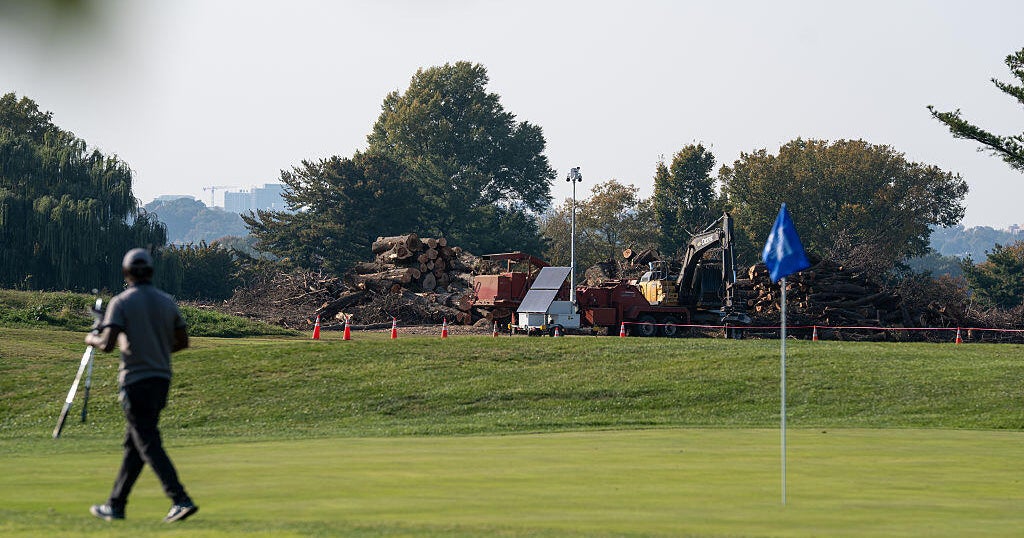
For months, Judge Reyes has been tasked with ensuring transparency in government dealings related to the historic East Potomac Golf Links, originally opened in the 1920s. Tensions escalated in recent weeks when the National Park Service unexpectedly cut down more than 500 trees on the course, which prompted the court to issue an order blocking any further tree removal and requiring government notifications for future actions.
Implications for the Park
While the administration announced a closure to facilitate redesign work, initial plans are still vague. Associate Attorney General Stanley Woodward questioned whether any formal contract with Tom Fazio had been secured regarding the new course design. The National Park Service has indicated that significant repairs to a deteriorating seawall would be necessary before any renovation can begin, with estimated costs exceeding $300 million and a timeline of at least two and a half years.
Next Steps
The Justice Department plans to seek bids for infrastructure work associated with the park’s seawall. Meanwhile, preservation advocates argue that the administration engineered circumstances for the proposed closure, which eliminates the current operator, the National Links Trust, as of the November deadline. Attorneys for the preservation group argue this was done to justify the course’s closure.
Investigative Inquiry
In addition to the ongoing legal discussions, Judge Reyes has initiated an inquiry to investigate potential misrepresentations made by Trump administration officials during court proceedings. This includes looking into whether certain facts were omitted or misrepresented regarding the park’s condition and ongoing operations.
Conclusion
The future of East Potomac Park and its golf course remains uncertain as this legal battle unfolds, with potential repercussions not just for local golfers and residents but for the broader landscape of public park management and preservation efforts in Washington, D.C.
