


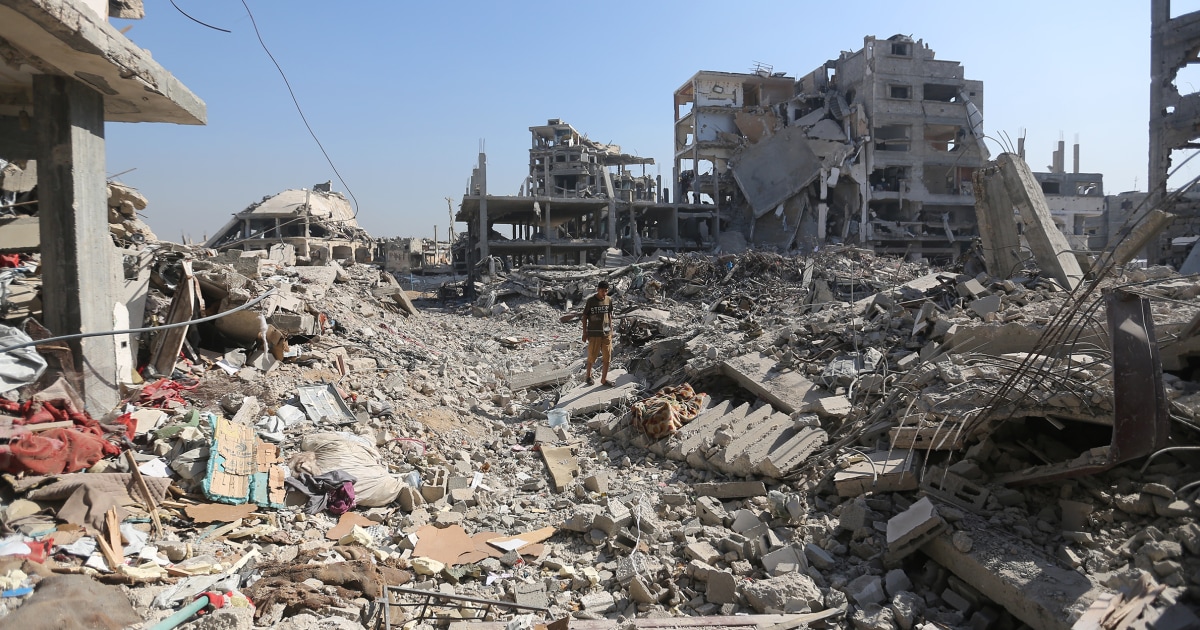
Israeli Military Operations Trigger Displacement in Gaza
On Wednesday, a significant military operation by Israeli forces in central Gaza led to the displacement of numerous Palestinian residents. This action involved the advancement of Israeli tanks in an area identified by military officials as hosting Hamas infrastructure outside Israeli-controlled territories within the enclave.
Recent Military Actions
According to eyewitness accounts, several Israeli tanks entered the principal Salahudeen road, which is situated to the west of the Yellow Line—a boundary demarcating the region of Gaza still under Israeli control despite an ongoing ceasefire that has been effective for more than a year.
Casualties and Airstrikes
Amid the military aggression, Palestinian medical personnel reported that an Israeli airstrike near the operational area resulted in one fatality. Earlier strikes on the same day also accounted for two additional deaths in Deir al-Balah and Gaza City.
Military Statement
An Israeli military spokesperson informed NBC News that the ongoing operation is aimed specifically at targeting Hamas infrastructure in central Gaza. They confirmed that a militant was struck in the southern part of Gaza earlier that day.
Growing Displacement Crisis
Many of the displaced Palestinians, who have already faced multiple displacements since the war began in 2023, hurriedly packed their belongings onto various forms of transport, including bicycles and motorcycles. Salam Aql, a resident affected by the military order to evacuate, expressed the exhaustion felt by many: “We are tired, I swear to God, we are tired. But as we were sitting there, gunfire started coming in,” she stated, recounting an incident where a child was wounded.
Ceasefire Violation Concerns
Hamas denounced the Israeli military’s actions as a violation of the ceasefire and a troubling escalation in hostilities. While the ceasefire has managed to put a pause on extensive combat, it has failed to suppress Israeli airstrikes and does not guarantee the disarmament of Hamas.
Health Impact and Casualties
As of recent reports, Gaza health authorities have noted that over 1,600 Palestinians have lost their lives since the ceasefire was instituted, against five confirmed fatalities of Israeli soldiers. Palestinian officials estimate that the ongoing military campaign following assaults on October 7, 2023, has resulted in more than 74,000 Palestinian deaths.
International Response and Future Implications
A recent report from the U.S. governmental Board of Peace highlighted the inadequacies of both Israel and Hamas in fulfilling commitments to avoid escalating violence, thrusting Gaza’s population into worsening conditions. This report, part of an assessment presented to the United Nations Security Council, suggests that the distance between agreed-upon terms and on-the-ground realities poses a fundamental threat to the peace process.
Continuing Conflict
While the ceasefire has been hailed as a halt to major confrontations, the broader peace agreement—which called for disarmament of Hamas, withdrawal of Israeli forces, and the initiation of reconstruction—remains unfulfilled. A looming challenge presents itself as Israeli airstrikes persist and Hamas continues military operations, undermining efforts to bring about a lasting peace.
Basem Naim, a senior Hamas official, criticized the Board of Peace’s report as “pure disinformation,” alleging that it serves to shield Israel from its peace commitments while perpetuating its aggression in Gaza.
Conclusion
The current situation in Gaza remains precarious, with significant implications for both civilian lives and regional stability. As the complexities of the conflict continue to evolve, the international community watches closely in the hope of a peaceful resolution.