


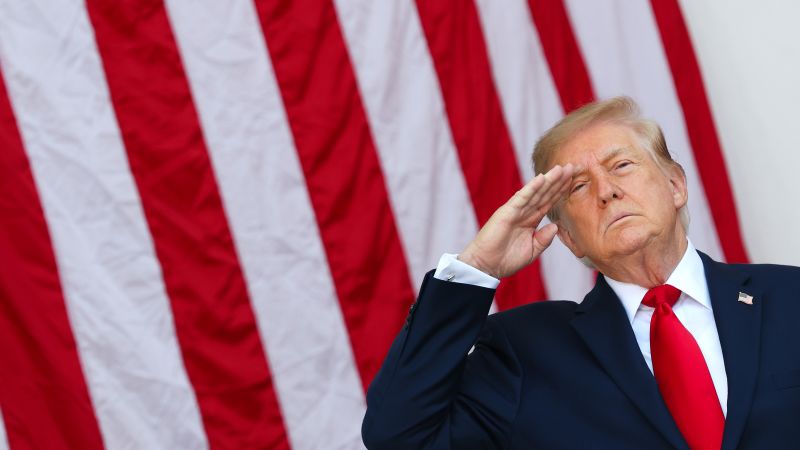
Strategic Presidential Travels: A Look at Trump’s Asia Trip
Presidential trips abroad have long served as a strategic tool for U.S. leaders to reclaim authority during politically tumultuous times. This practice, which has become a staple for presidents facing domestic challenges, will be once again utilized by President Donald Trump during his planned visit to Asia.
A Historical Perspective
The tradition of overseas trips as a means of political rejuvenation was notably started by President Ronald Reagan in 1982. Amid economic hardship, including an 11% unemployment rate, Reagan embarked on a journey through Latin America, evidencing how foreign travel could provide a reprieve from domestic strife and perceived political decline.
Trump’s Upcoming Asia Engagement
In a week marked by political setbacks, President Trump will travel to Asia. His itinerary includes a significant three-way meeting with Chinese President Xi Jinping and Russian President Vladimir Putin, designed to showcase U.S. engagement on the global stage. This gathering, drawing parallels to historical summits, will be notable not only for its format but also due to the context of Trump’s domestic issues and declining popularity.
The Political Context
- Recent voter backlash has raised eyebrows among international observers regarding Trump’s political strength.
- His foreign counterparts are keen to assess his status following disappointments in recent elections, and this trip serves as a litmus test for his influence.
- Trump’s meeting will coincide with the presence of influential figure Elon Musk, whose recent political contributions failed to yield the expected Republican gains.
“Foreign policy and presidential trips are something only the president can do. There is pomp and circumstance. There’s a focus on it,” explained Edgard Kagan, a former U.S. ambassador and current adviser at the Center for Strategic and International Studies. “This is a way in which you start changing the narrative, and remind people that, you know, the president is still the president.”
Complicating Factors
While Trump’s administration hopes to portray a strong diplomatic front during this visit, several issues could overshadow the talks. The controversy surrounding high-powered AI technology and allegations concerning Jensen Huang could dampen the atmosphere in China. Despite these challenges, Trump reportedly plans not to address these accusations with Xi during their discussions.
Strategic Goals in Asia
During his visit, set to include summits with the Association of Southeast Asian Nations (ASEAN) and the Asia-Pacific Economic Cooperation (APEC), Trump aims to announce new trade agreements and reinforce American presence in a region that has historically felt neglected. This trip represents a critical opportunity for Trump to counter the narrative of waning political power.
Challenges Ahead
Despite ambitions of establishing stronger ties in Asia, Trump faces complications stemming from ongoing conflicts in the Middle East and Ukraine, which continue to dominate his international agenda. Additionally, domestic political challenges, as seen in recent congressional losses for Republicans, pose significant questions regarding the extent of Trump’s influence on foreign policy.
As Kagan emphasized, “It’s something that reminds the nation, it reminds foreign observers, that this is very much the president’s bailiwick.” This narrative is crucial not only for Trump’s upcoming discussions but also for shaping the perception of U.S. leadership globally.
Conclusion
As President Trump prepares to embark on this pivotal journey, the trip underscores the intricate interplay between domestic politics and foreign affairs. The outcomes of this engagement could significantly influence both his standing at home and the perception of the U.S. on the global stage.